
Prevention checklists
Vacation Home Leak Prevention Checklist
By Dal Beggs, founder and owner of 1 Call Restoration. Published November 1, 2026. Updated November 1, 2026.
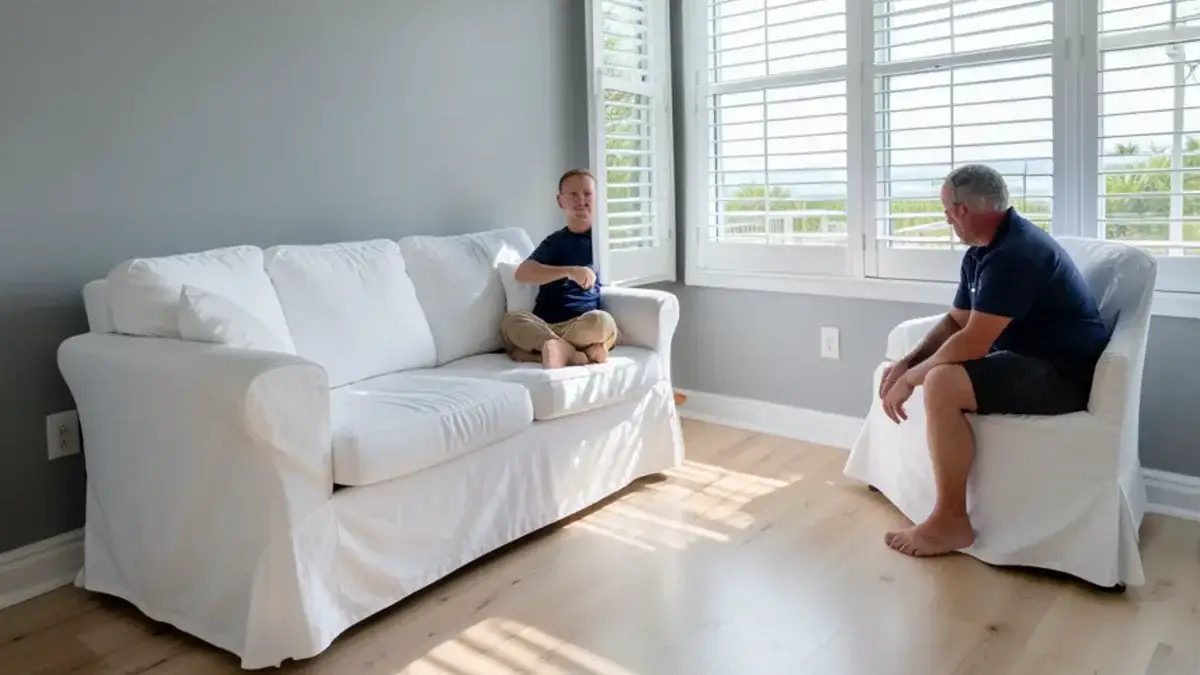
Vacation home water leak prevention comes down to three jobs: stop the water, sense the water and get someone to walk the house. A leak that runs for ten minutes with you at home is a nuisance. The same leak in an empty house can run for weeks, so every step below shortens that gap.
Why do empty homes take the worst leak damage?
Empty homes take the worst damage because nobody is there to notice. The failure is usually an ordinary one, such as a supply line or a drain pan overflow. What changes is the run time.
Coastal Florida adds a second problem. Humid air slows drying and supports mold, and the EPA says water-damaged areas should be dried within 24 to 48 hours. A leak discovered three weeks late is past that window on the day you find it, so the plan has to focus on finding it sooner, or stopping it altogether.
Got a leak alert from an empty house? Call us.
Open 24 hours for emergencies. Non-emergency calls are best between 7am and 7pm.
- 5.0 on Google, 8 reviews
- Family owned since 2020
- Calls go straight to the owner
- Free assessments and estimates
Before you lock the door
Work through this list on every departure, even a short one. Tape a copy inside a cabinet door, so a guest or relative can run it too.
- Pour a little water in rarely used drains, so traps stay full.
- Check that the condensate drain line is flowing.
- Turn the washer valves off. IBHS advises against running a washer in an unoccupied home.
- Turn off the icemaker line and empty the ice bin.
- Set the water heater to its vacation mode, or follow your plumber's advice.
- Set the thermostat on hold, so the air conditioning keeps running.
- Close any shutters, and bring in anything the wind can throw.
- Send the keyholder your departure date and any changes.
- Close the main water shutoff last, or the unit valve in a condo.
- Open a low faucet briefly to release pressure in the lines.
The guide from IBHS and the Connecticut Insurance Department also says to turn supply valves off when not in use, and to test each valve to make sure it actually stops the water.
For a long absence, UF/IFAS Extension adds three steps. Water in drains and toilets evaporates into the house, so close the drain stoppers and seal the toilet bowl and tank top with plastic wrap. Leave interior doors open so air can move. Turn the water heater off if you will be gone a month or more, and set it to its lowest setting for a shorter trip.
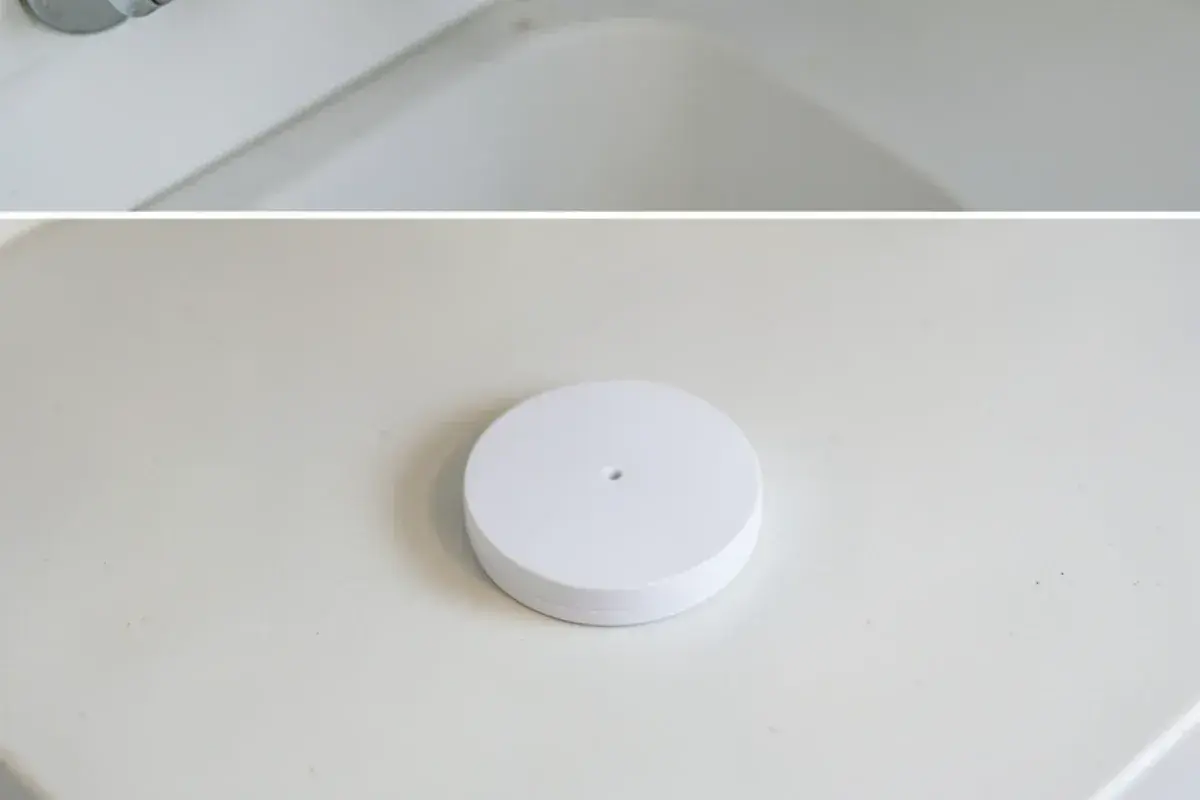
Closing dates for a Northeast Florida house
The list above covers the day you leave. These dates cover the weeks around it and the months the house sits, and they matter most if you are away during the wet season.
| When | Do this | Why then |
|---|---|---|
| Three weeks before you leave | Book the air conditioning check-up, including the condensate pan and pipe | UF/IFAS puts the check-up at three weeks out |
| One week before | Change the filter, and replace backup batteries in the thermostat and irrigation timer | A dead battery can undo a schedule while you are gone |
| Before June 1 | Agree a storm plan with the keyholder, including who closes the shutters | The National Hurricane Center opens the season on June 1 |
| August | Ask for a humidity reading after any heavy rain | Our wettest month, at about 7.4 inches |
| Mid-August to mid-October | Tighten the visit schedule | The center says most activity falls here, with the peak on September 10 |
| October and November | Add a visit around the City's posted king tide dates | Check low doors and anything stored on the floor |
| Any forecast freeze | Ask the keyholder to protect exposed outdoor pipes | Hard freezes are rare here, and an empty house has nobody to notice one |
If you can only be there once a year, make it the weeks before June 1. Setting up the storm plan and the air conditioning then deals with the two jobs that cannot be done from out of state once the season starts.
Which sensors and shutoffs are worth adding?
Sensors help when somebody can act on the alert. A leak alarm in an empty home does nothing if your phone is in another state and nobody has a key.
| Device | What it does | Its limit |
|---|---|---|
| Leak sensors | Alert your phone when a spot gets wet | Only detect water that reaches them |
| Automatic shutoff valve | Closes the main when a leak is detected | Needs a plumber to install, plus power or battery backup |
| Flow monitor | Flags water use when nobody is home | Needs Wi-Fi to report |
| Humidity sensor | Warns when indoor humidity climbs | Reports the air, not the cause |
| Power-loss alert | Tells you the air conditioning may be off | Needs a backup to send the message |
Place leak sensors where supply lines and drains live: under sinks, behind the toilet and refrigerator, beside the water heater and under the air handler. Put one beside any appliance that can leak and stays connected while you are gone.
What should your keyholder check on each visit?
Give the keyholder a short list and ask for dated photos. A visit with no record is hard to rely on later, whether the question comes from you or from an insurer.
- Smell the air when the door first opens.
- Read the thermostat and any humidity display.
- Look under each sink and around the toilets.
- Check the air handler pan and the drain line.
- Look at the ceilings, especially under bathrooms.
- Run each faucet briefly, if the water is on.
- Close everything back up, and send the photos.
Agree in advance who the keyholder calls, and put that authority in writing. It saves a day if they find a problem while you are out of reach.
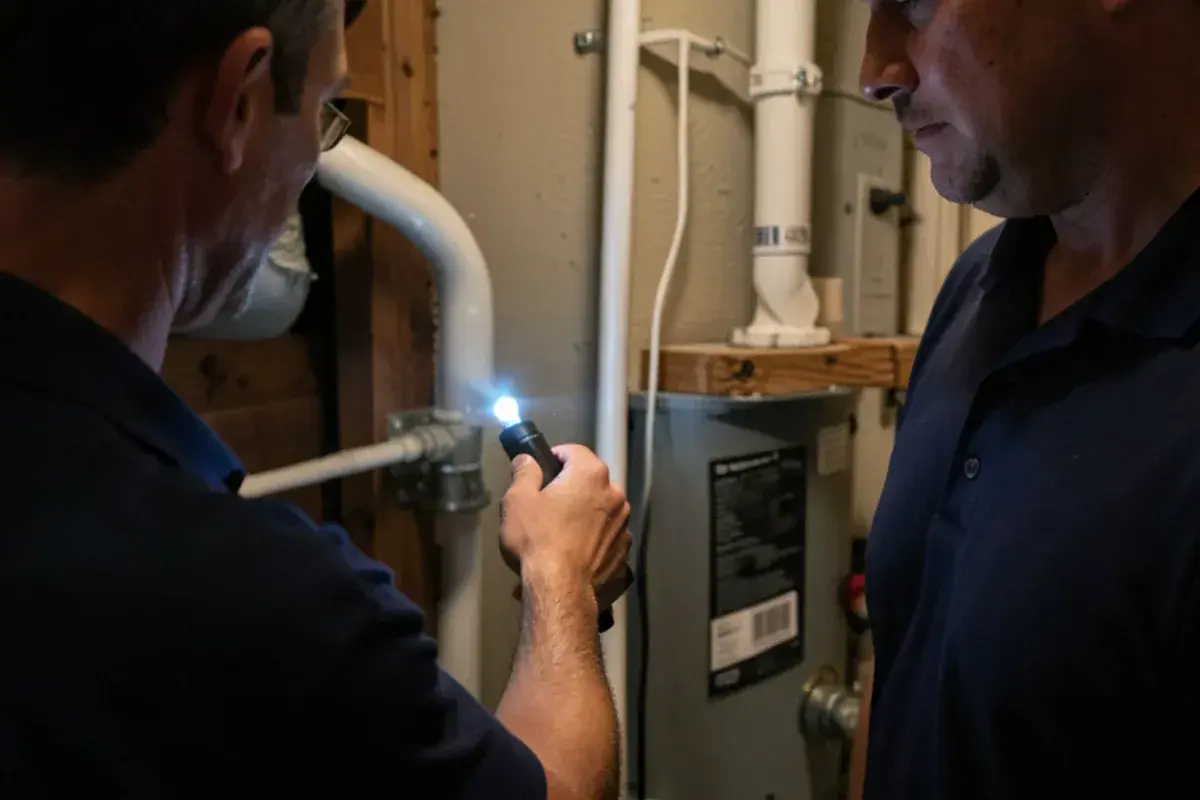
After a storm or power outage
Add an extra visit after any storm or long outage, as soon as the area is safe. Those are the events most likely to cause a problem nobody has noticed.
Ask the keyholder to check the windward side of the house, the ceilings below the roof and any door that faces the weather. Power outages matter too, because a stopped air handler lets humidity climb. A home on Crescent Beach can take wind-driven rain from a nor'easter with no named storm anywhere nearby.
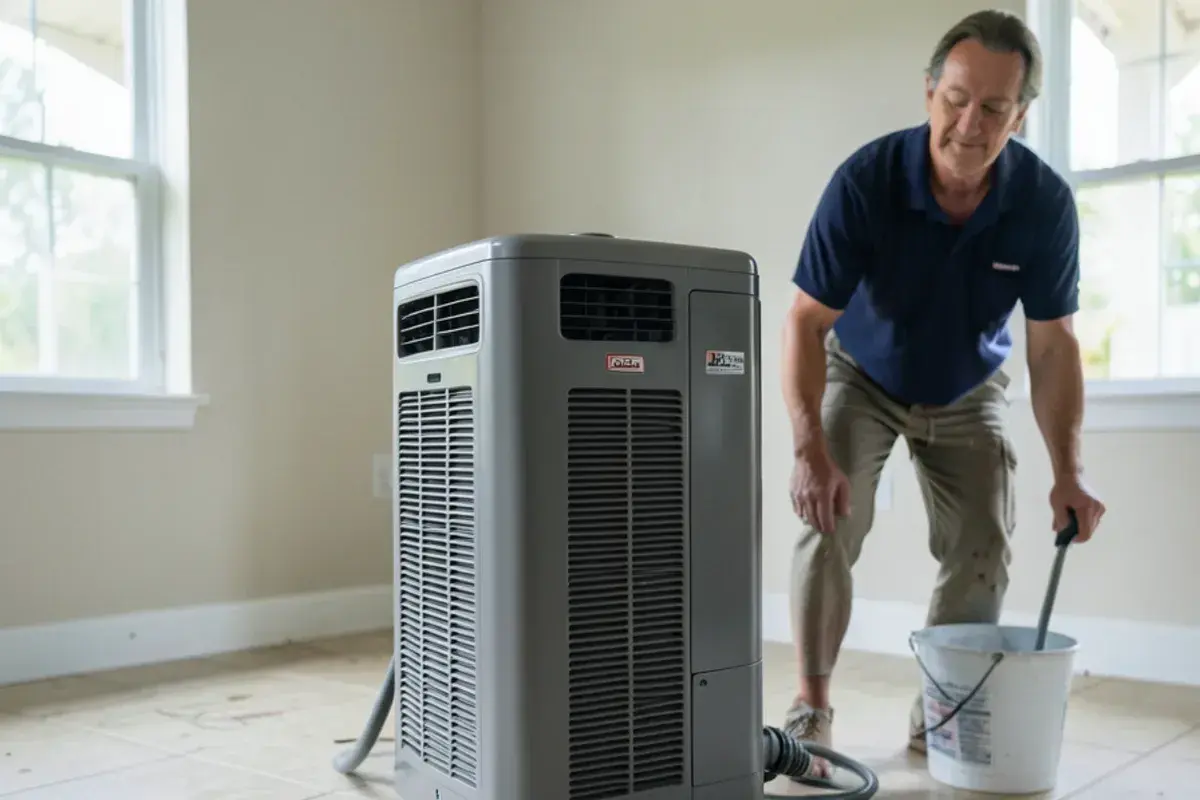
Rules we give absentee owners
Most of what goes wrong with absent owners comes down to access and authority. These are the rules we would ask you to set up now:
- Keep a lockbox or a trusted key holder within a short drive.
- Leave a written note saying who can approve emergency work.
- Keep a photo of the shutoff location on your phone.
- Tell the keyholder never to enter standing water or touch wet electrical gear.
- Ask for a written estimate by email if you cannot be there in person.
- Keep your policy details handy, and take coverage questions to your insurer.
What each closing choice costs you
Every protection here has a price, and it helps to see them side by side.
| Choice | What it buys | What it gives up |
|---|---|---|
| Main water off | Stops any supply line leak | Irrigation, fire sprinklers and the keyholder's faucet test, if they share that supply |
| Air conditioning at 80 to 85 degrees | Moisture removal on a lower bill, within the UF/IFAS range | The drain line keeps working with nobody watching it |
| Two-hour daily run on a timer | The UF/IFAS schedule for a sealed house | Needs a programmable thermostat that survives an outage |
| Humidistat | Runs the system by humidity | UF/IFAS warns a poor setting or calibration means inefficient running and high bills |
| Dehumidifier piped to a drain | Extra moisture removal | UF/IFAS says it helps less than air conditioning, and the hose is one more thing to leak |
The second row is the one owners miss. Running the system protects the house from humidity, and it also means condensate is still moving through a line nobody is checking. That is why a sensor under the air handler earns its place even when the main is off, since closing the main does nothing for water that condenses out of the air.
A small leak found late still needs a real dry-out, and structural drying is the part you cannot do from out of state. Moisture that sits for weeks can also bring mold after water damage, which adds a separate scope and a licensed mold assessor if formal sampling is needed.
Shorten the gap, then call when the alert fires
Every line in this post buys the same thing: less time between the failure and someone noticing. Close what you can, sense what you cannot close, and put a person with a key within reach. An owner on Crescent Beach renting out a condo needs the same three things, plus the manager's number and the association's rules.
If an alert goes off or a neighbor calls, call us with an emergency at any hour. You will reach the owner, and with your approval and access, we will assess the house and send you what we find with photos and readings.
Frequently asked questions
Should I shut off the water when I leave my vacation home?
Yes, closing the main is the simplest protection for most homes, as long as nothing depends on that supply. Check first for fire sprinklers and irrigation, and ask your plumber how a shutoff affects your water heater. Condo owners should close the valve for the unit only, and they should check the association's rules. Drain the lines at the fixtures, then test the shutoff before your first trip away.
Should I leave the air conditioning on in an empty Florida house?
Yes, leave it running at a steady setting, because Florida air carries a lot of moisture into a closed house. The EPA advises keeping indoor humidity below 60 percent, and an empty home with the system off can pass that quickly in summer. Set the thermostat to hold, put a humidity sensor inside, and have someone confirm the drain line is flowing during each visit.
How often should someone check on an empty vacation home?
Your insurer is the first place to ask, because some policies set conditions on homes left unoccupied. Read yours, and ask your agent what applies. As a working rule, shorter gaps mean a shorter run time for any leak, so set a regular visit and add an extra one after a storm or a long power outage. Ask the keyholder to send a dated photo each time.
Far from your Florida home and worried? Call and we will check.
Open 24 hours for emergencies. Non-emergency calls are best between 7am and 7pm.
- 5.0 on Google, 8 reviews
- Family owned since 2020
- Calls go straight to the owner
- Free assessments and estimates
1 Call Restoration, Saint Augustine, FL. (208) 464-4194.
Related services: Appliance Leak Water Damage, Structural Drying, Mold After Water Damage. Serving Crescent Beach and the rest of our service area.
Sources
- Connecticut Insurance Department and IBHS, Quick Tips to Prevent Water Damage: Residential
- EPA, A Brief Guide to Mold, Moisture and Your Home
- UF/IFAS Extension, Closing Your Seasonal Home (FCS3154, revised June 2014)
- National Hurricane Center, Tropical Cyclone Climatology
- City of St. Augustine, King Tide