
What Does Reconstruction Mean After a Water Loss?
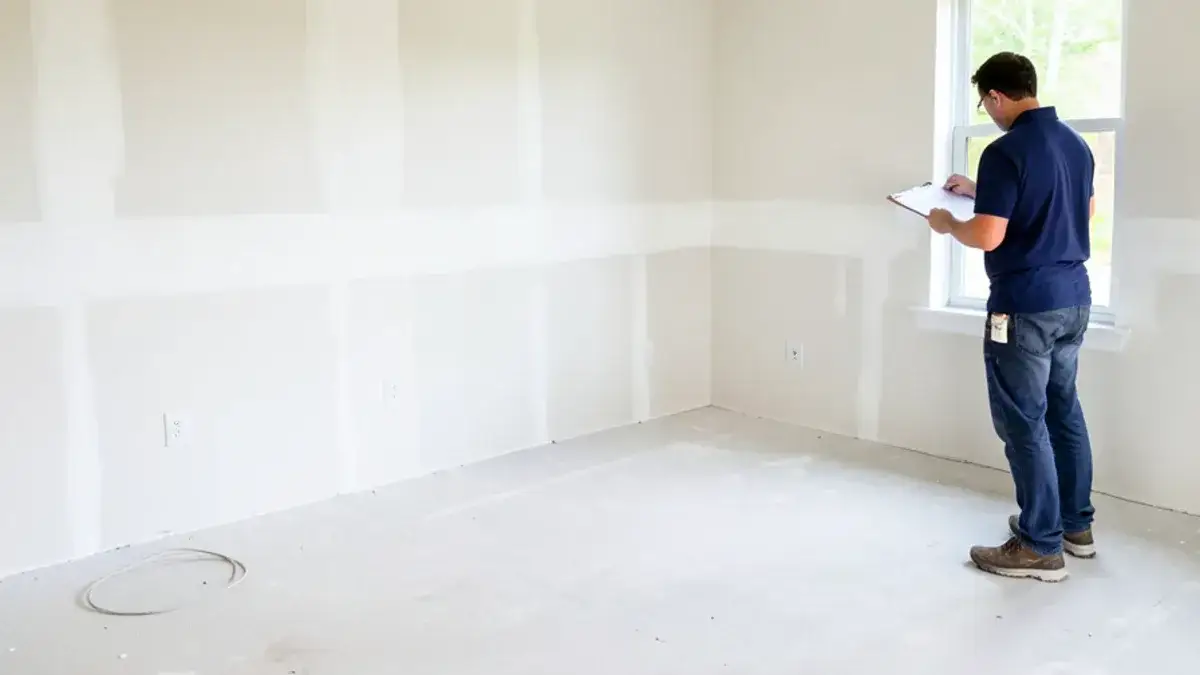
Reconstruction means putting the home back after mitigation ends. Mitigation stops the damage with extraction, demolition and drying. Reconstruction restores what was removed.
Think of it as a planning job as much as a building job. You may have open walls, a bare slab, missing baseboards and several trades who all need the room at different times. Our work is to scope it, set the order and keep the record straight.
What we scope and sequence:
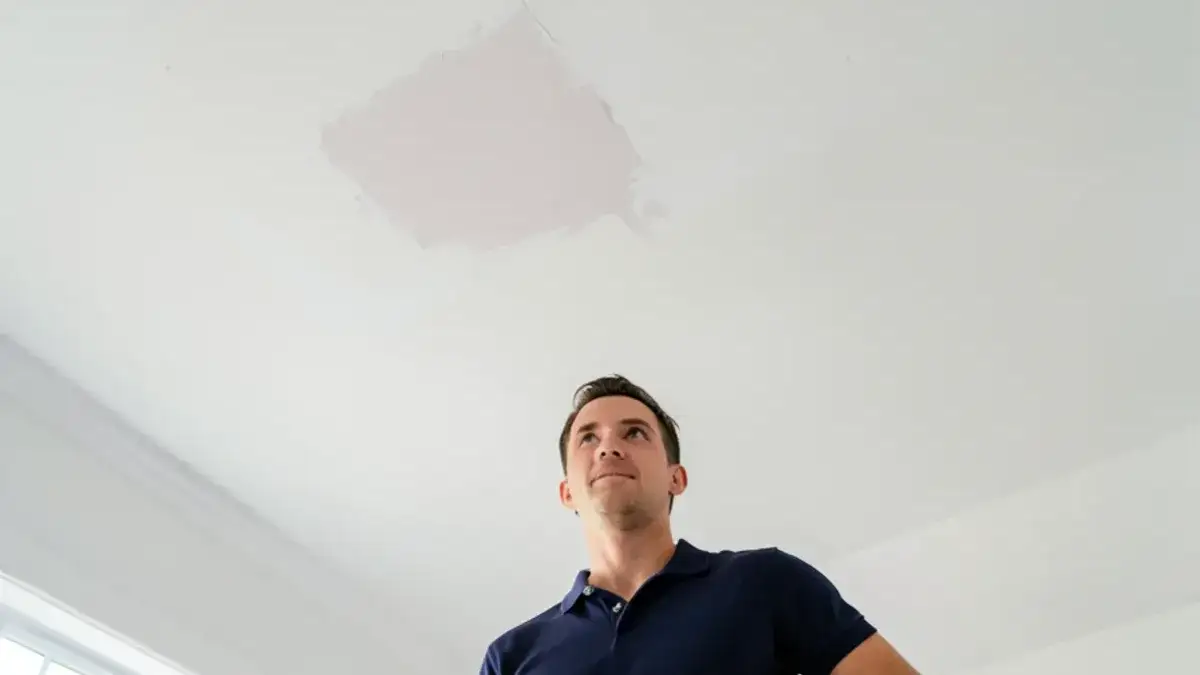
- Drywall and paint repair, including ceilings and texture
- Flooring replacement, including what sits under it
- Baseboards, trim and insulation on the put-back list
- Cabinets and doors, each marked repair or replace
- A written sequence with the waiting points marked
- The final moisture log, handed over before walls close
What goes elsewhere: structural repairs go to a suitable licensed contractor, and electrical, plumbing and AC work go to those licensed trades. We set the order around them.
Walls and floors each have their own page, so this one stays on the plan: who comes when, and what has to happen first.
How You Know You Have Reached This Stage
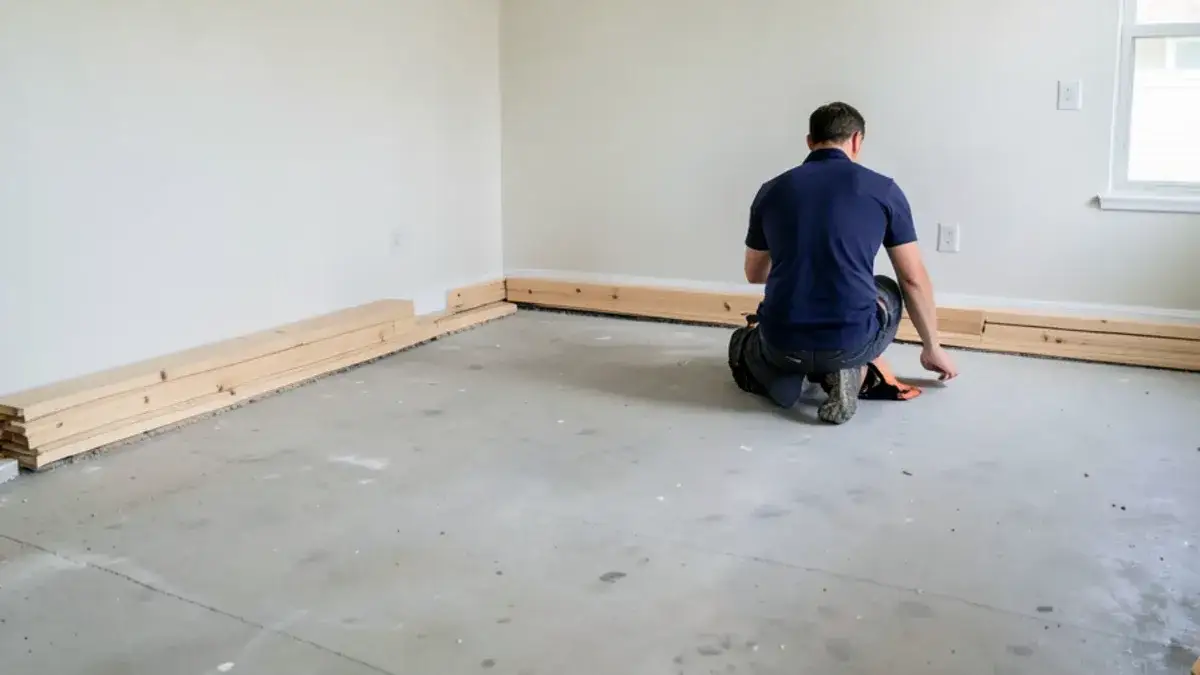
You are here when the equipment has left and the room is still open. That usually means bare studs above a flood cut, a stripped slab or missing baseboards.
Around St. Augustine most homes get here after a plumbing leak, storm intrusion or tide water, and the source shapes the plan. A supply line leak usually stays a finish job. A tidal flood in a Special Flood Hazard Area can bring the 50 percent test into the conversation. Humidity keeps working in the meantime, because open framing in August can pick up moisture again, so we re-read it before anything closes.
What Goes Back, and in What Order
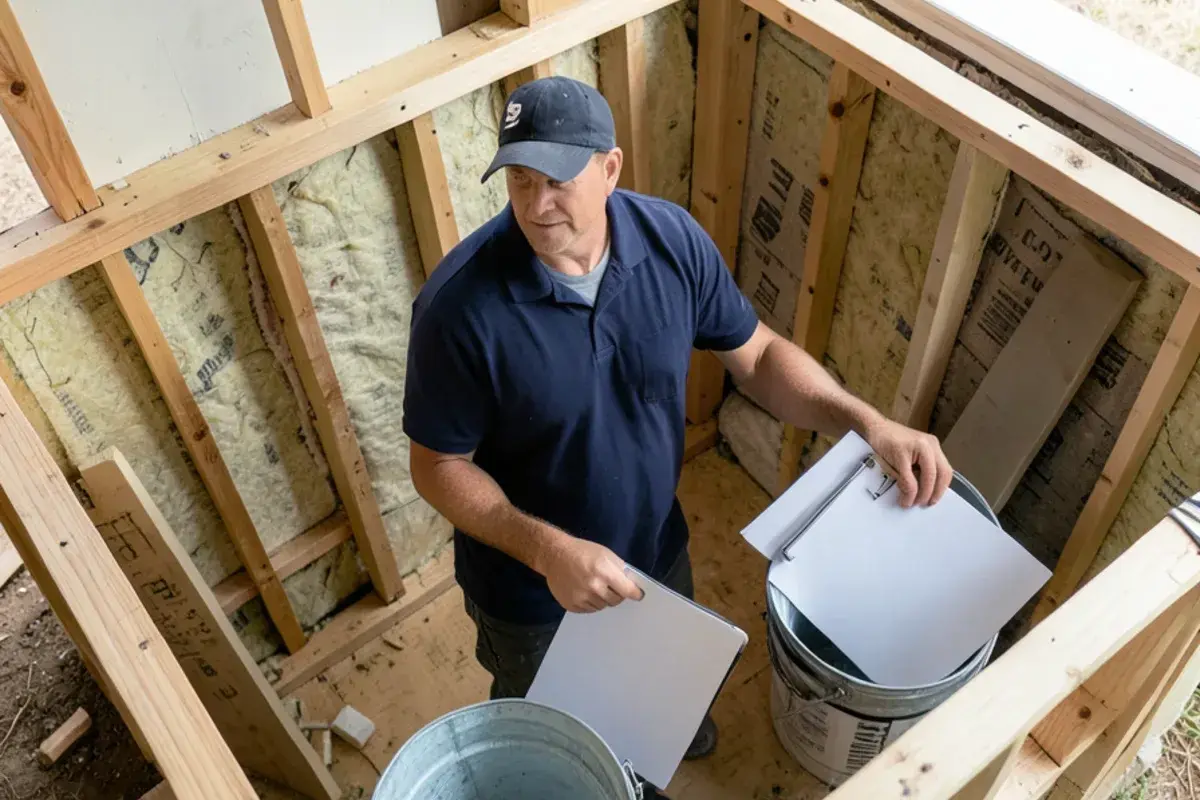
Order prevents most rework. Paint before flooring, for example, means no drips on new floors, while closing a wall early can trap a moisture problem for good.
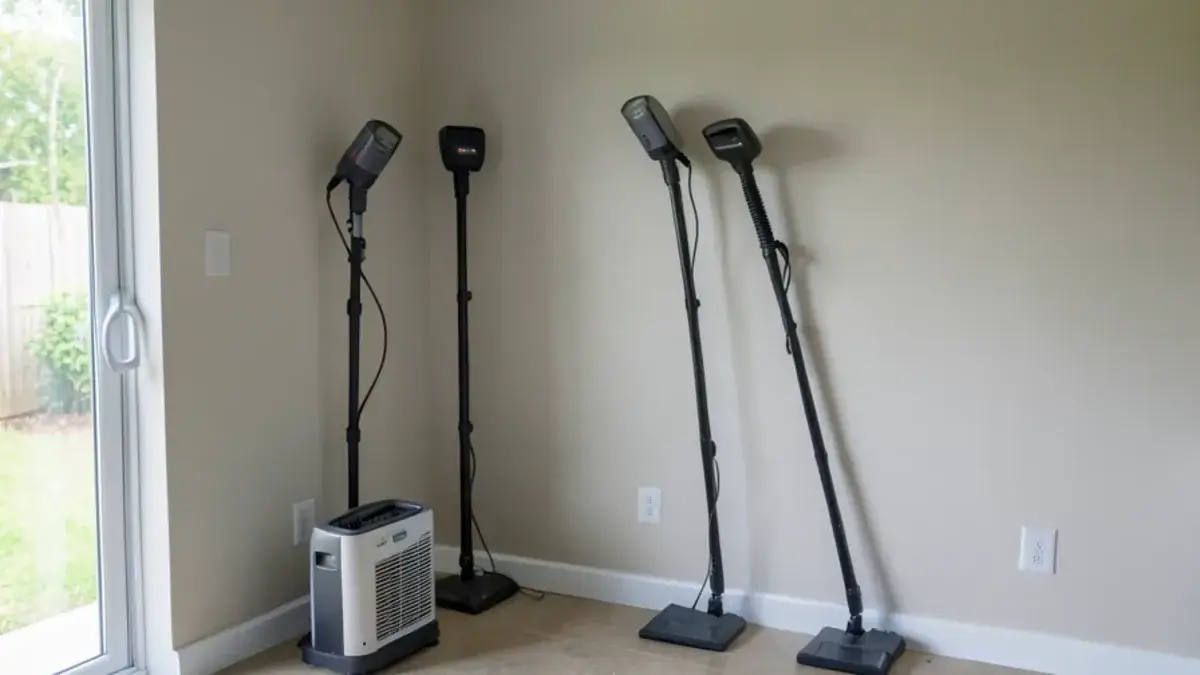
- Confirm dry and fixed. The final moisture log and a last moisture meter pass are reviewed, and plumbing, roof or AC fixes are done and checked.
- Structural repairs. A licensed contractor handles them, with inspections as required.
- Rough trades and insulation. Electrical and plumbing work inside open walls gets finished and inspected, then new insulation goes into dry cavities.
- Drywall, primer and paint. Board goes up, then tape, finish and texture. Stain-blocking primer comes first, then paint.
- Flooring. Installed after the slab or subfloor passes its moisture check.
- Trim and final walk. Baseboards, doors and touch-ups, then a walkthrough with you.
Drying done and the room still open? Let's plan the put-back.
Open 24 hours for emergencies. Non-emergency calls are best between 7am and 7pm.
- 5.0 on Google, 8 reviews
- Family owned since 2020
- Calls go straight to the owner
- Free assessments and estimates
Request a free estimate
Not an emergency? Send the details and we will call you back. If water is still moving, call instead.
Which Repairs Need a Permit in St. Augustine?
The answer depends on the address, the work and the cost. Check before work starts, not after.
| Item | City of St. Augustine guidance | What to do |
|---|---|---|
| Removing wet, storm-damaged material | No permit listed in the Storm Recovery Permitting Guide | Photograph first |
| Drywall and structural storm repairs | Storm damage permit | Prepare insurance scope, photos |
| Replacing floor coverings | No permit listed for storm repairs | Confirm if subfloor is involved |
| Electrical, plumbing, mechanical, roof | Separate permits | Licensed trade applies |
| Single-family work under $7,500 | Exempt since July 1, 2026, with exceptions | Get the exemption approved first |
The City's Planning and Building Department says the under-$7,500 exemption does not cover electrical, plumbing, mechanical, gas, structural or flood hazard area work. It also warns that starting without an approved exemption means getting the permits anyway.
Outside city limits, St. Johns County says permits are needed for most improvements and leaves it to the owner to find out. Contractors must be licensed and registered with the county to get a permit there. An owner who applies directly takes on the owner-builder rules in F.S. 489.103. Call the Building Department before you start. Other cities, such as St. Augustine Beach, run their own offices. Ask any company for its license number and check it on the DBPR site, ours included.
Older Homes: Lead Paint, Asbestos and Historic Review
Age adds three checks. Do them during scoping, because each can change the schedule.
- Lead paint. EPA requires lead-safe certification for anyone paid to disturb paint in homes built before 1978.
- Asbestos. EPA and CPSC say older tile, adhesives and joint compound may contain it, and only testing confirms it.
- Historic review. The City says buildings over 50 years old may need Historic Architectural Review Board approval, so ask early.
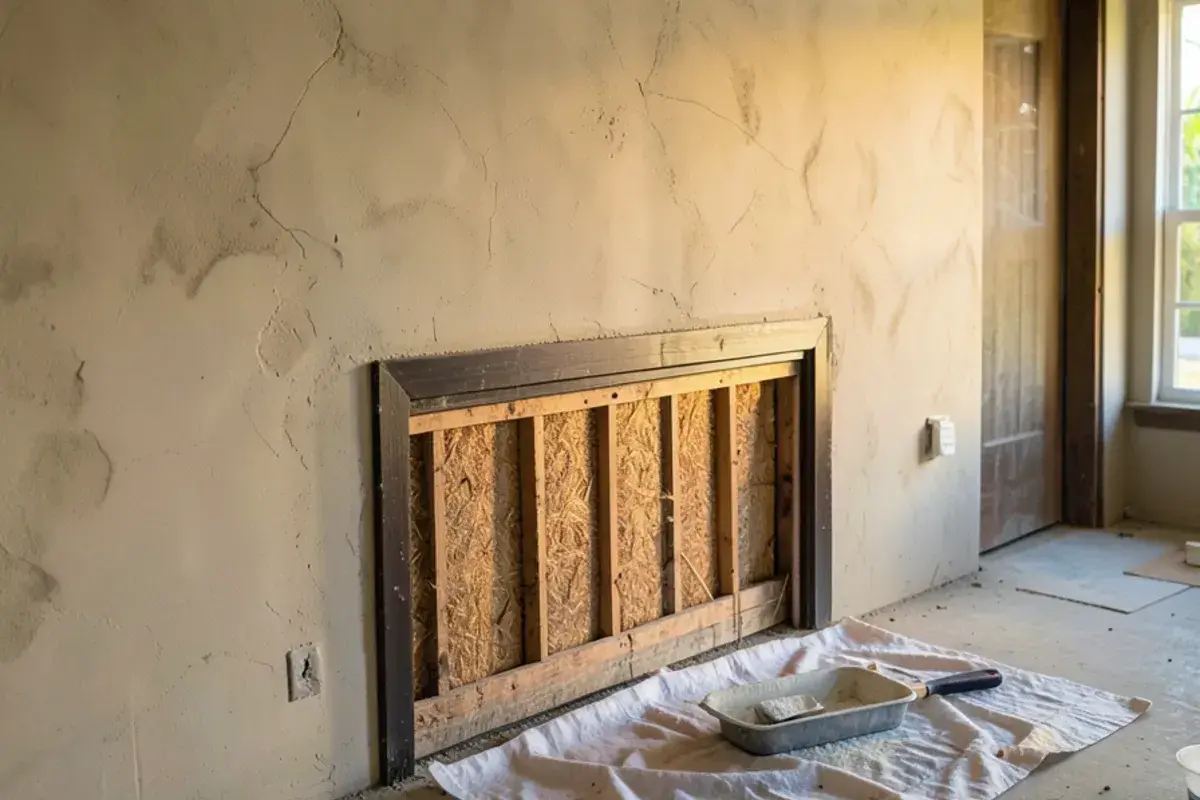
Ask for proof of lead-safe certification from whoever does that work. Plaster, coquina and old wood trim also call for different methods, and many of these repairs need a specialist. We flag them in the scope.
How Long Does Reconstruction Take After Drying?
There is no fixed number. A single room with drywall and paint moves quickly, while a whole-floor job with structural repairs takes much longer.
These items set the pace:
- Permit review and required inspections
- Drying time for compound, primer and paint
- Lead times on flooring and matching materials
- Structural and trade schedules
- Slab moisture tests before flooring
You get the sequence in writing, with the waiting points marked, so a quiet day on site has an explanation.
Repair or Replace: Decisions That Set the Scope
Each item gets its own decision, and the scope shows the reason.
- Cabinets. Repair when boxes are firm and dry, and replace when particleboard swelled.
- Trim. Keep real wood where you can, and replace swollen MDF.
- Doors. Solid doors often recover, while hollow ones often delaminate.
- Flooring. Replace when moisture or matching makes saving it impractical.
- Paint. Repaint the whole wall or room, since patches rarely blend.
If adjoining rooms share a finish, matching may push the scope past the wet area. We show that as a separate line so you can decide.
What Changes a Reconstruction Estimate
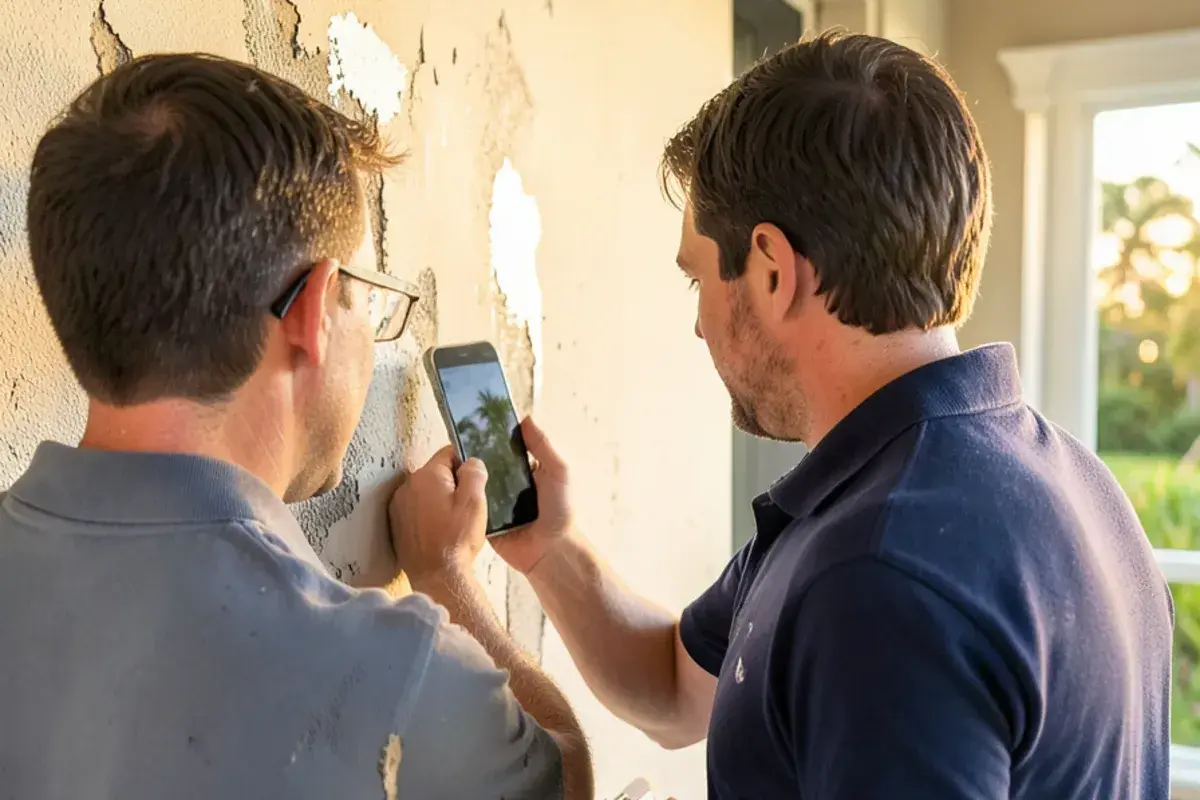
Finish level and matching drive most of the difference. A smooth wall in a home with high-end flooring costs more to put back than a textured wall with carpet.
The written estimate breaks out each item, and the estimate is free. Line items usually include demolition left to finish, drywall square footage, paint area, flooring type, trim and any permit-related cost. Work by outside trades is priced by those trades.
Older downtown homes add lines a newer house never sees: lead-safe paint work, asbestos testing, plaster or old trim that needs a specialist, and possible historic review. In a flood zone, the 50 percent test can add floodplain requirements that change what goes back. We show each of these as its own line, and we give no figure until we have seen the rooms.
Why Use 1 Call to Organize the Put-Back
- The same record from start to finish. Drying logs and photos carry into the scope.
- Direct line to the owner. Calls go to Dal Beggs, not a call center.
- Local family company. Founded here in 2020, owner and son still at the helm.
- Clear lines of responsibility. You see who does what before anything starts.
- Your own trades are fine. Keep your painter or flooring installer, and they get the scope and final readings.
We organize put-back work across St. Johns County, including St. Augustine Beach, and south to Palm Coast. Claim paperwork questions are covered on our insurance claim help page.
What customers say
5.0 stars on Google from 8 reviews. Quoted as written.
“I recently had the pleasure of working with 1 Call Restoration, led by owner Dal, and I couldn’t be more impressed. Dal’s expertise in restoration services is evident from the moment you engage with him; he possesses a deep understanding of the industry and provides practical solutions tailored to individual needs. His professionalism shines through in every interaction, as he maintains clear communication, sets realistic expectations, and follows through on commitments. What truly sets Dal apart is his unwavering trustworthiness—he approaches each project with integrity and transparency, ensuring that clients feel valued and informed throughout the process. I highly recommend 1 Call Restoration for anyone seeking reliable and skilled restoration services.”
Inside reconstruction
Frequently asked questions
How soon after drying can the put-back start?
It starts once affected materials match the dry standard and any open repairs are finished. That means the moisture readings are final, the leak is fixed and any required permit is in hand. We show you the final log first. In a closed-up, air-conditioned home, keeping the humidity down between drying and put-back protects the bare framing.
Do you handle structural repairs yourselves?
No. Rotted framing, damaged trusses, load-bearing walls and similar structural work go to a suitable licensed contractor, who pulls any permit that work needs. We note the issue in the scope, leave the area open for inspection and build the drywall, paint and flooring sequence around that contractor's schedule. You will know who is responsible for each item.
Can I use my own painter or flooring installer?
Yes. It is your home and your choice. We give you the written scope, the sequence and the final moisture readings so your installer knows the surface is ready. Many homeowners keep a trusted painter or flooring store they already know. Tell us at the start and we will plan the schedule around them.
Will the insurance estimate match your reconstruction estimate?
It may not, and differences are normal. We can explain our own estimate line by line and give you the photos and moisture records behind it. We do not negotiate with your insurer or interpret your policy. Questions about payment or coverage go to your insurer, a licensed public adjuster or an attorney, because your policy wording and adjuster decide.
What if the house is in a flood zone?
Ask before you rebuild. Both the City of St. Augustine and St. Johns County apply a 50 percent test comparing repair cost with market value. Above that line, the home may have to meet floodplain rules. Call the City's Planning and Building Department or County Floodplain Management with your address before you order materials or close any walls.
Ready to put the room back together? Call for an estimate.
Open 24 hours for emergencies. Non-emergency calls are best between 7am and 7pm.
- 5.0 on Google, 8 reviews
- Family owned since 2020
- Calls go straight to the owner
- Free assessments and estimates
1 Call Restoration, Saint Augustine, FL. (208) 464-4194.
Related services
Worth reading
Where we handle reconstruction
See all of our service areas.