
Local angles
Water Damage in Historic St. Augustine Homes
By Dal Beggs, founder and owner of 1 Call Restoration. Published November 1, 2026. Updated November 1, 2026.
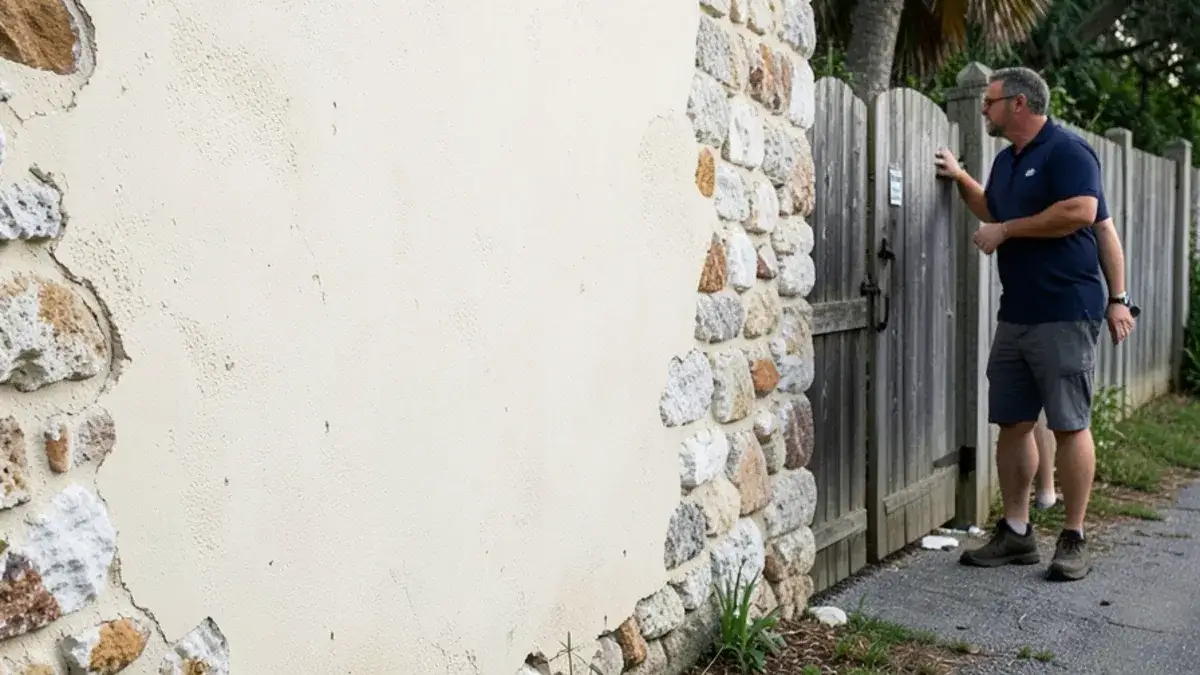
Water damage in a historic St. Augustine home calls for a different plan, because old masonry walls take on water and give it back through the surface. A modern repair that seals that surface can do more harm than the leak. Dry the house, keep the wall breathing and check with the City before historic material leaves the building.
What makes water damage in an old house different?
The walls work differently. A coquina wall is not a sealed box. The City's flood guidance describes coquina as very porous, with a high rate of water absorption, and says moisture naturally wicks upward through the wall to higher, drier stones, where it evaporates.
That means the wall has to keep breathing. The City says inappropriate maintenance and repairs can alter that process and damage the historic material. A 1988 federal study of the Castillo found the stone highly porous, with damp walls and salt bloom in places. The National Park Service reports that hard Portland-cement mortar in the Castillo's Covered Way wall was speeding up the stone's deterioration.
Modern restoration habits can work against all of this. Seal it, paint it and close it up, and the water stays inside.
Water in an older home? Call before anyone cuts the walls
Open 24 hours for emergencies. Non-emergency calls are best between 7am and 7pm.
- 5.0 on Google, 8 reviews
- Family owned since 2020
- Calls go straight to the owner
- Free assessments and estimates
Know the wall before anyone dries it
Identify the materials first, since each one changes the plan. Some 40 coquina structures from before 1821 survive in the Town Plan district, the City says, and coquina stayed in use into the early 20th century. Frame houses need a different approach.
| Material | What it does with water | What to avoid |
|---|---|---|
| Coquina | Absorbs fast, wicks upward, dries at the surface | Portland-cement mortar and stucco, latex paint |
| Tabby | Lime, sand, ash and oyster shell, used for foundations and floors | Patching with hard cement before asking a specialist |
| Lime plaster | Lets a masonry wall dry through its face | Single-coat plaster, sealers, latex paint |
| Wood frame on piers | Open below, with air moving under the floor | Closing the crawl space to speed drying |
| Old wide-board floors | Moves as it dries, and may be irreplaceable | Sanding early, high heat, tearing boards out |
The tabby row rests on what the material is, since the sources we read describe its makeup rather than how it dries. The Ximenez-Fatio House describes tabby as a man-made cement of water, lime, sand, ash and crushed oyster shell, and the City's guidelines list tabby and coquina foundations in its Spanish-period styles. We treat it with the same caution as coquina.
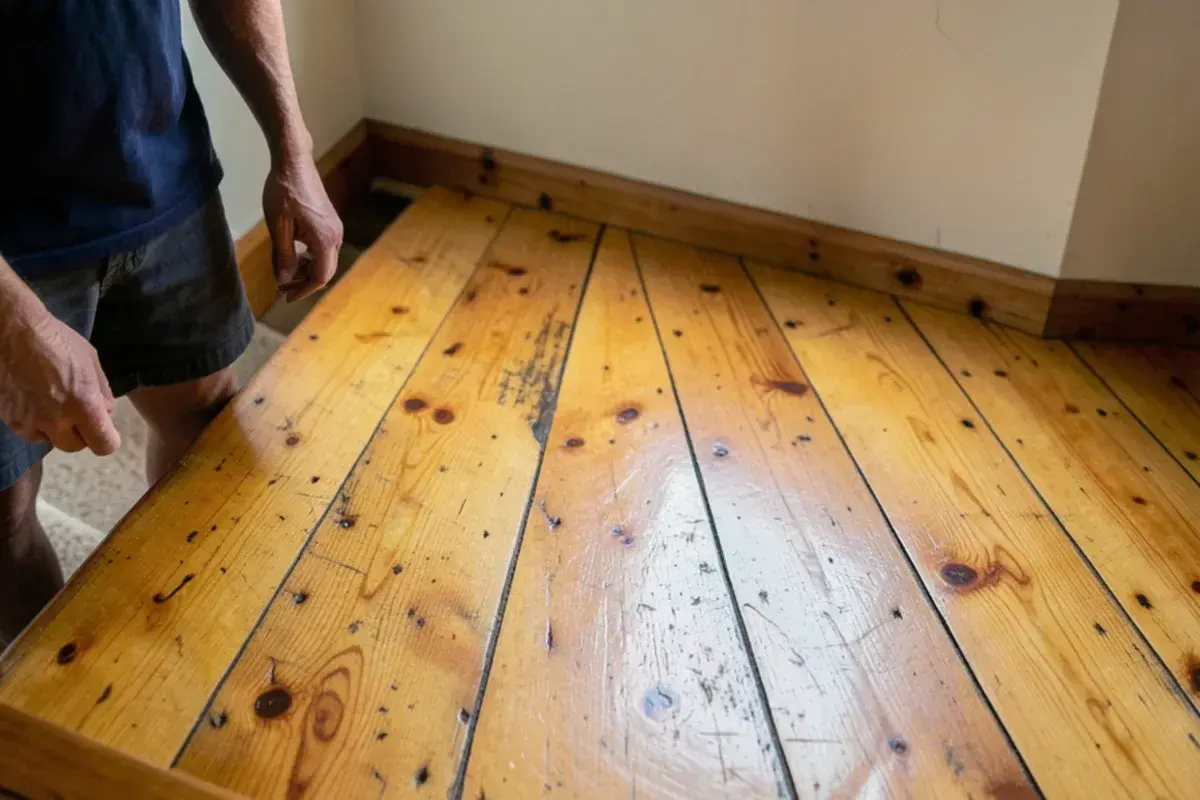
Old pine floors, sometimes sold as heart pine, deserve care too. We could not find a public record of which St. Augustine houses have it, so we identify the wood on site instead of assuming. Read whether wet hardwood can be saved before any board comes up.
What counts as dry in a coquina wall?
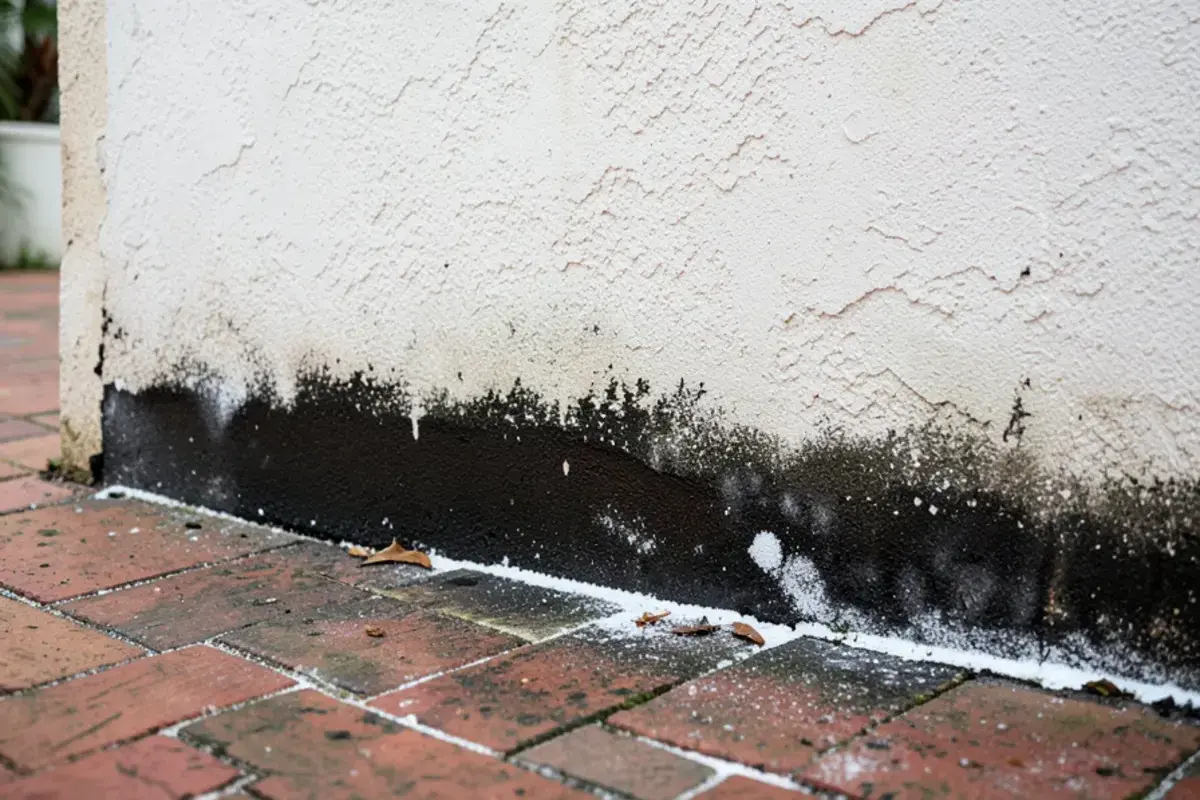
The usual answer needs adjusting. Our dry standard is the reading of unaffected materials in the same home, but the City says rising damp shows as a darkened band along the base of these buildings. So a coquina wall may never read like a drywall partition, and it was not doing that before the leak either.
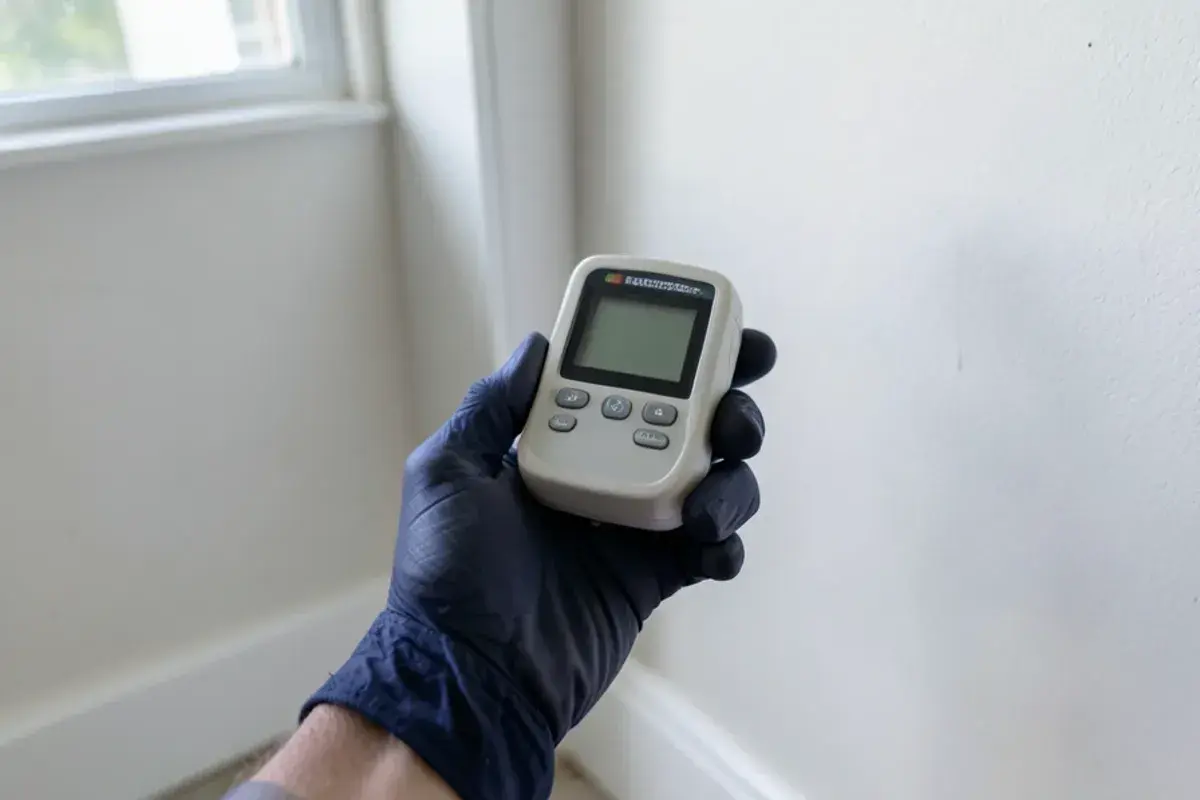
Compare like with like. We read the affected wall at set heights, then read an unaffected wall of the same material at the same heights, away from the water. Pin meters are built around wood, so on stone we treat the numbers as comparisons between spots, never as a percentage. The goal is a wall behaving like its neighbors, tracked through daily moisture readings.
Why a reading can rise with no new leak
Salt is the usual reason. The National Park Service describes a whitish tide mark on damp masonry, often 1 to 3 feet above grade and full of salt crystals. It says those salts make the wall more prone to taking up moisture from the surrounding air. So a coquina wall can read higher in a humid week with nothing leaking, and we watch the trend across several visits and do not chase one number.
Does a repair need HARB review?
Often yes, and the answer depends on the district, the work and the material. The Historic Architectural Review Board reviews work under the City's rules, and the City says a Certificate of Appropriateness is required for most work in its five Historic Preservation zoning districts, HP-1 to HP-5. Here is how the City's documents break it down.
- Permits: exterior or interior projects anywhere in the city still need a building permit, and possibly others.
- Guidelines: the 2011 Architectural Guidelines regulate exteriors and do not address interiors.
- Routine repairs: maintenance in the same materials can be pre-approved, but still needs a permit.
- Full demolition: buildings 50 years or older, or anything in HP-1 to HP-5, go to HARB.
- Partial demolition: matching replacements may be approved by staff instead of the board.
- Digging: soil disturbance over 3 inches deep and 100 square feet may need archaeological review.
A house does not have to be in the Town Plan to count. The City treats a building as historic if it is listed, contributes to a National Register district or is a local landmark, and districts include Lincolnville, Abbott Tract, Model Land Company, North City, Nelmar Terrace and Fullerwood Park.
The City has said its guidelines are due for an update, so confirm current rules with Historic Preservation staff. Whoever performs permitted work pulls the permit. Structural repair belongs with a suitable licensed contractor. We scope and sequence the drywall and paint put-back, and the same goes for flooring.
Drying rules we follow in older homes
Slow and measured wins here. The National Park Service's guidance on moisture in historic buildings puts diagnosis ahead of treatment, and EPA advises dehumidifiers, gentle heat and fans for wet wood. We work the same way.
- Photograph every finish before moving anything.
- Remove the water first, then find out how it got in.
- Run structural drying with LGR dehumidifiers, sized and watched, not maxed out.
- Pull non-historic finishes that trap moisture, as the City's guidance suggests.
- Stop and ask before removing anything original.
- Keep pressure washers off masonry, which the City's guidelines rule out.
- Leave sealers, cement patches and latex paint out of the wall.
The Park Service gives the reason for that last rule. A waterproof coating on the inside of a damp wall, such as cement parging or vinyl wall covering, does not stop the water. It pushes the capillary rise higher up the wall.
When the mold clock meets a slow answer
These two pressures collide, and we would rather say so. EPA wants wet materials dry within 24 to 48 hours, and City staff may not answer a question about original plaster in that time. So we split the job. Water comes out now and drying starts now. Modern finishes trapping moisture can go. Anything that may be original gets photographed and stays until staff or a preservation specialist weighs in. If nobody can say whether it is original, we treat it as original.
The other honest limit is time. The Park Service says broken pipes should be fixed promptly, but a complicated moisture problem may take several months, or up to four seasons, of monitoring to diagnose. We can finish the emergency without finishing that question. A band of rising damp that was there before the leak may still be there after we leave, and slower drying adds equipment days you should expect to see on the estimate.
If river water is the cause, it is Category 3 water, and our flood and storm damage rules apply alongside everything above. Homes in St. Augustine Beach are in a separate city, so HP zoning there is not the question, but check that city's building office before you assume.
Move fast on water, slow on original material
That is the whole decision in an old house. Get the water out and the air drying today, then take your time over anything that cannot be replaced.
Found water in an older home? Call us before anyone starts cutting. We will read the walls, tell you what we see and what we do not know, and give you an estimate at no charge.
Frequently asked questions
Does a dark band at the base of a coquina wall mean I have a leak?
Not always. The City's flood guidance says rising damp appears as a darkened, stained area along the base of coquina buildings, and moisture naturally wicks upward through the stone. A new leak looks different: wet at a height the band never reached, a sudden change, or a nearby plumbing line. Compare it with an old photo, then have the wall read at several heights.
Can a flood cut be made through old lime plaster?
Sometimes, but it should be the last choice, not the first. Historic plaster may be the very finish the City wants kept, and it dries better than drywall. Try drying first, and photograph the plaster before anything happens. If it has failed, ask Historic Preservation staff what the replacement should be, since the City's coquina guidance calls for lime-based, multi-coat plasters rather than single-coat products.
Do I need HARB approval just to dry out my house?
The City's HARB page does not mention extraction or drying, so we cannot give you a blanket yes or no. Its Certificate of Appropriateness requirement covers most work in the five Historic Preservation districts, and permits apply to interior and exterior projects citywide. Removing water is one thing. Removing historic material is another. Call Historic Preservation staff before that second step.
Old house, new water problem? Call for a free assessment
Open 24 hours for emergencies. Non-emergency calls are best between 7am and 7pm.
- 5.0 on Google, 8 reviews
- Family owned since 2020
- Calls go straight to the owner
- Free assessments and estimates
1 Call Restoration, Saint Augustine, FL. (208) 464-4194.
Related services: Structural Drying, Flood and Storm Damage, Drywall and Paint Repair. Serving St. Augustine Beach and the rest of our service area.
Sources
- City of St. Augustine, Flood Guidance for Historic Coquina Structures, September 2021
- City of St. Augustine, Certificate of Appropriateness and HARB
- City of St. Augustine, Do You Own a Property in the City of St. Augustine?
- City of St. Augustine, Architectural Guidelines for Historic Preservation, Fourth Edition, 2011
- City of St. Augustine, Flooding and Historic Properties
- National Bureau of Standards, NBSIR 88-3714, Castillo de San Marcos coquina study, 1988
- National Park Service, Covered Way Wall Preservation Project, Castillo de San Marcos
- National Park Service, Preservation Brief 2, Repointing Mortar Joints
- National Park Service, Preservation Brief 39, Holding the Line: Controlling Unwanted Moisture in Historic Buildings
- Ximenez-Fatio House Museum, Preservation
- EPA, Mold Remediation in Schools and Commercial Buildings Guide, Chapter 4