
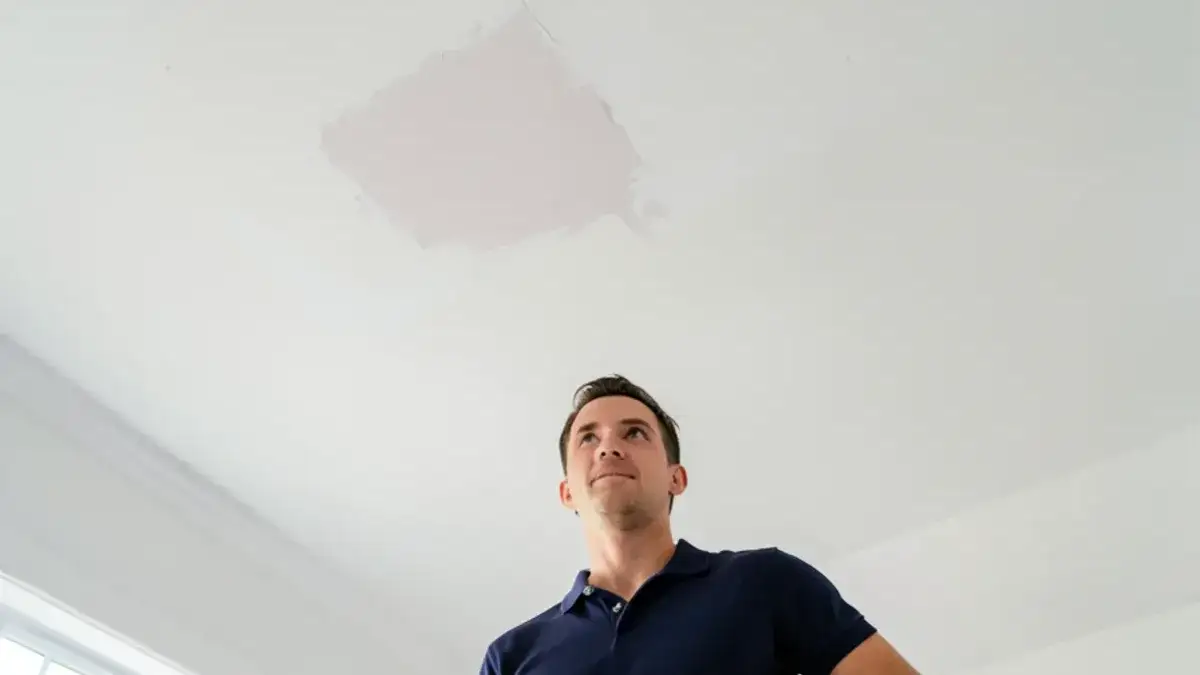
Can Wet Drywall Be Dried, or Does It Have to Go?
Some drywall dries well, and some has to come out. Three questions decide it: what kind of water, how long it stayed wet, and whether the board kept its strength.
| Condition | Usual call |
|---|---|
| Category 1 water, caught early, board firm | Dry in place |
| Category 2 water, porous layers wet | Often removed, depends on readings |
| Category 3 water, sewage or flood | Remove above the wet line |
| Soft, crumbling or sagging board | Remove |
| Visible mold growth | Remove past the growth, as mold work |
| Wet insulation behind the board | Remove board to reach it |
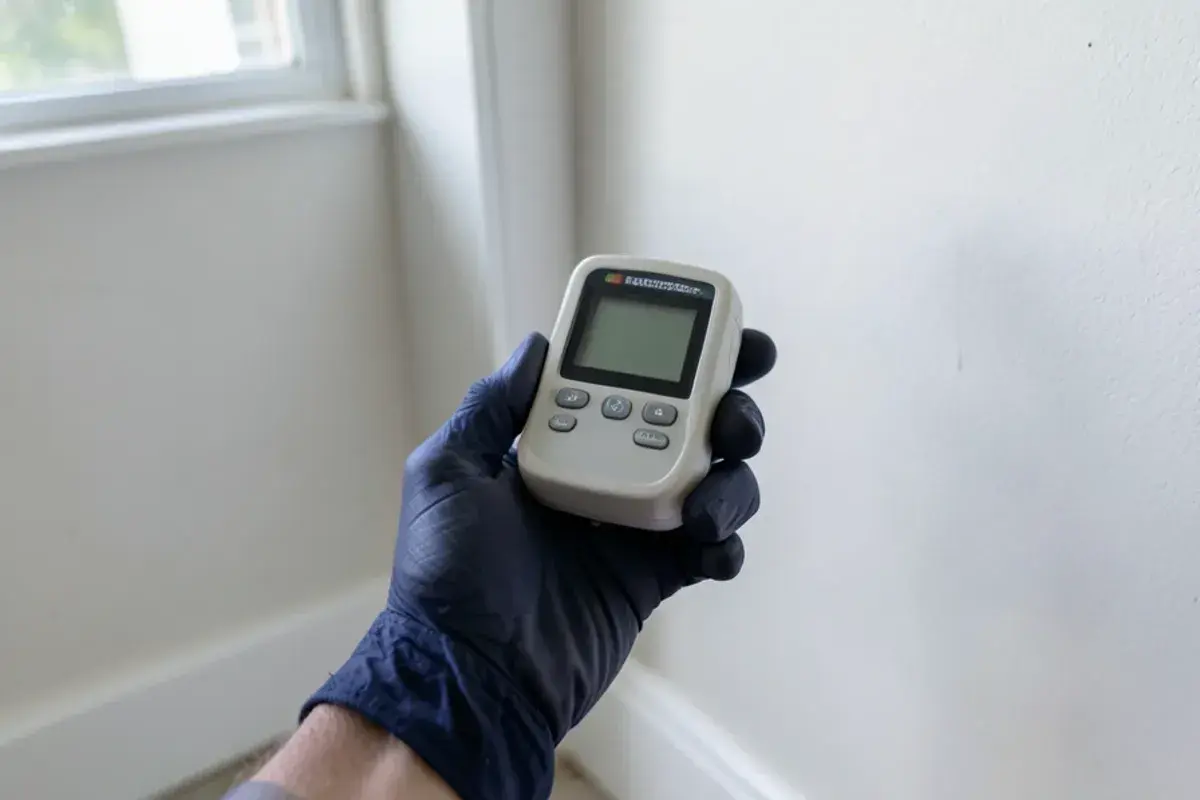
We read the wall with a moisture meter and compare it to dry walls in the same home. That reading is the dry standard, and no new board goes up until the framing meets it.
What Ruins Drywall Around St. Augustine
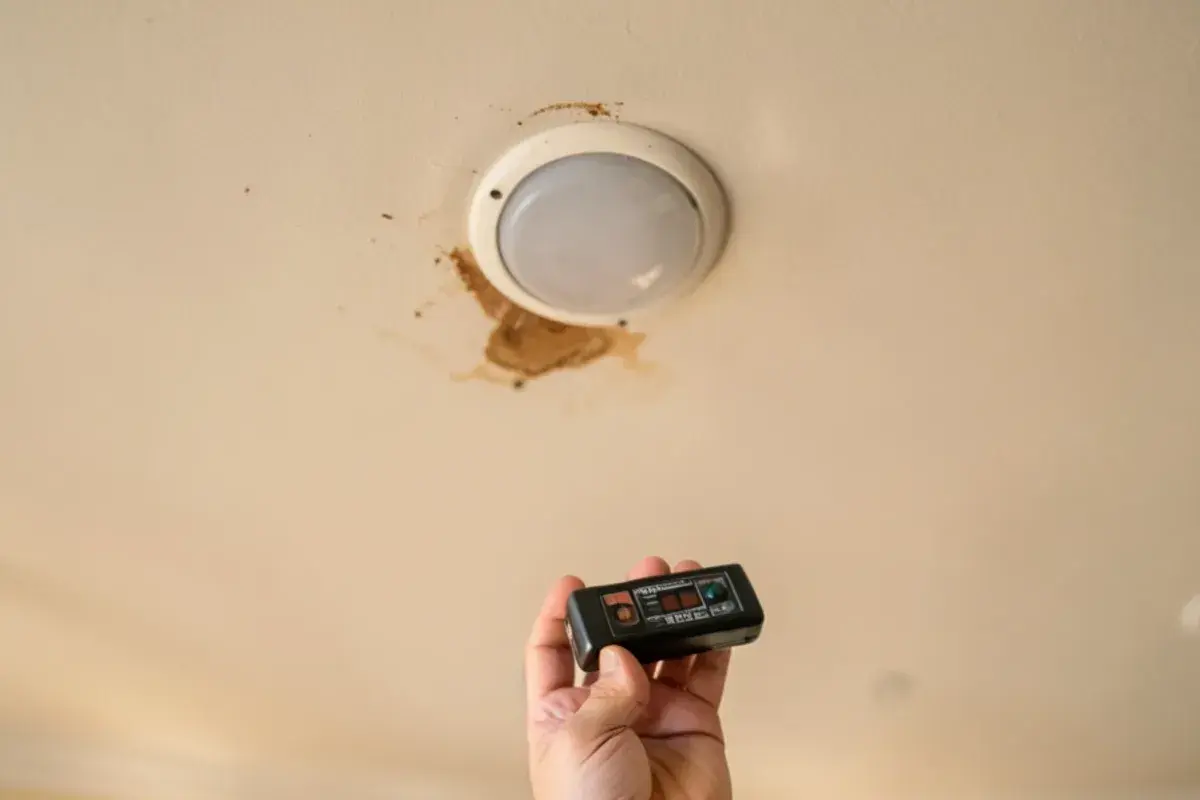
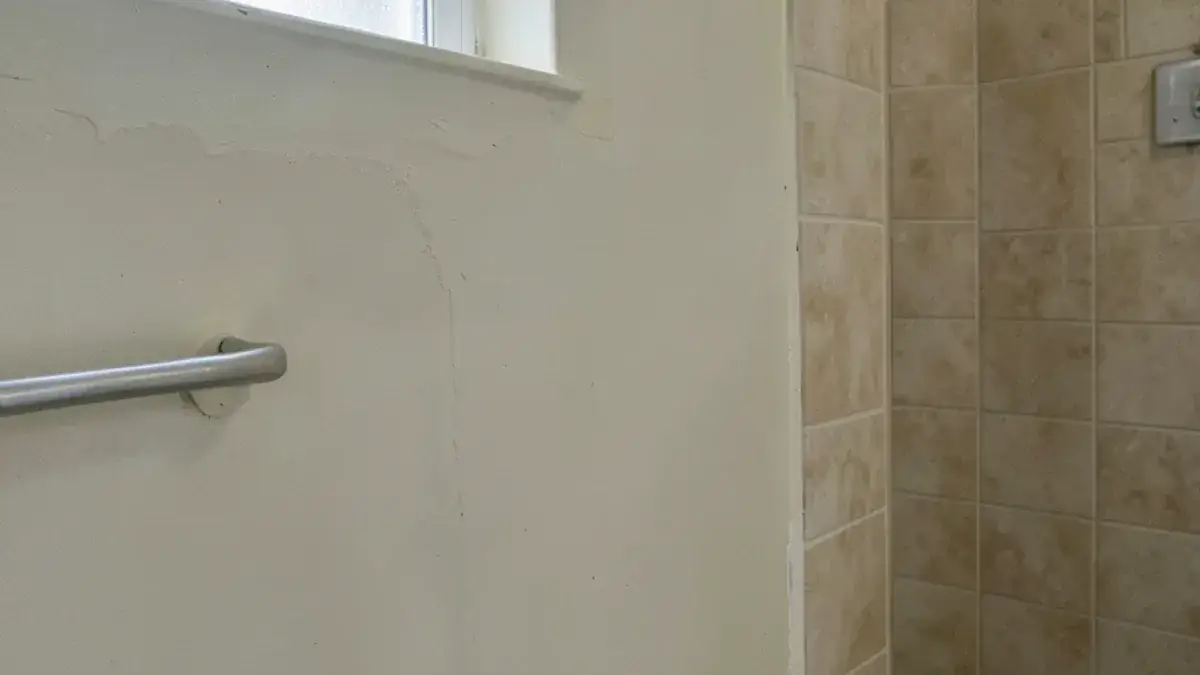
The signs are plain: a ring stain, a sag, bubbling paint, a soft bottom edge, or seams starting to show. The causes are local. About 116 rain days a year find roof and flashing gaps above ceilings. Salt air works on sliders and window corners along the beaches, and rain pushed past them runs down inside the wall. Inland, laundry rooms and AC lines above finished ceilings do the same job from the inside.
Drywall and Paint Repair Options After a Leak
The right repair depends on the damage size and where it sits. Here are the usual options.
- Stain block and repaint. For dry, firm board with only a stain. Lowest cost of the group.
- Patch. For a small damaged spot. Quick, but blending a smooth wall takes skill.
- Flood cut replacement. Lower wall replaced in a straight line, with full cavity access.
- Full ceiling section. For sag or wet insulation above. More repainting, fewer seams.
- Plaster repair. For older homes, usually by a specialist. Slower, keeps the original wall.
Board, Finish and Texture Choices
Match what the wall needs, not just what was there. A few choices matter after a water loss.
Board type. Standard board suits most dry rooms. Moisture- and mold-resistant panels make sense in bathrooms and laundry areas, though they do not replace a working fan or a fixed leak.
Finish level. The Gypsum Association's GA-214 sets finish levels from 0 to 5. Higher levels suit smooth walls and bright side light, where seams show up most.
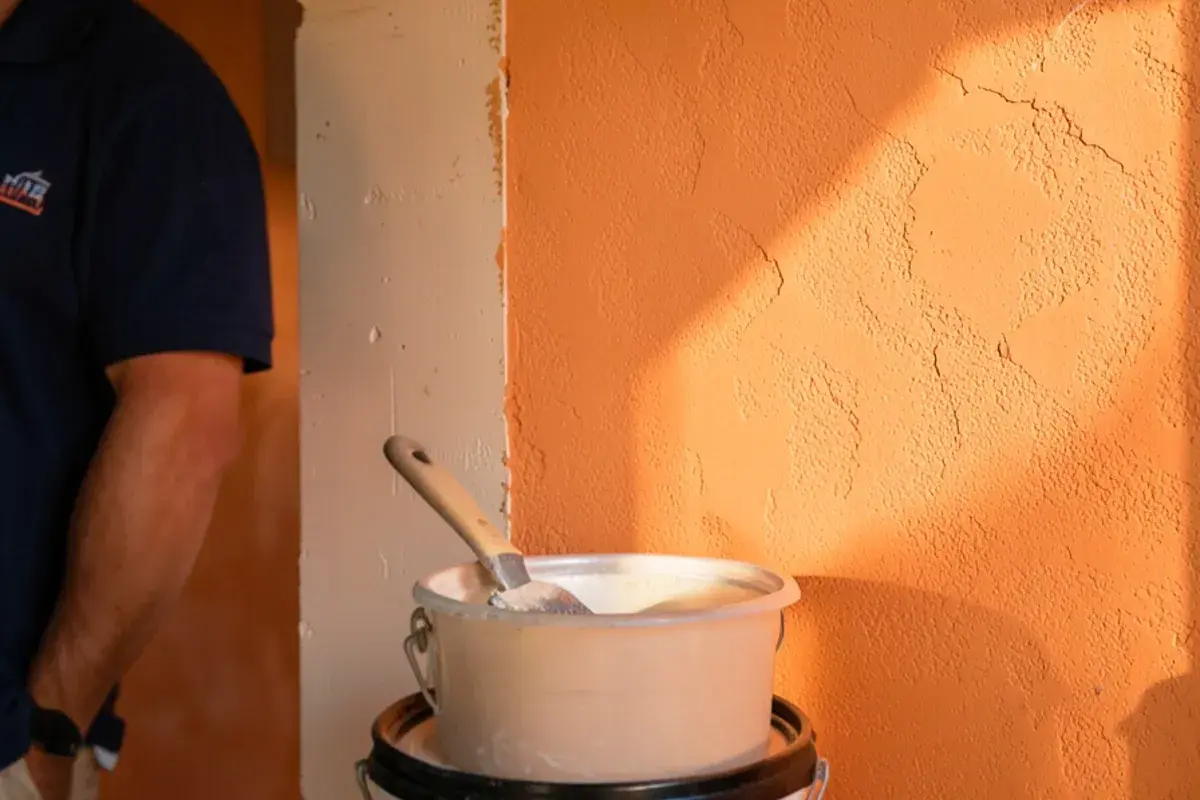
Texture. Orange peel, knockdown and smooth walls are all common here. Texture hides small flaws, so a smooth wall costs more to repair well. A sample on a scrap or closet wall can settle any doubt.
Primer and paint. Stain-blocking primer goes over any stain, then paint in a matching sheen. A flat ceiling paint hides more than a satin one.
How the Repair Is Sequenced
Each step waits on the one before it. This order keeps moisture out of the finished wall.
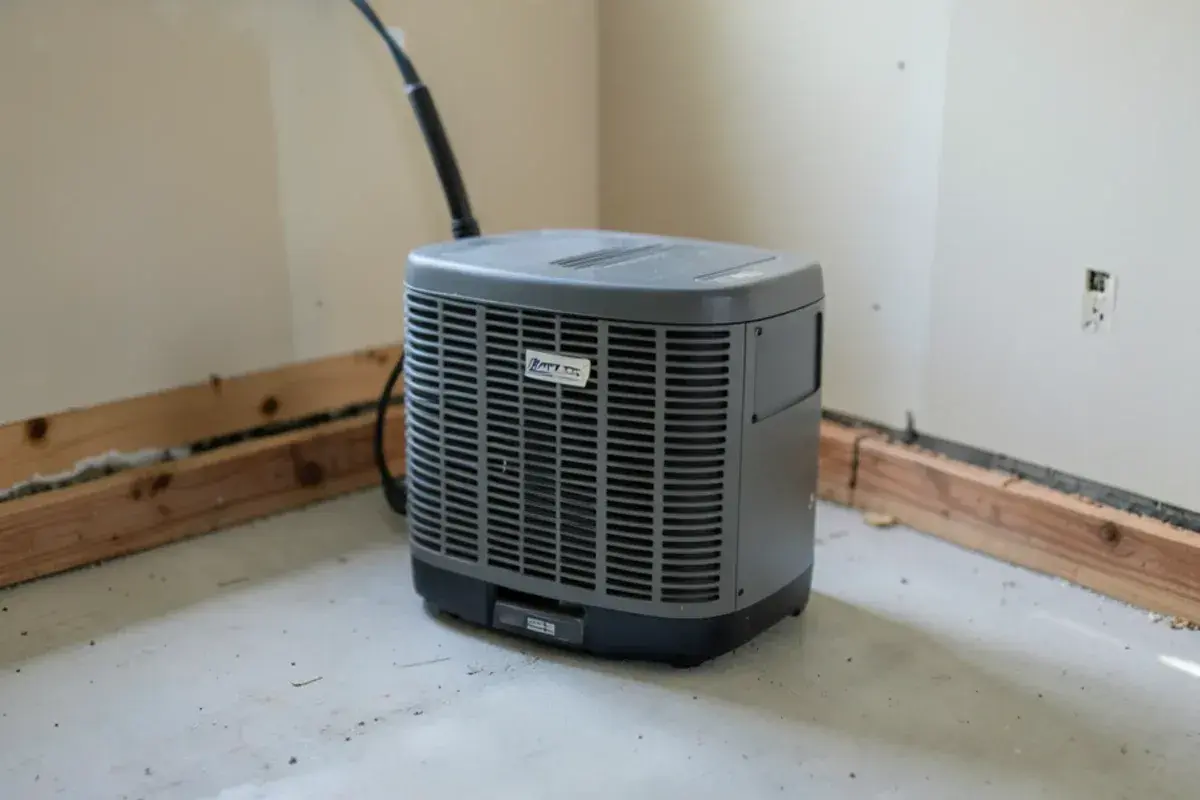
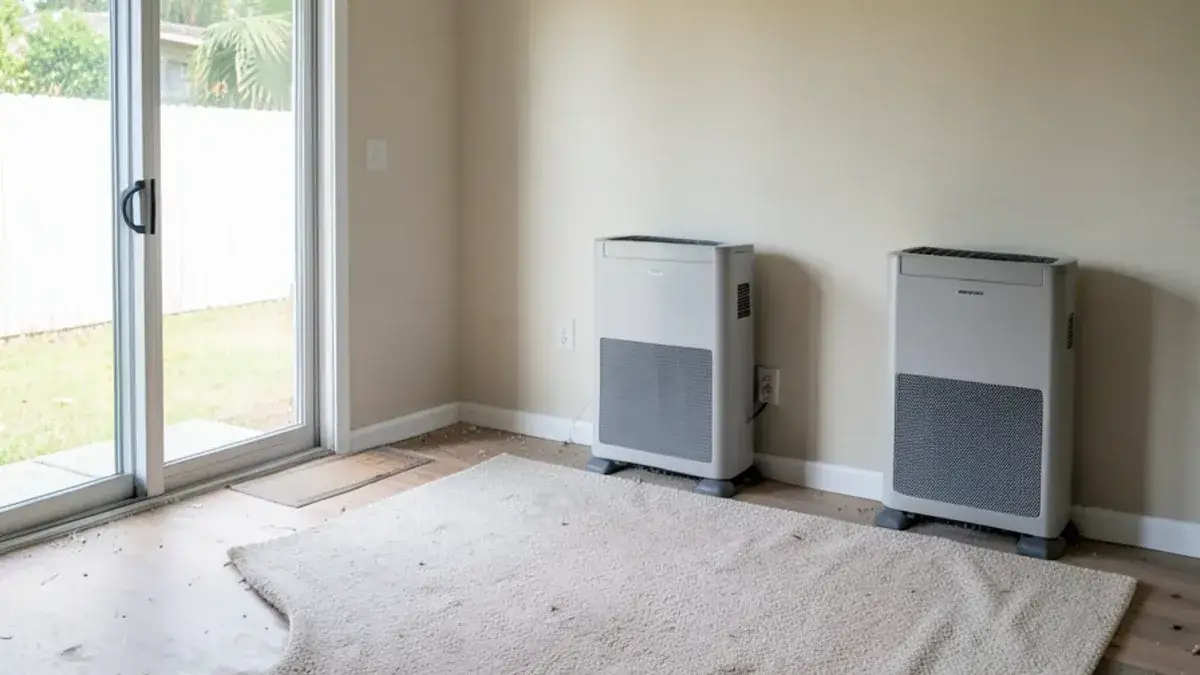
- Confirm the leak is fixed, the air movers and LGR dehumidifiers are out, and moisture meter readings meet the dry standard.
- Photograph the open cavity and framing, then finish any electrical or plumbing inside the wall.
- Replace insulation in exterior walls, then hang board with a gap above the slab.
- Tape, finish and let the compound dry.
- Texture and blend into the old wall, then prime and paint the full wall.
- Reinstall baseboards and do a final walkthrough.
We scope and schedule these steps and keep the records together, so you can see each stage was finished before the next began. Structural problems found behind the wall go to a suitable licensed contractor.
What the Written Scope Covers
Our part starts where drying ends. We confirm the dry standard, measure each wall and ceiling, and set the order of the put-back. The scope also says where each repair stops, which decides whether a seam or a paint line shows later. If a wall needs framing work, that stage is listed separately and comes before board.
- Final moisture readings logged against the dry standard
- Measurements for each wall and ceiling
- Board type, finish level and texture by area
- Stain-blocking primer and paint extent, corner to corner
- Order of electrical, plumbing, insulation, board and paint
- Photos of every open cavity before it closes
Stained ceiling or cut-open wall? Get a written repair scope.
Open 24 hours for emergencies. Non-emergency calls are best between 7am and 7pm.
- 5.0 on Google, 8 reviews
- Family owned since 2020
- Calls go straight to the owner
- Free assessments and estimates
Request a free estimate
Not an emergency? Send the details and we will call you back. If water is still moving, call instead.
Does Drywall Repair Need a Permit in St. Augustine?
Sometimes, and storm damage is the clearest case. The City of St. Augustine Planning and Building Department lists drywall under its storm damage permit, along with structural repairs. Applicants supply photos, the insurance scope and, when an owner applies, an owner-builder affidavit.
Since July 1, 2026, the City also says single-family improvements under $7,500 can be exempt from building permits, with exceptions that include structural work, electrical, plumbing and flood hazard areas. You need the exemption approved before work begins, so do not assume it applies.
In unincorporated St. Johns County, the Building Department says most improvements need a permit, and the owner has to determine that up front. Call them at the number on the county site. Whoever does permitted work pulls the permit, so ask to see it. Ask any company for its license number and check it on the DBPR site, ours included.
Hidden hazards matter too. EPA and CPSC note that older joint compound may contain asbestos, and sanding can release fibers. On older homes, have it tested by a qualified professional before cutting or sanding.
What Moves the Price of a Drywall Repair
Height, texture and paint area matter more than how big the hole is.
- Square footage of board and finish
- Ceiling work and ladder or scaffold access
- Smooth finish versus texture
- How much wall or ceiling gets repainted
- Plaster, old trim or tall rooms
- Lead-safe practices on pre-1978 paint
St. Augustine housing adds its own variables. Downtown's older homes may mean plaster, which is slower and specialist work. A 1970s block home has furred walls, so a flood cut may expose more than the stain suggested. A smooth wall under bright side light calls for a higher finish level. Summer humidity can also stretch compound dry times, adding return trips to the schedule.
Assessments and estimates are free, and the written estimate lists each line. We do not push you to a decision. You can use it to compare, or hand it to your own painter.
After the Paint Dries: Care and Early Warnings
Keep watching the area through the next few rains. A returning stain, soft spot or bubbling paint means water is still getting in.
- Hold indoor humidity under 60 percent, the top of EPA's range
- Leave a small gap between furniture and exterior walls
- Touch up with the leftover paint, and label it
- Call if a musty smell shows up
Save the photos of the open wall. They show what is behind the finish, which helps with future repairs or a home sale.
Why Homeowners Trust 1 Call With the Finish Work
- Dry first. We do not schedule board until the readings say so.
- One point of contact. Dal Beggs takes your calls himself.
- Family owned and local. Founded in 2020 and run with his son.
- Clear scope. Each room, wall and ceiling is listed in writing.
- Plain answers. We show up, assess the damage and give an estimate, with no high-pressure sales.
- Records kept together. Readings, photos and the estimate stay in one file you can keep.
We work with homeowners in St. Augustine Shores, World Golf Village and Nocatee, and throughout the surrounding counties. For the wider picture of what happens after drying, see Reconstruction.
What customers say
5.0 stars on Google from 8 reviews. Quoted as written.
“I recently had the pleasure of working with 1 Call Restoration, led by owner Dal, and I couldn’t be more impressed. Dal’s expertise in restoration services is evident from the moment you engage with him; he possesses a deep understanding of the industry and provides practical solutions tailored to individual needs. His professionalism shines through in every interaction, as he maintains clear communication, sets realistic expectations, and follows through on commitments. What truly sets Dal apart is his unwavering trustworthiness—he approaches each project with integrity and transparency, ensuring that clients feel valued and informed throughout the process. I highly recommend 1 Call Restoration for anyone seeking reliable and skilled restoration services.”
“Dal and his son are so compassionate and truly care about the human and do everything in their power to help your house back to normal. They were punctual and even showed back up to the house with any questions etc, I was very pleased with them and would recommend them to anyone who wants someone honest in this industry that unfortunately doesn’t have many honest companies in it. Dal and his crew have a customer life with us anytime we need their services.”
“I needed a second opinion on my water damage cleanup but about 5 minutes after Dal showed up I realized I should have contacted 1 Call FIRST. They immediately got to work drying out my house and explained everything so well which helped relieve so much of the anxiety I was feeling. The communication and work was all top notch. HIGHLY RECOMMEND!”
Frequently asked questions
Can I just paint over a water stain?
Not until the leak is fixed and the board reads dry. A stain will bleed through ordinary paint, so a stain-blocking primer goes on first. If the area is soft, sagging or shows growth, painting will not help, and EPA says not to paint over mold at all. Check the moisture before buying paint.
Do I have to replace the whole sheet of drywall?
Usually not on walls. A flood cut replaces the lower section, and the seam gets taped and blended. Ceilings are different, because a sag or wet insulation above can run past the stain, so a larger piece is often cleaner. The moisture map shows how far the damage goes, which sets the size of the cut.
Will the new texture match the old wall?
Usually close, and on some walls nearly invisible. Orange peel and knockdown are the common Florida textures, and an experienced finisher can blend them. Old texture can be hard to match exactly, particularly on a large wall under side light. Repainting the whole wall corner to corner hides far more than spot-painting the repair.
How long before I can paint new drywall?
Paint follows the compound, and the compound follows the humidity. Joint compound needs to dry between coats, and in humid air that takes longer, so keep the AC running through the job. Skim or textured walls then need primer first. Follow the product label on dry times, and do not rush a final coat over damp compound.
My home has plaster walls. Is that a problem?
No, but it changes the approach, not the order. Plaster on lath dries slowly and does not patch like drywall, so older St. Augustine homes may need a plaster specialist for a good match. We note it on the scope. In a pre-1978 home, paid work disturbing paint falls under EPA's lead-safe rules, so ask for certification.
Get your wall repair scoped in writing. Call 1 Call Restoration.
Open 24 hours for emergencies. Non-emergency calls are best between 7am and 7pm.
- 5.0 on Google, 8 reviews
- Family owned since 2020
- Calls go straight to the owner
- Free assessments and estimates
1 Call Restoration, Saint Augustine, FL. (208) 464-4194.
Related services
Worth reading
Where we handle drywall and paint repair
See all of our service areas.