
Comparison and decision guides
Water Mitigation vs Water Restoration
By Dal Beggs, founder and owner of 1 Call Restoration. Published November 1, 2026. Updated November 1, 2026.
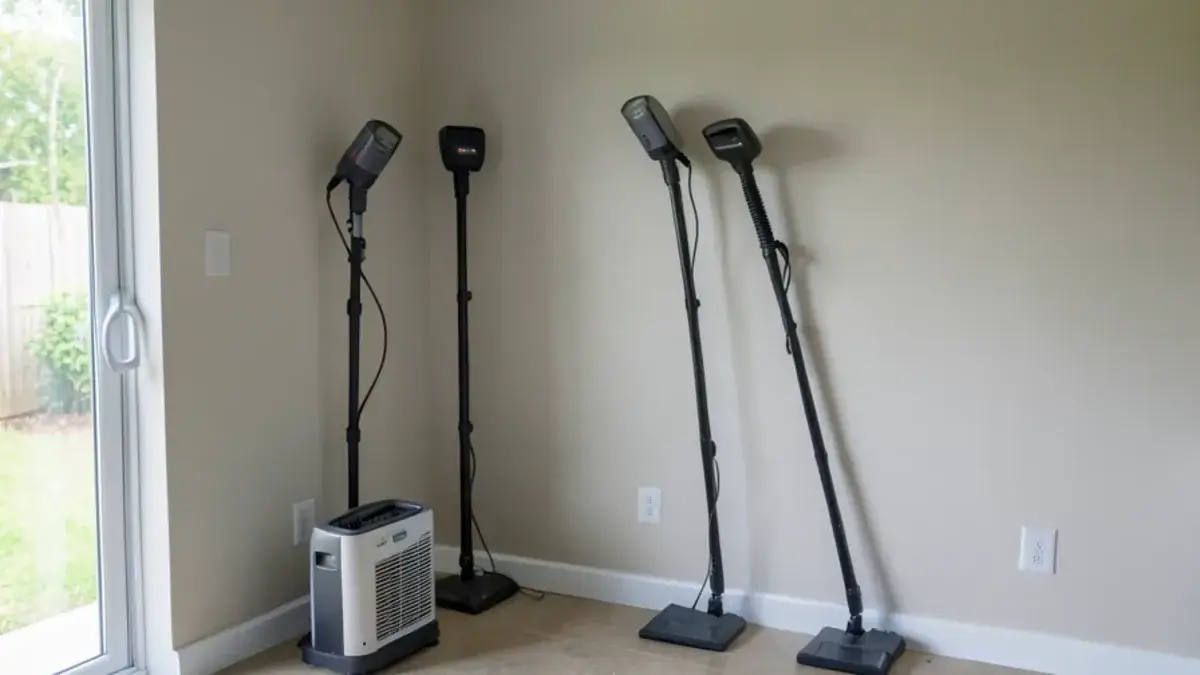
Water mitigation vs restoration comes down to order: mitigation stops the damage from spreading, and restoration puts the home back together afterward. Mitigation is urgent and starts first. Restoration waits until moisture readings prove the structure is dry. Get the order wrong and new drywall closes up a wet wall.
What is the difference between water mitigation and water restoration?
Mitigation is the emergency phase. It removes the water, takes out what cannot be saved and dries what can. Restoration is the repair phase, when drywall, paint and flooring go back.
Both words often appear under one company name and one heading on an estimate, which is why people mix them up. The table shows how they split on a real job.
| Water mitigation | Water restoration | |
|---|---|---|
| Goal | Stop the damage from spreading | Return the rooms to working condition |
| Timing | Starts right away | Starts after the dry standard is met |
| Typical work | Extraction, flood cuts, air movers, LGR dehumidifiers | Drywall, paint, flooring, trim |
| Proof of progress | Daily moisture readings | Finished repairs against the written scope |
| Priced by | Equipment days, demolition, water category | Materials and labor per repair |
| Risk of delay | Spreading moisture and mold | Longer disruption to the household |
Water still spreading? Start the mitigation phase now.
Open 24 hours for emergencies. Non-emergency calls are best between 7am and 7pm.
- 5.0 on Google, 8 reviews
- Family owned since 2020
- Calls go straight to the owner
- Free assessments and estimates
Where does mitigation end and restoration begin?
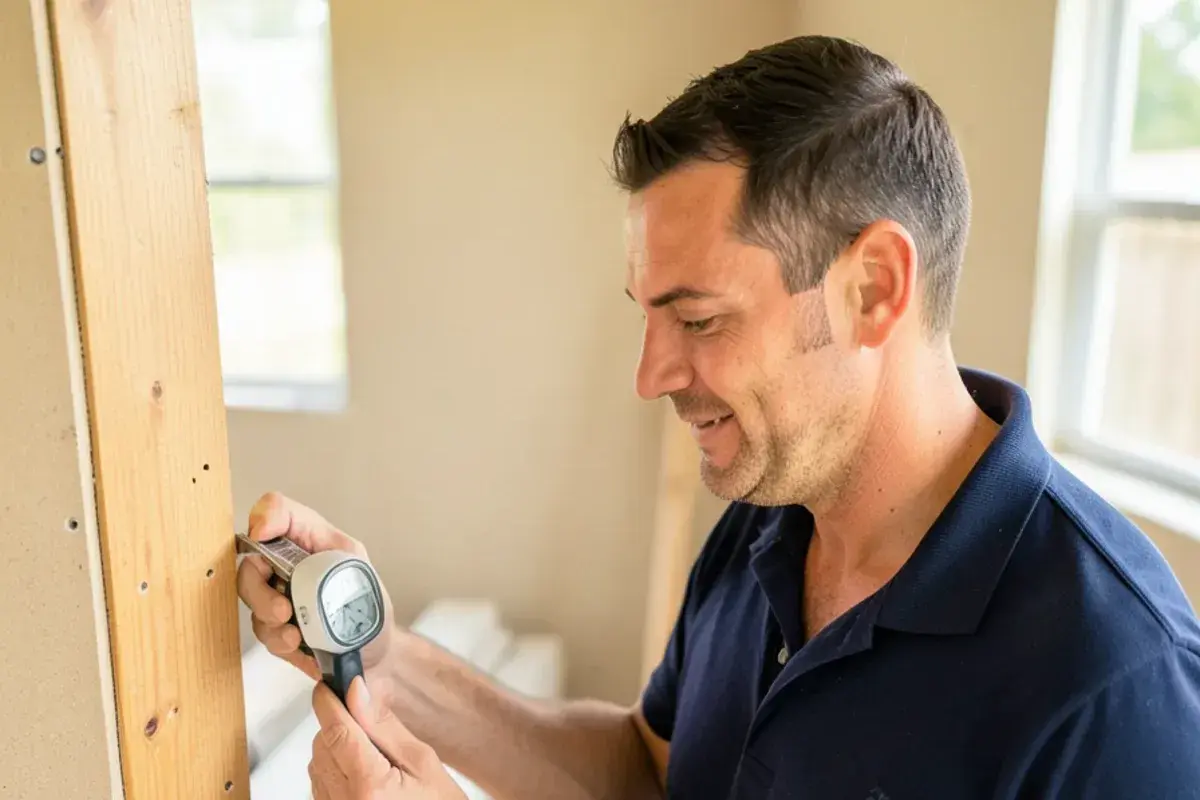
Mitigation ends at a measurement, not on a calendar date. The dry standard is the reading of unaffected materials in the same home, and affected materials must match it before equipment leaves. We log those readings daily on a moisture map.
Skipping that check is the classic mistake. Paint and drywall hide a wet stud perfectly well for a few weeks, and then the wall has to come open again.
The urgency all sits on the mitigation side. The EPA says water-damaged areas and items should be dried within 24 to 48 hours to prevent mold growth. Our water mitigation work runs against that clock, while restoration has no such deadline.
What should change hands at the handover?
The handover is a packet, not a conversation. Whoever does the repairs should start from these items, even if another company did the drying.
- The final moisture log, with the date each area reached the dry standard.
- The moisture map, showing which walls and floors got wet.
- Photos taken before demolition.
- A list of what was removed and what stayed in place.
- Equipment records for the drying.
Ask for one more reading if the room has sat open for a while, because bare framing in a humid month can take moisture back.
Why do the two phases get separate estimates?
Separate estimates exist because the phases are priced on different things, and they become clear at different times. Mitigation depends on how wet the structure is. Repairs depend on what is left once the walls are open and dry.
Ask for these items to be listed apart:
- Mitigation: extraction, demolition, equipment days, disinfection for Category 3 water
- Restoration: drywall, paint, flooring, trim, cabinets, any permitted work
A single lump sum hides both. If a company cannot tell you how many equipment days it projects, ask why, and ask for the daily readings that support the count.
Insurers can also treat each phase in its own way. Your policy wording and your adjuster decide that, so take those questions to them. We provide photos, moisture logs, equipment records and an itemized estimate, and we explain our own estimate line by line.
Sorting the words on an estimate
The trade uses one word for the whole job and for its last phase. Water damage restoration on a sign usually means everything from extraction to the final coat of paint, while "restoration" on an estimate may mean repairs only. So ignore the heading and sort the tasks.
| Word on the paperwork | Usually belongs to | What to ask |
|---|---|---|
| Dry-out | Mitigation | How many equipment days, and which readings support them? |
| Tear-out or demolition | Mitigation | What comes out, and what stays? |
| Remediation | Mitigation, for contamination or mold | Which contaminant, and how large is the area? |
| Reconstruction or rebuild | Restoration | Who does it, and who pulls any permit? |
| Put-back | Restoration | What order, and where are the waiting points? |
| Contents | Either | Are packing and storage a separate line? |
Which phase can wait, and which cannot?
Mitigation cannot wait. Restoration can, and sometimes it should. Once the structure is dry, a pause does little harm and gives you room to make good decisions.
Sensible reasons to hold the repair phase include choosing finishes, comparing repair bids and giving your adjuster time to review the file. Whoever does permitted work pulls the permit, so build that time in as well.
Visible mold changes the order. Containment comes before more demolition, and Florida licenses mold remediation of more than 10 square feet through DBPR. Sampling and formal assessment come from an independent licensed mold assessor, so a structural drying crew should scope what it can see and stop there.
How do drying decisions change the repair bill?
Every cut in the first phase becomes a line in the second. A cheaper mitigation can leave a more expensive repair, and the reverse is also true, so we talk through both sides before demolition.
| Decision during mitigation | What it can save | What it adds |
|---|---|---|
| Cut the drywall higher | Drying time, access to wet studs | More board, tape and paint |
| Dry the wall in place | New drywall and paint | More equipment days and monitoring |
| Lift tile from a wet slab | Drying time | New flooring |
| Leave the tile down | Flooring cost | A slab that can hold the job up |
| Detach lower cabinets | Access to the wall behind | Reinstall work, and older boxes may not survive it |
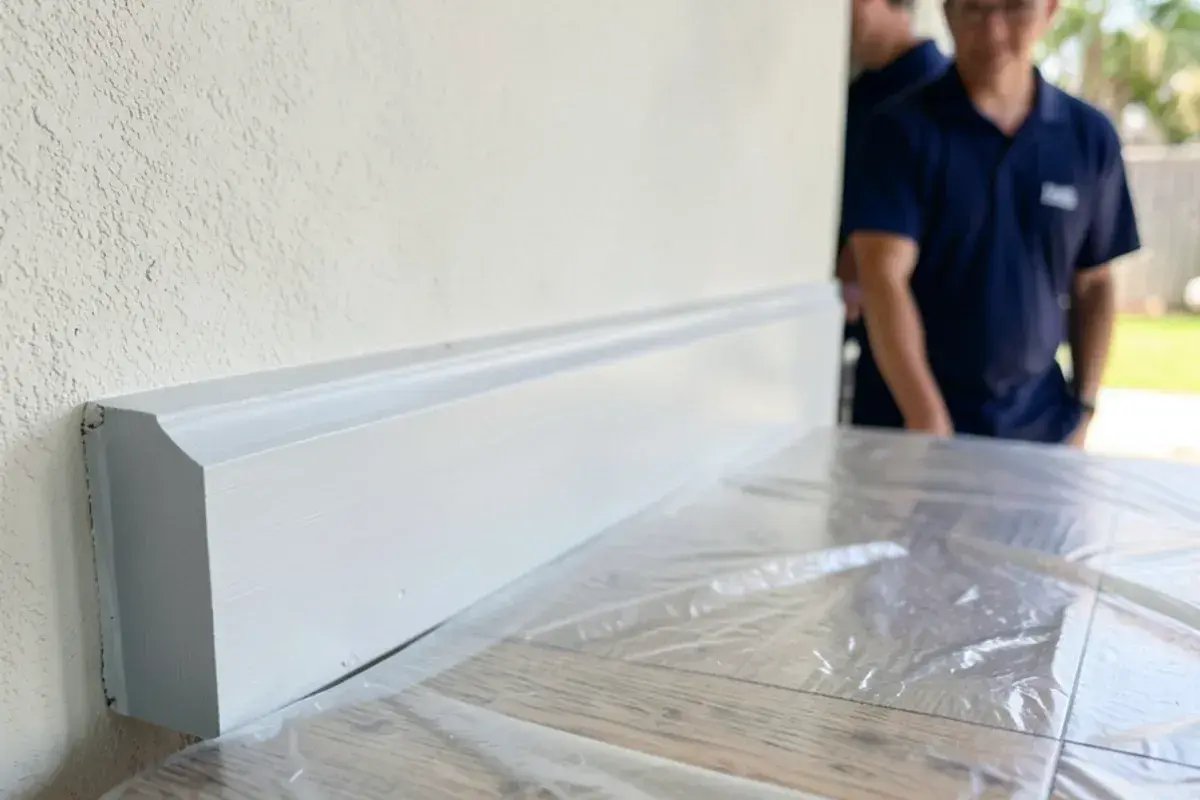
| Pull wood baseboards with care | The cost of new trim | Labor and storage |
Neither column wins every time. Two bids only compare fairly when they make the same calls on this list, so ask each company which ones it assumed. A low drying number that opens more wall may cost you more by the time the paint is dry.
How we keep mitigation and the put-back from colliding
Most rework comes from the handover between phases. These are the rules we follow on it:
- Nothing gets closed up until readings match the dry standard.
- Photos come before demolition, so the original condition is on record.
- Flood cuts stay straight and level, because a clean line makes the drywall repair simpler.
- A plank of flooring and a piece of trim get saved for matching.
- A written scope comes before heavy work, and it names what is staying.
After drying, we scope and sequence the put-back of drywall, paint and flooring. Structural rebuilding goes to a suitable licensed contractor, and you see that handoff in the scope before it happens.
What changes in a newer master-planned home?
A builder warranty can add a step between the two phases. In a newer community such as Nocatee, read your builder warranty papers and tell the builder about the leak before repairs change anything.
That notice should not hold up extraction or drying. Wet materials keep getting worse while a builder warranty request moves through its process. Photos and moisture logs from the first day give the builder and your insurer the same record.

Which phase are you in right now?
One reading answers this. Materials that have not reached the dry standard put you in mitigation, where every day counts. Materials that have reached it put you in restoration, where you can slow down, compare bids and choose finishes. Either way, keep the two scopes on separate pages so each decision has its own number beside it.
If water is still moving, you are in the mitigation phase, and the phone call matters more than the vocabulary. Call us at any hour with an emergency. We will assess the damage, explain which phase you are in and give you a written estimate with no high-pressure sales.
Frequently asked questions
Is water mitigation the same thing as water remediation?
They overlap in everyday use, and most homeowners hear both words for the same emergency work. Mitigation usually means limiting the damage through extraction, tear-out and drying. Remediation often describes cleaning up a contaminant, such as Category 3 water or mold. Ask any company to list the actual tasks in writing, because the task list tells you more than the label does.
Do I have to use one company for both mitigation and restoration?
No, you can use one company for both phases or different companies for each. One point of contact can simplify sequencing, while separate bids let you compare repair pricing. Either way, make sure the repair side receives the moisture records and photos from the drying side. Those records show what was removed, what stayed and when the structure reached the dry standard.
Can repairs start before the house is completely dry?
Repairs should not close up any wet assembly, because new drywall or flooring traps the moisture behind it. Work in an unaffected room can usually go ahead, and ordering materials can start early. For affected rooms, wait until readings match the dry standard. A small delay at this point costs far less than opening a finished wall a second time.
Get the drying started and the put-back planned. Call us.
Open 24 hours for emergencies. Non-emergency calls are best between 7am and 7pm.
- 5.0 on Google, 8 reviews
- Family owned since 2020
- Calls go straight to the owner
- Free assessments and estimates
1 Call Restoration, Saint Augustine, FL. (208) 464-4194.
Related services: Water Damage Mitigation, Structural Drying, Reconstruction. Serving Nocatee and the rest of our service area.