
Cost and insurance
Flood vs Water Damage Coverage: The Difference
By Dal Beggs, founder and owner of 1 Call Restoration. Published November 1, 2026. Updated November 1, 2026.
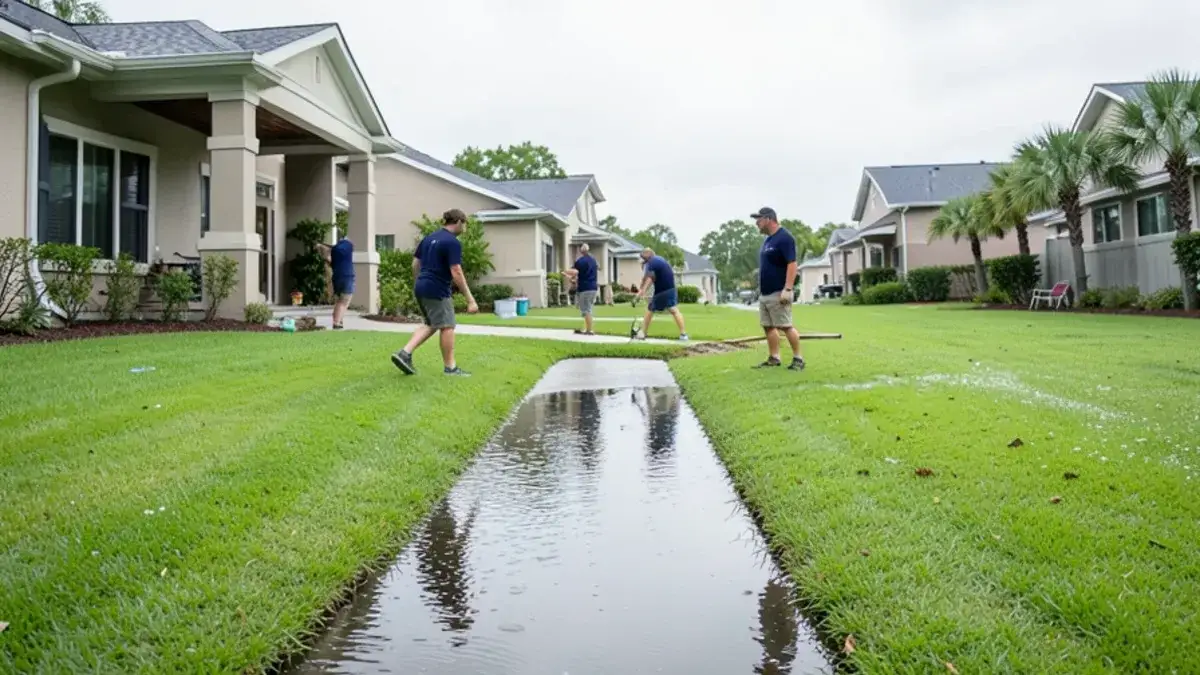
Flood vs water damage insurance comes down to where the water came from. The National Flood Insurance Program defines flood as water covering two or more acres of normally dry land or two or more properties. Florida's Office of Insurance Regulation reports most homeowners policies leave flooding out. Your policies and adjusters decide, and we record the water's path.
What makes water a flood?
Flood has a defined meaning in the National Flood Insurance Program, and it has nothing to do with how deep the water got in your hallway. The NFIP's standard policy describes a general and temporary condition of partial or complete inundation of two or more acres of normally dry land, or of two or more properties, one of which is yours. Overflow of inland or tidal waters and unusual runoff of surface water both count.
So a burst pipe that puts a foot of water in your house is not a flood under that definition, and a few inches of rising water that crosses a neighborhood can be.
Notice where the test looks. It looks at the land around your house, not the rooms inside it. So the first useful fact after any water loss is whether the street and the neighbors got wet too. Photograph that early, because a yard that was under water at dawn can look ordinary by the afternoon.
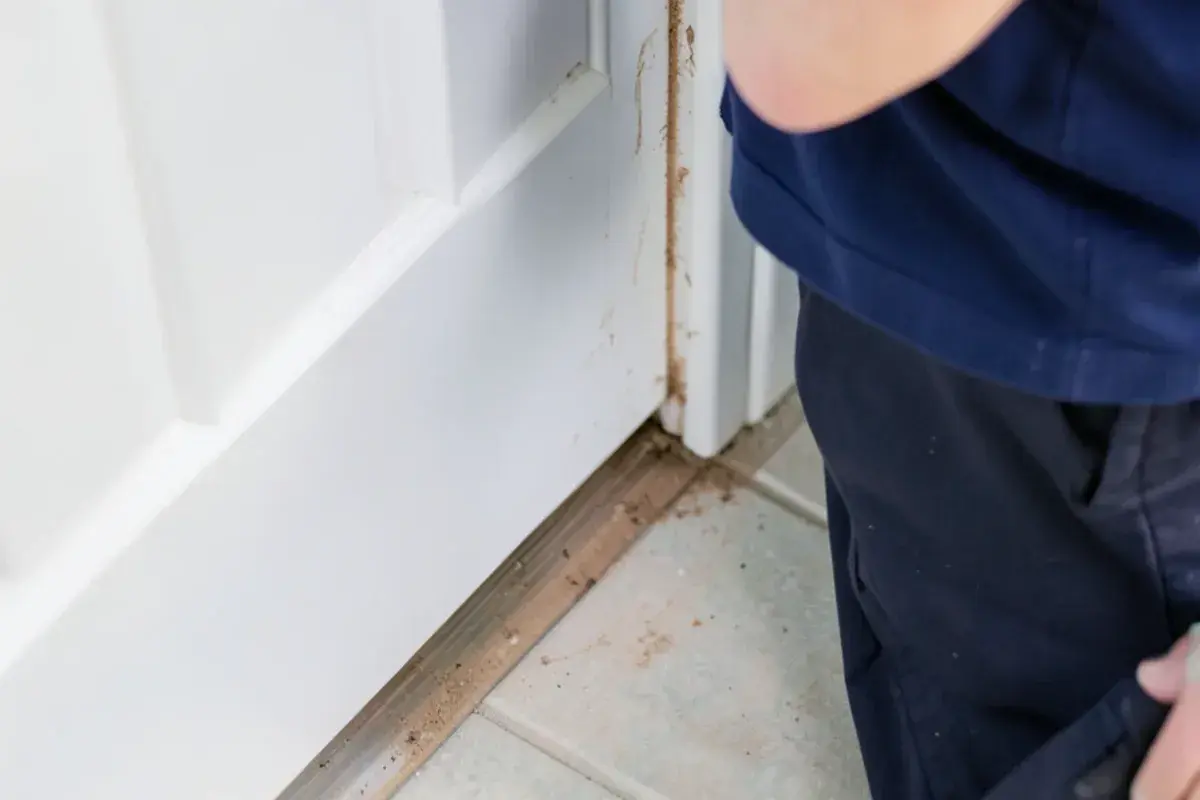
Need the water's path photographed and measured? Call us
Open 24 hours for emergencies. Non-emergency calls are best between 7am and 7pm.
- 5.0 on Google, 8 reviews
- Family owned since 2020
- Calls go straight to the owner
- Free assessments and estimates
Flood and homeowners coverage, side by side
These are usually two separate contracts with two separate sets of rules. The table lists general features only. Your own declarations page and forms have the actual terms.
| Homeowners policy | NFIP flood policy | |
|---|---|---|
| Who sets the terms | Your insurer, under Florida law | FEMA's standard federal policy |
| Flood | OIR: most policies do not cover it | The purpose of the policy |
| New policy waiting period | Set by the insurer | 30 days in most cases |
| Top limits, single-family home | Set by your policy | $250,000 building, $100,000 contents |
| Temporary living costs | Depends on your form | DFS: not included |
| Sewer backup | Depends on form and endorsements | DFS: only with flood damage at the same time |
| Notice or proof deadline | Notice in 1 year, F.S. 627.70132 | Sworn proof of loss in 60 days, unless FEMA extends it |
| Disputes | DFS mediation, subject to restrictions | Not eligible for DFS mediation |
How does the 30-day wait work?
A new NFIP policy generally does not start for 30 days, so buying one as a storm heads for Florida usually comes too late. FEMA's manual lists limited exceptions. Coverage bought as part of making or renewing a loan can start at closing, and a map change that newly places a building in a high-risk zone can carry a one-day wait if you buy within 13 months. The Dwelling Form also says it does not insure a loss from a flood already in progress when the policy term begins.
Program status matters too. Congress has kept the NFIP going on short extensions, and FEMA listed December 11, 2026 as the current end date when this was written in November 2026. Treat that as a date to re-check, not a settled fact, because Congress can move it at any time. During a lapse FEMA says it would stop selling and renewing policies, though valid claims can still be paid with available funds. Check FEMA's reauthorization page for the latest.
Where does a flood policy stop?
A flood policy is not a general water policy. FEMA's Dwelling Form carries its own limits and exclusions, so do not assume one contract picks up whatever the other leaves out. These are general features of the federal form. Your own form and your adjuster apply them to your facts.
- Rain and spray: the form lists rain, sleet, hail and water spray among its exclusions.
- Backup and seepage: sewer or drain backup, sump overflow and seepage are listed unless a flood in the area is the proximate cause.
- Problems inside the home: the form lists damage from a condition confined to the dwelling or within your control, such as failed water lines.
- After the water drops: that same clause names failure to inspect and maintain the property after a flood recedes.
- Deductibles: the form applies separate deductibles to the building and to personal property.
- Valuables: it sets a $2,500 limit on any one loss to items such as artwork, jewelry and collectibles.
One more line matters on low ground. The form includes Increased Cost of Compliance, up to $30,000 with building coverage, toward meeting a local floodplain law after a flood. It has its own eligibility tests, so ask your flood insurer how they read for your home.
When one storm brings both kinds of water
A single storm can send water in from the roof and the ground at once. Then each insurer may look at its own part, and the record of what happened in each room becomes important.
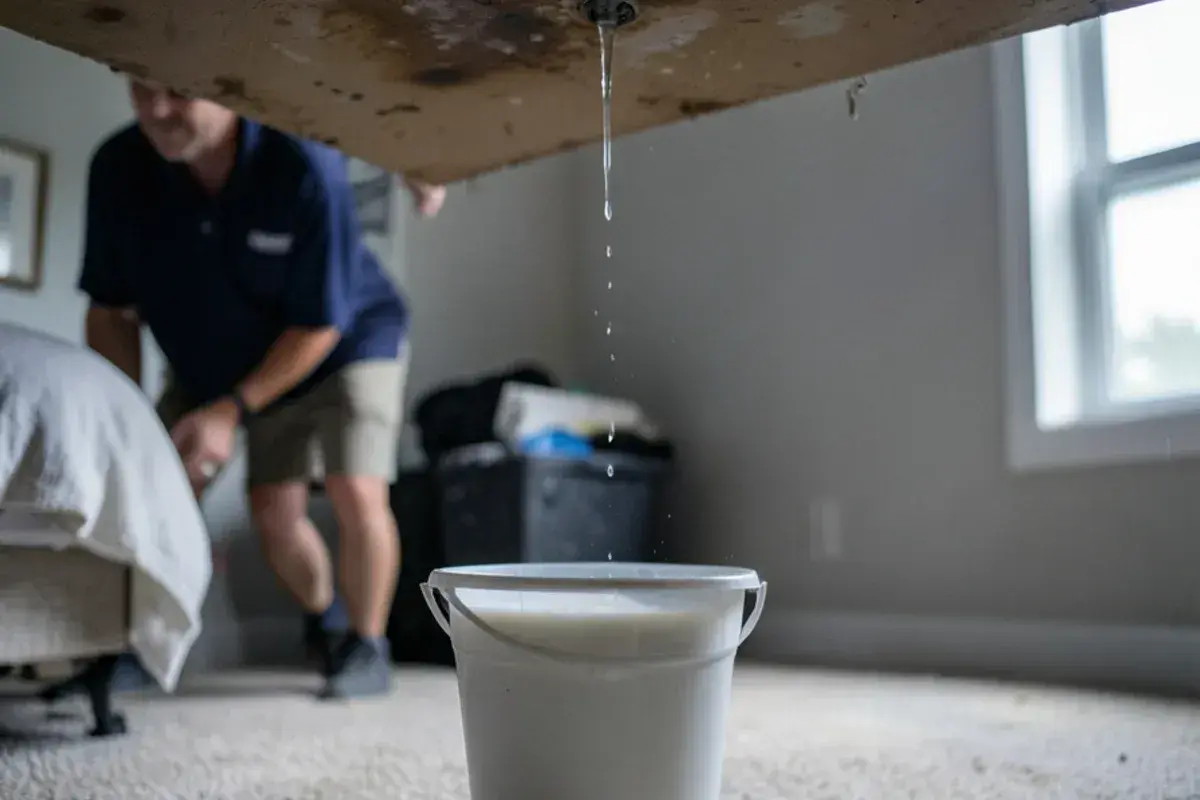
Here is how to think about the path of the water:
- Came down from above, through a ceiling or window: note the opening.
- Came up from the ground, under doors or through a slab edge: note the waterline.
- Came from a pipe or appliance: keep the failed part.
- Came back up through a drain: photograph the fixture.
Report to every insurer you think may be involved, and let them sort it out. Keep each insurer's claim number on its own page of your notes, because they run on different rules and different clocks.
The gap between those clocks is wide. F.S. 627.70132 gives a year from the date of loss for notice on a homeowners claim, and for a hurricane that date is landfall. FEMA's form asks for prompt written notice, damaged property separated from undamaged, an inventory, and a signed, sworn proof of loss within 60 days after the loss. It also says an adjuster's help with that form is a courtesy and does not excuse the deadline, unless the insurer chooses to accept the adjuster's report instead. Ask your flood insurer which it wants. Our claim filing guide walks through the state dates.
New construction does not change any of this. A newer home in Nocatee sits under the same definitions as a 1970s block house, and the deciding fact is still what the water did.

What we record, and what we leave to your adjuster
We document the path of the water and leave the coverage call to your adjusters. A contractor in Florida may not interpret policies or advise on coverage, so we will not tell you which policy applies.
What we hand over:
- Photos of waterlines, openings and failed parts before demolition.
- Moisture maps that show which rooms and how high.
- Water category for each area: 1, 2 or 3.
- Daily readings, an equipment log and an itemized estimate.
What a moisture map cannot prove
A meter shows where a material is wet today. It does not always show how the water got there. A wall wet from the base up under a dry ceiling points one way, and a wet ceiling over a dry baseboard points the other. After a long storm both patterns can sit in the same room. When they do, our record says so, and we do not pick a story to suit anyone.
Speed also pulls against the record. Category 3 water means wet drywall and pad should leave soon, yet that drywall carries the line you want on file. So we photograph each wall and measure the line from the floor before any cut, and then demolition goes ahead. Tell your insurer what is about to come out and when. If the adjuster cannot get there quickly, whether to wait is your decision, and the wet materials stay wet while you make it.
Our insurance claim help page explains these limits. The drying work itself is on the flood and storm damage and storm damage restoration pages.
Find out which water you have
The land around your house decides whether flood wording is even in play, and the path of the water decides what belongs in the record. Your insurer, a licensed public adjuster or an attorney can answer the coverage question. The question of what happened in your house is one we can help with. Call, and we will come out, map the moisture and write you a free estimate. Those facts stay useful whichever policy ends up answering, and the assessment does not depend on whether you ever make a claim.
Frequently asked questions
Is storm surge flood or wind damage for insurance purposes?
Rising water from a storm surge fits the NFIP's description of flood, which includes overflow of tidal waters. Wind that tears open a roof and lets rain in is a different cause, and it is often handled under a different policy. Many hurricane losses involve both, so your insurers may each look at their part. Photograph the waterline and any roof or window openings, and ask each insurer how they will treat it.
Do Citizens customers have to carry flood insurance now?
Most will. Citizens says that under section 627.715 of the Florida Statutes, most new and renewing personal residential policies with wind coverage must have flood insurance by January 1, 2027, following a phase-in by home value. Condo unit owner policies are among the exemptions. Citizens lists its own rules, and they can change, so confirm your status with your agent or with Citizens well before your renewal date.
Is a private flood policy the same as an NFIP policy?
No, not necessarily. Private flood policies are written by insurance companies and set their own terms, so waiting periods, limits and what they include can differ from the NFIP's. OIR notes that flood coverage must be purchased separately from a typical homeowners policy, and that a mortgage may require it. Ask an agent to compare the actual forms side by side, including the deductible and how contents are handled.
Rain, surge or a pipe? Call and we will record what happened
Open 24 hours for emergencies. Non-emergency calls are best between 7am and 7pm.
- 5.0 on Google, 8 reviews
- Family owned since 2020
- Calls go straight to the owner
- Free assessments and estimates
1 Call Restoration, Saint Augustine, FL. (208) 464-4194.
Related services: Insurance Claim Help, Flood and Storm Damage, Storm Damage Restoration. Serving Nocatee and the rest of our service area.
Sources
- FEMA, Standard Flood Insurance Policy, Dwelling Form
- FEMA, NFIP Flood Insurance Manual, April 2024
- FEMA, Congressional Reauthorization of the NFIP
- Florida Office of Insurance Regulation, Flood Insurance
- Florida Department of Financial Services, Flood Insurance Coverage FAQs
- Florida Department of Financial Services, Mediation FAQs
- Citizens Property Insurance, Flood
- Florida Statutes 627.70132, Notice of property insurance claim
- Florida Statutes 489.147, Prohibited property insurance practices