
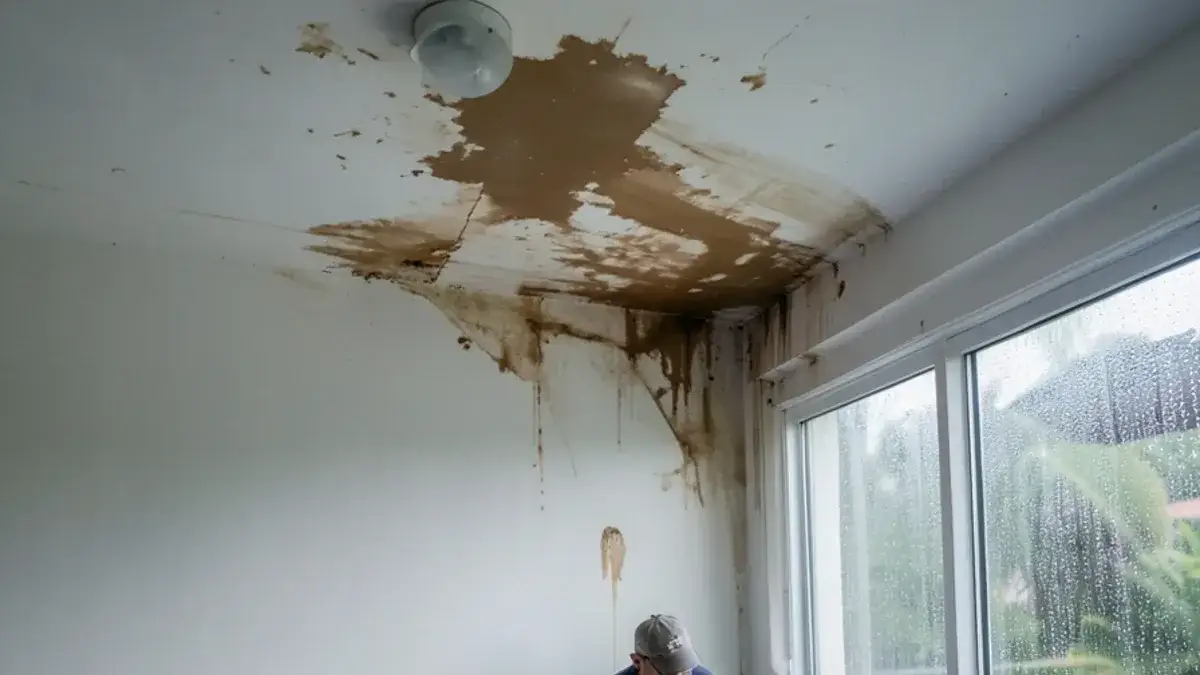
What storm damage restoration covers inside a home
We handle the water that a storm put inside the house. That means finding it, removing what it ruined and drying what can stay.
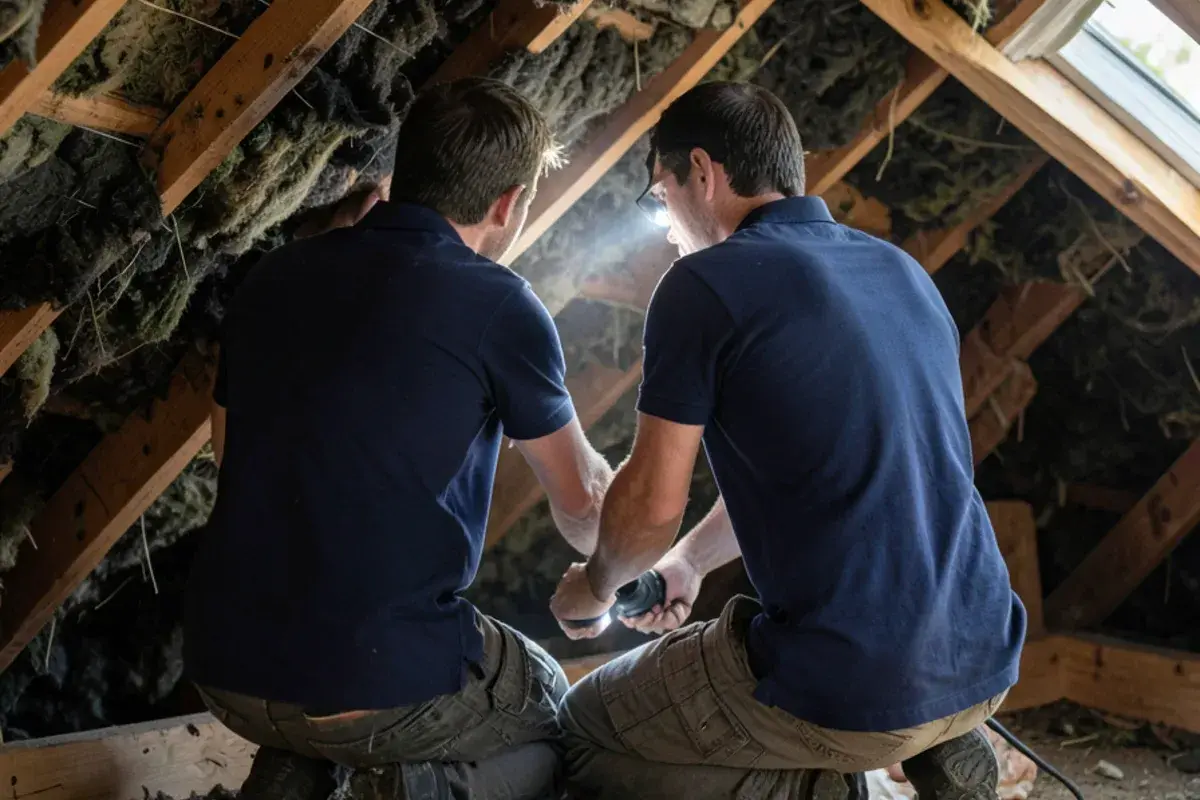
The first job is working out how far the water went. Rain can enter at a soffit vent or a window corner, then run along rafters and studs before it shows, so the room with the stain may not be the only wet room. We follow the readings into the attic and the rooms beside it, then scope only what they support.
We stay on the inside of the house. A roofer, glazier or stucco contractor closes the way in, and we can cover an opening in the meantime so the interior can dry. You get these from the visit:
- A moisture map of every affected wall, ceiling and floor
- Photos of the damage before demolition
- Removal of wet insulation, drywall, carpet and pad where needed
- Air movers and LGR dehumidifiers sized to the wet area
- Daily moisture readings until the dry standard is met
- A written scope before heavy work starts
If water rose from outside rather than blowing in, start with our flood damage restoration page, since that water is handled as Category 3.
Signs that rain got inside
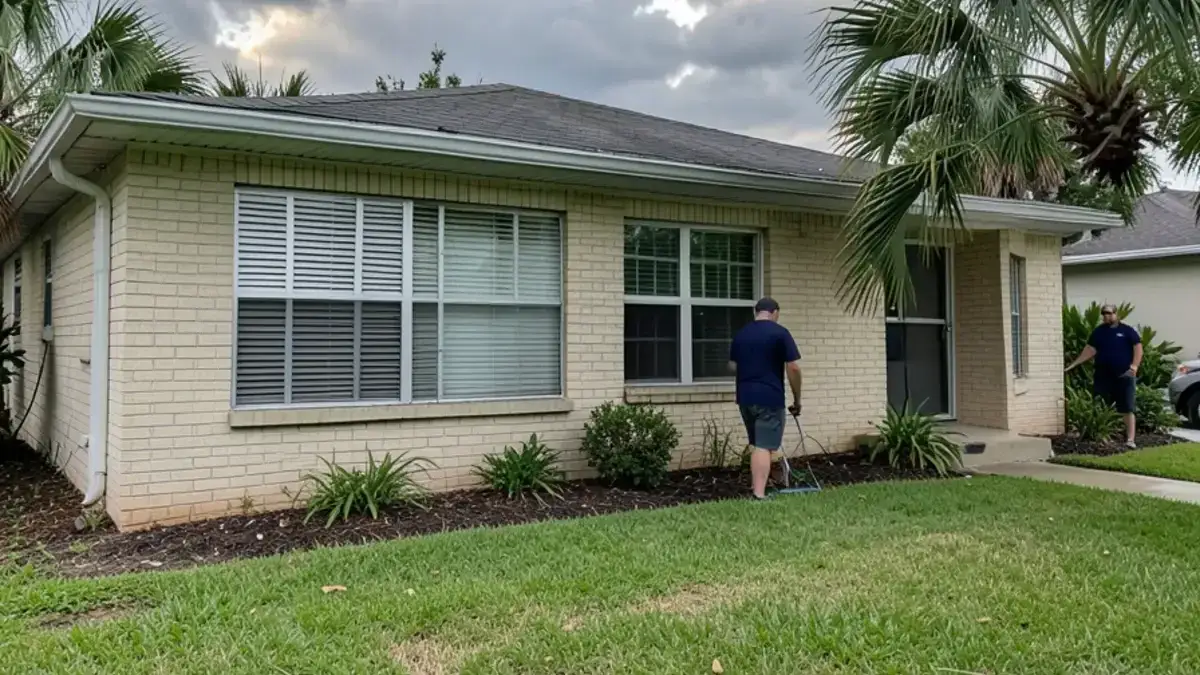
Walk the weather side of the house first. In most storms one side takes the wind, and that wall tells you where to look.
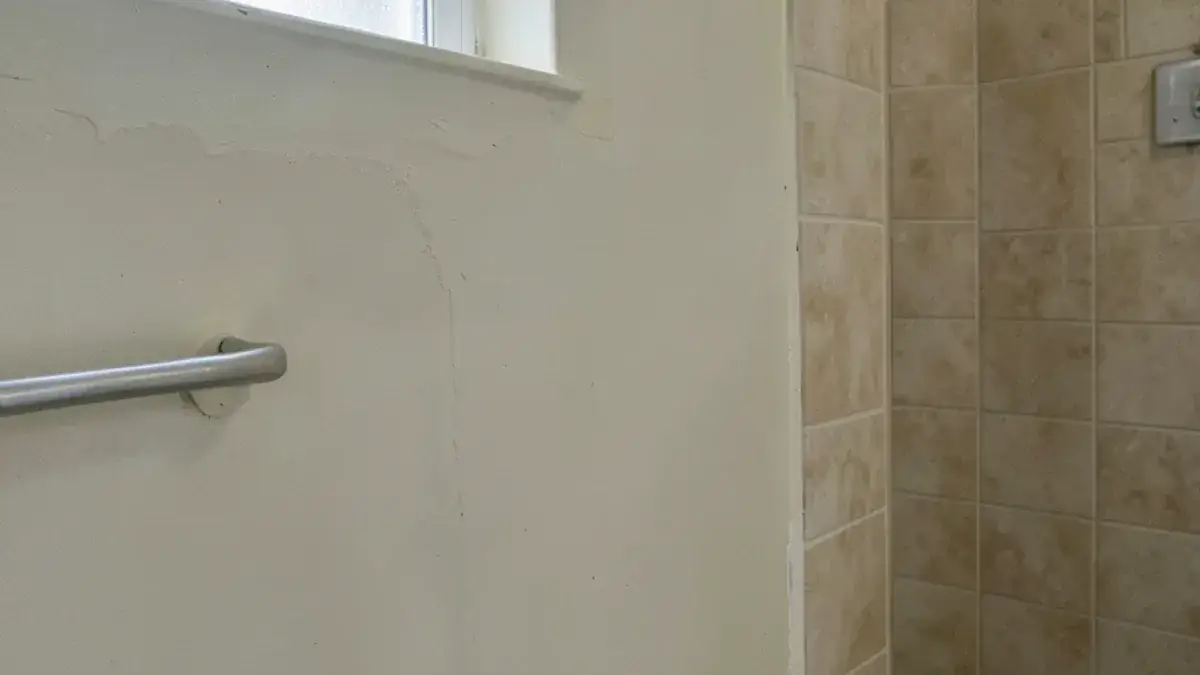
- Stains on ceilings near exterior walls
- Bubbling or peeling paint under windows
- A wet sill or a damp carpet edge by a sliding door
- A musty smell in closets on an outside wall
- Soft or swollen baseboards
- A sagging ceiling, which you should stay out from under
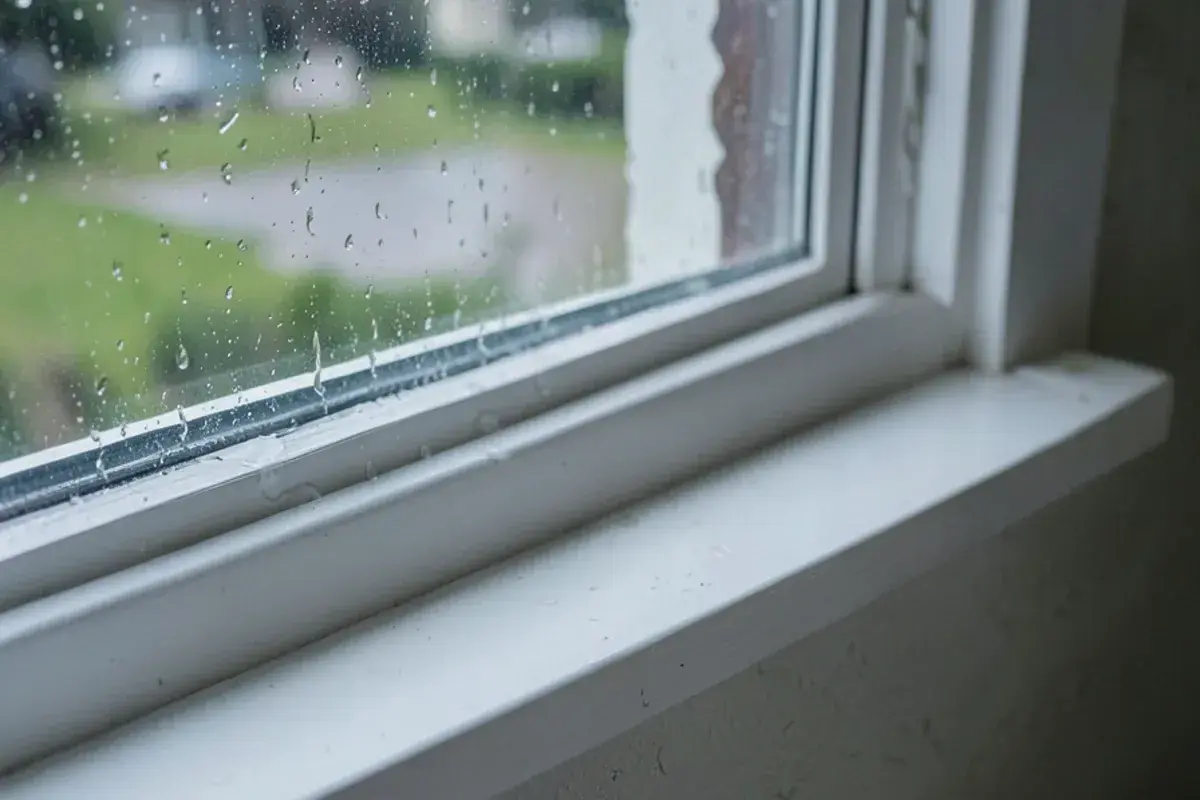
Stains can appear days later. Check again after a week, and after the next hard rain.
Why wind-driven rain gets in here
Rain does not need a hole when the wind pushes it sideways. Nor'easters and tropical systems drive it against walls for hours, past window frames, door sweeps, soffit vents and stucco cracks. Rainfall here runs near 50 inches a year. The wettest month is August, close to 7.4 inches.
Salt air adds to the problem. It wears at flashing, fasteners and sealants on coastal homes, so a gap that stayed dry in light rain can leak in a long storm. Homes along Crescent Beach and Butler Beach take that weather first.
Age matters too. Older block homes often hold water in the wall until it wicks through to the plaster or drywall. Newer framed homes can hide it behind insulation and show nothing until the drywall softens.
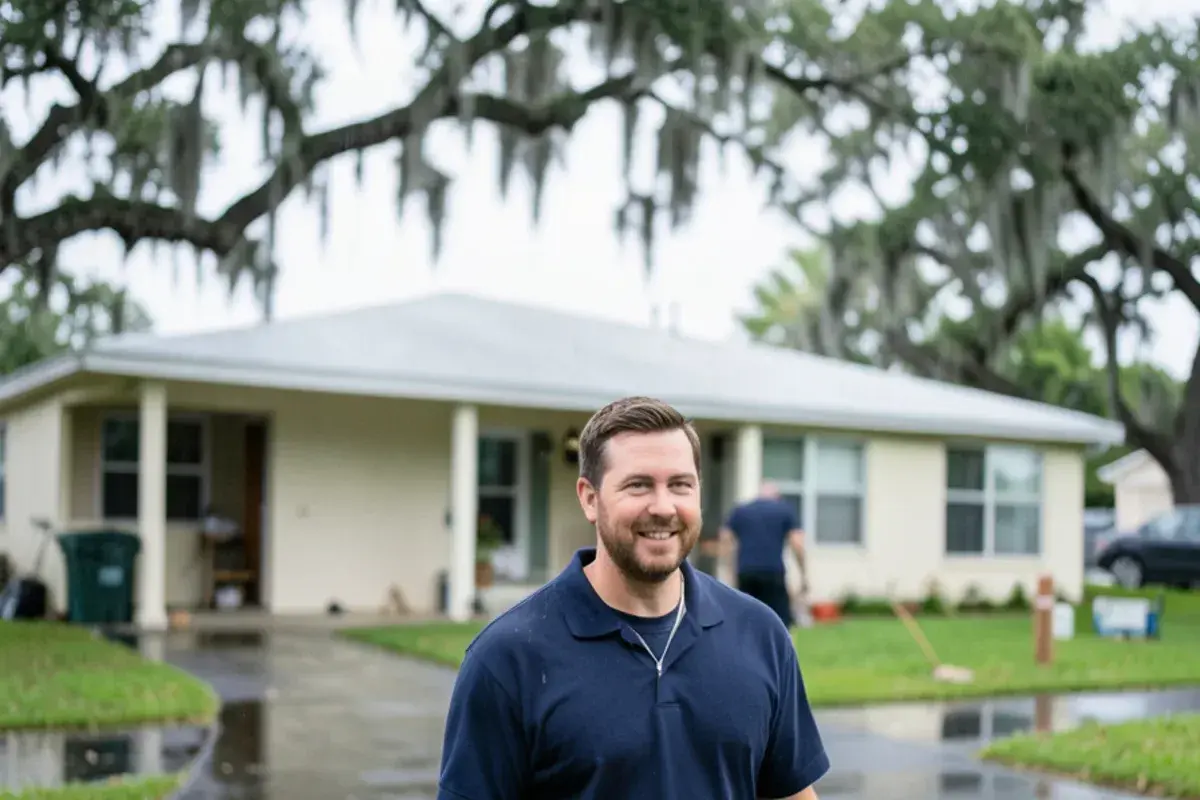
How do we trace and dry storm water?
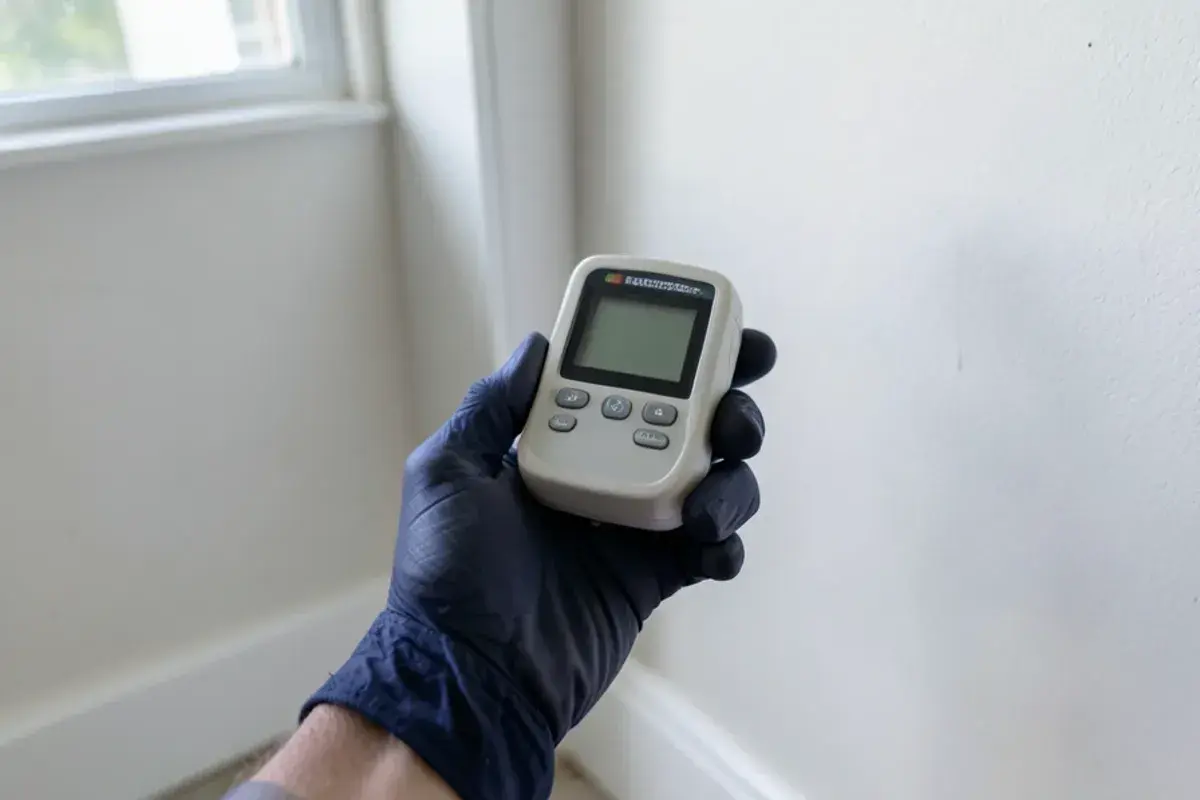
Inspection comes before any tool touches a wall. We trace water from the stain back to the entry point, because the wet area is almost always bigger than what you can see. Thermal imaging shows cool patches, then pin and pinless meters confirm which ones are wet.
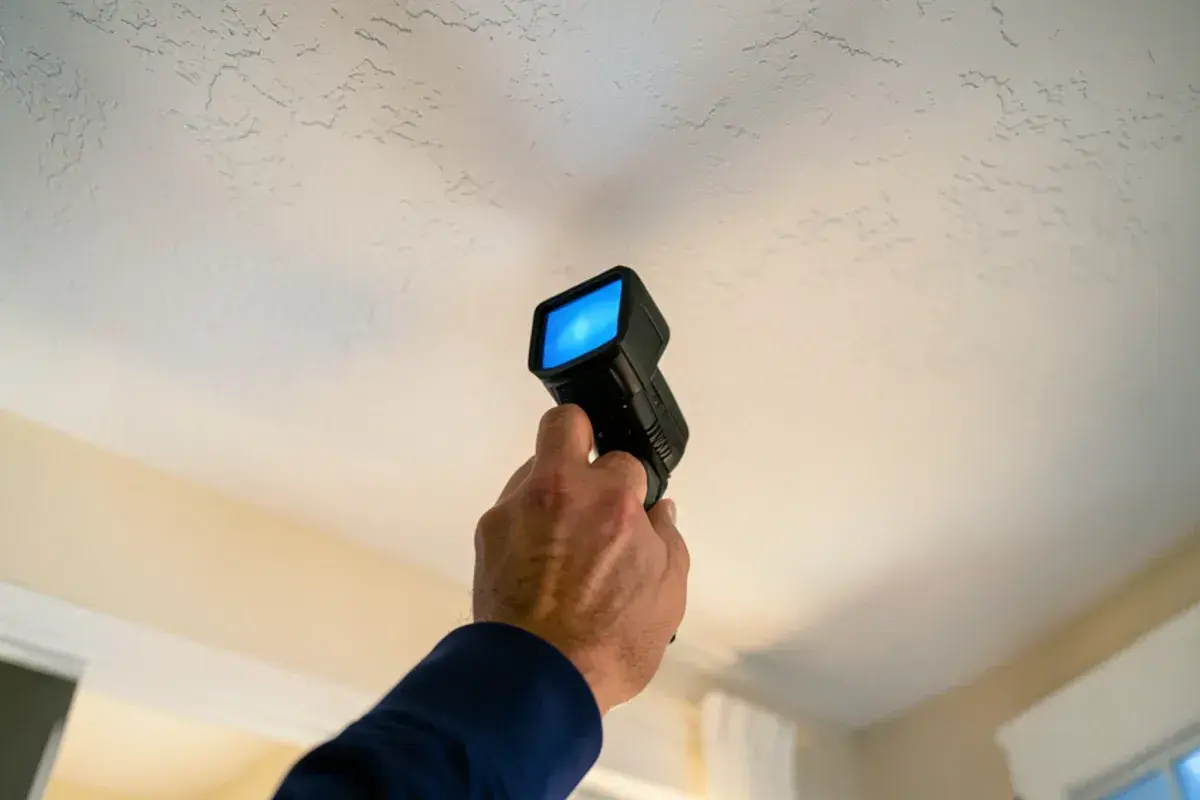
Then we pick the method. The trade-offs are simple:
| Method | Works well when | The downside |
|---|---|---|
| Dry the cavity in place | Drywall is sound, water was clean and brief | Slower, needs daily readings to prove it |
| Flood cut | Insulation is wet or water sat for days | Adds drywall and paint repair |
| Pull attic insulation | It stays wet or sits on the ceiling | Adds replacement cost and mess |
| Closed-room dehumidification | Nearly every Florida job | Equipment noise and power use |
Rain that came straight through an opening starts cleaner than floodwater. It does not stay that way. Wet materials in Florida heat can grow into a mold after water damage problem, so early drying matters more than the look of the stain.
New stain since the storm? Get it traced before it spreads
Open 24 hours for emergencies. Non-emergency calls are best between 7am and 7pm.
- 5.0 on Google, 8 reviews
- Family owned since 2020
- Calls go straight to the owner
- Free assessments and estimates
Request a free estimate
Not an emergency? Send the details and we will call you back. If water is still moving, call instead.
Our storm visit, step by step
Each visit follows the same order, whether the job is one ceiling or a whole wing.
- Walk the home with you, hear what changed after the storm, and check the exterior side of each wet wall and the attic above each wet ceiling.
- Read and photograph every affected area with a moisture meter and thermal camera, then build the moisture map.
- Put up a temporary cover if the opening is still taking water, and hand you a written scope with the estimate.
- Remove what cannot be dried, and set air movers and LGR dehumidifiers.
- Return to take readings, move equipment and update the log.
- Pull equipment when readings match the dry standard, then plan the order of the drywall, paint and flooring work that follows.
Need more on ceilings? See ceiling water damage. For the drying science, see structural drying.
Do you need a permit for storm repairs in St. Augustine?
Tear-out usually needs no permit, but the repair often does. The city's storm recovery guide lists tear-out of wet materials, debris removal and temporary tarps or boards as work with no permit. Storm repairs including structural work and drywall do, along with re-roofing and mechanical, electrical and plumbing work.
For a city permit, the guide wants three things: the insurance scope, damage photos and, when the owner applies, an owner-builder affidavit. The city's permit page also asks for a detailed scope of work on storm damage permits.
Since July 1, 2026, the city exempts single-family improvements under $7,500, but not electrical, plumbing, mechanical, gas or structural work, and not projects in a flood hazard area. You must request the exemption first. The Planning and Building Department makes the final call.
St. Augustine Beach and unincorporated St. Johns County run their own building departments, so check there if you live outside city limits. Whoever does permitted work pulls the permit. Claim questions go to your insurer.
The city's guide also warns owners to be cautious of unlicensed contractors after a storm. Ask any company for its license number and check it on the DBPR site, ours included.
What decides the cost of storm drying?
Time and access decide most of it. The assessment and estimate are free on water damage projects, and nobody leans on you to sign, so you see the numbers first.
- How many rooms and ceilings took water
- Whether insulation has to come out
- Attic access and ceiling height
- Equipment days until the dry standard is met
- The drywall, paint and flooring put-back afterward
Two St. Augustine details weigh on the number. A nor'easter can drive rain into the same wall for days, so the wet area often runs past the room you noticed. In summer, attic heat shortens working hours overhead, and August air gives the LGR dehumidifiers more to pull.
You get dated photos, moisture logs and equipment records along with an itemized estimate, and we go through our own numbers with you. Should filing look right to you, we can go over the steps with you. We do not negotiate with insurers or tell you what a policy covers.
Why 1 Call for storm water, and where we go
Storm work rewards patience and honest readings. That is how Dal Beggs and his son run jobs.
- Family owned, locally owned and founded in 2020
- Calls go straight to the owner
- A visit, an assessment, an estimate, and no pressure after that
- Daily readings that show when a room is truly dry
We work in St. Johns County and its neighbors, Volusia, Flagler, Clay, Duval and Putnam, from the beach roads of Flagler Beach to the riverfront and inland towns. Call any time with an emergency. For a stain that is not active, calls are best between 7am and 7pm.
What customers say
5.0 stars on Google from 8 reviews. Quoted as written.
“I needed a second opinion on my water damage cleanup but about 5 minutes after Dal showed up I realized I should have contacted 1 Call FIRST. They immediately got to work drying out my house and explained everything so well which helped relieve so much of the anxiety I was feeling. The communication and work was all top notch. HIGHLY RECOMMEND!”
“Dal and his son are so compassionate and truly care about the human and do everything in their power to help your house back to normal. They were punctual and even showed back up to the house with any questions etc, I was very pleased with them and would recommend them to anyone who wants someone honest in this industry that unfortunately doesn’t have many honest companies in it. Dal and his crew have a customer life with us anytime we need their services.”
“Very impressive service. Dal and his team responded to our call immediately and were out the same day to begin the remediation process. Would highly recommend 1Call Restoration.”
Frequently asked questions
A roof leak let rain in. What gets fixed first?
Stop new water first, then dry the inside, then repair finishes. A roofer handles the roof itself. We can put a temporary tarp in place and dry the interior so the wet ceiling and insulation do not sit while you line up that work. Drying before the leak is stopped wastes equipment days.
Why did a ceiling stain show up a week after the storm?
Water takes time to travel. Rain soaks attic insulation and sheathing first, then moves along rafters and drips down to the drywall. The stain marks where it finally came through, often feet from the entry point. That is why we check the attic above a stain and read the ceiling around it with a moisture meter.
Should I open windows to air the house out after a storm?
Keep them closed if the air outside is humid, which it usually is here. Open windows bring more moisture into rooms that are already wet. Run the air conditioner if an electrician or the utility says the system is safe. The CDC says to have an HVAC system checked before running it if flood water reached it.
Can wet attic insulation dry where it sits?
Sometimes, but blown insulation and matted batts often hold water against the drywall. We read the ceiling below, then pull what stays wet. Removing it costs more up front and adds replacement work. Leaving wet insulation in place in Florida heat is the bigger risk, since moisture stays trapped against the ceiling and framing.
I rent my home. Who should call about storm water?
Tell your landlord or property manager right away, in writing, with photos. The owner usually authorizes work on the structure, so we need that person involved for the scope. You should still move belongings out of the wet area and report any electrical hazard. Your own belongings are a question for your renters insurance agent.
What photos help most after wind-driven rain?
Take wide shots of each room, then close shots of every stain, wet sill and swollen baseboard, with the date visible on your phone. Add the outside wall on the same side of the house. Do this before anything is moved or cleaned. The City of St. Augustine asks for damage photos with a storm repair permit too.
Storm gone but the house smells damp? Call us and describe it
Open 24 hours for emergencies. Non-emergency calls are best between 7am and 7pm.
- 5.0 on Google, 8 reviews
- Family owned since 2020
- Calls go straight to the owner
- Free assessments and estimates
1 Call Restoration, Saint Augustine, FL. (208) 464-4194.
Related services
Worth reading
Where we handle storm damage restoration
See all of our service areas.