
Local angles
New Build Leaks in St. Johns County: Documenting the Problem
By Dal Beggs, founder and owner of 1 Call Restoration. Published November 1, 2026. Updated November 1, 2026.
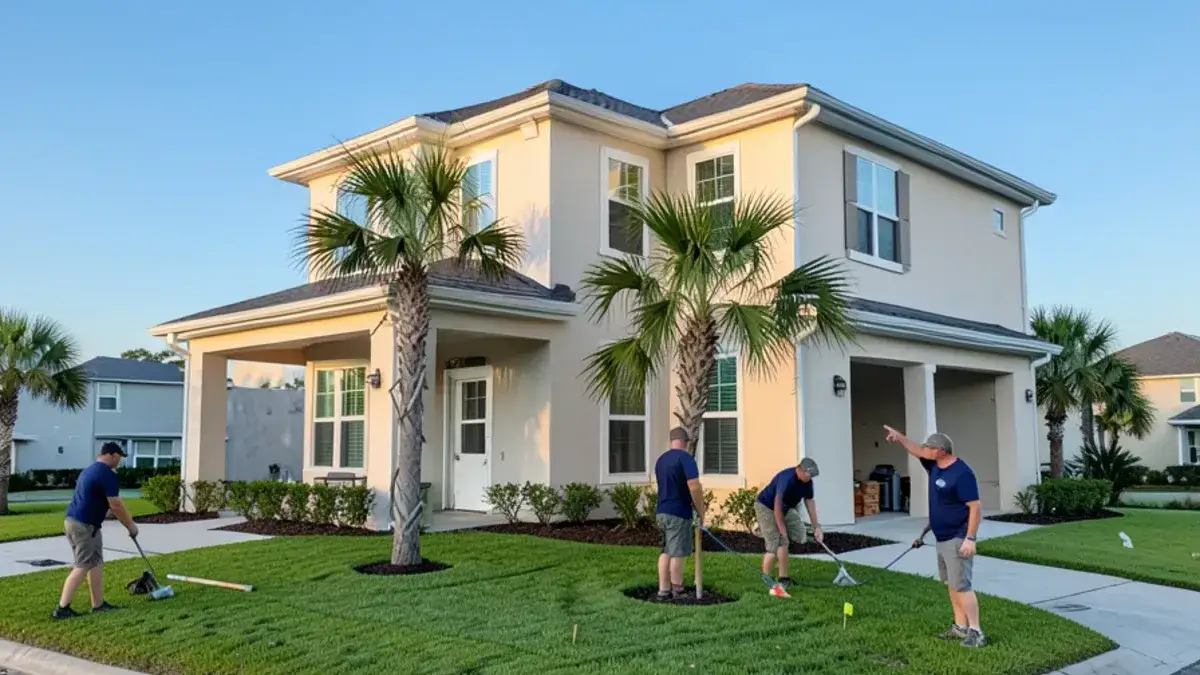
A new construction leak in St. Johns County means two jobs at once: stop the water, and build a record before anyone repairs it. Photos, dated moisture readings and written notice to your builder protect your position. Florida's Chapter 558 sets notice rules before a lawsuit, so show an attorney the dates early. This is general education, not legal advice.
What should you do first when a new home leaks?
Stop the water, then record it before anything changes. New construction does not get a pass from water, and St. Johns County has built a lot of it. Census figures show the county growing from 273,425 people in 2020 to about 346,000 in 2025, and a new home's first rainy season is often when a flashing, a roof penetration or a plumbing joint gets its first real test.
Close the valve or catch the drip. Move belongings. Then take photos before you wipe, dry or call anyone to fix it, because a tidy wall on inspection day proves nothing. Send your builder written notice that day, by email or portal, and keep the receipt.
Water in a new home? Call us to get it measured and on paper
Open 24 hours for emergencies. Non-emergency calls are best between 7am and 7pm.
- 5.0 on Google, 8 reviews
- Family owned since 2020
- Calls go straight to the owner
- Free assessments and estimates
What should you record, and how?
Date everything, and make each item stand on its own. A stranger should be able to pick up your file a year from now and follow what happened.
- Date and time you found the water, and what the weather was doing.
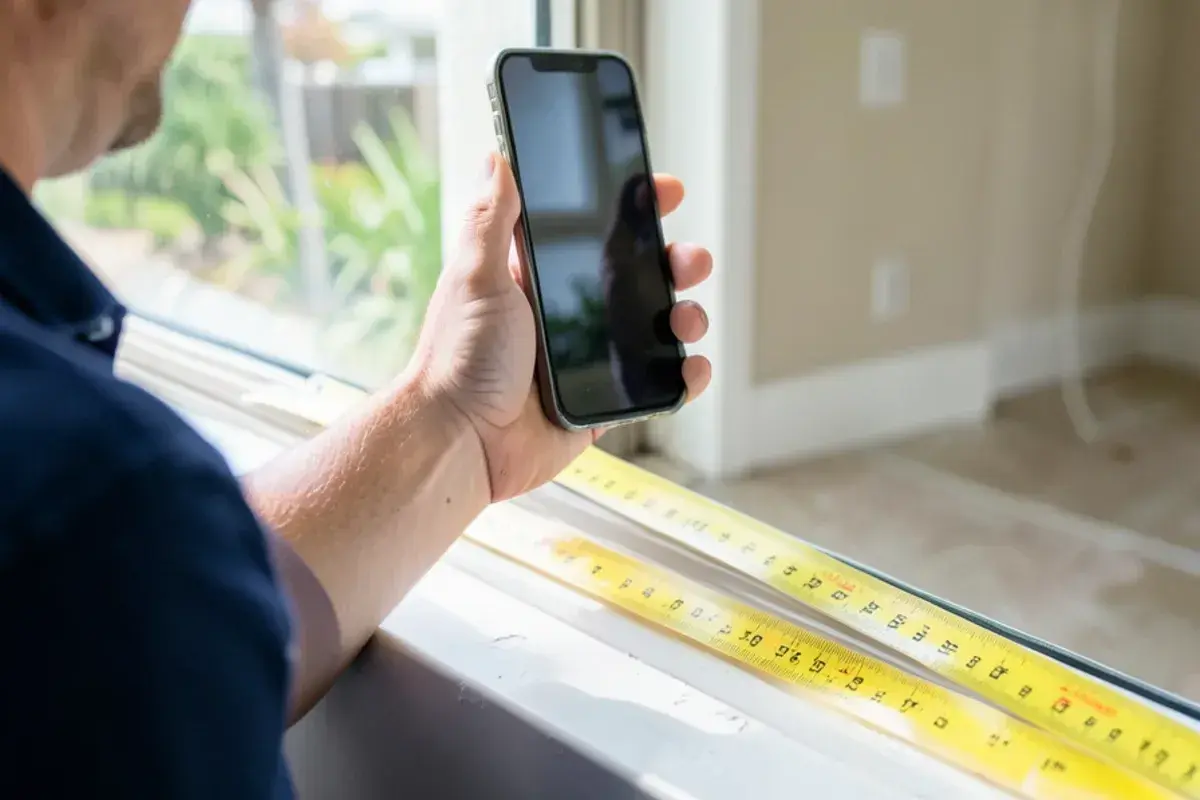
- Wide photos of the room, then close-ups with a tape measure in frame.
- Video of active water, with your voice giving the date.
- Copies of every message, portal ticket and repair note from the builder.
- Names of everyone who came to the house, with the date.
- Receipts for anything you bought or paid for.
- Moisture readings over time, on a map, from one consistent source.
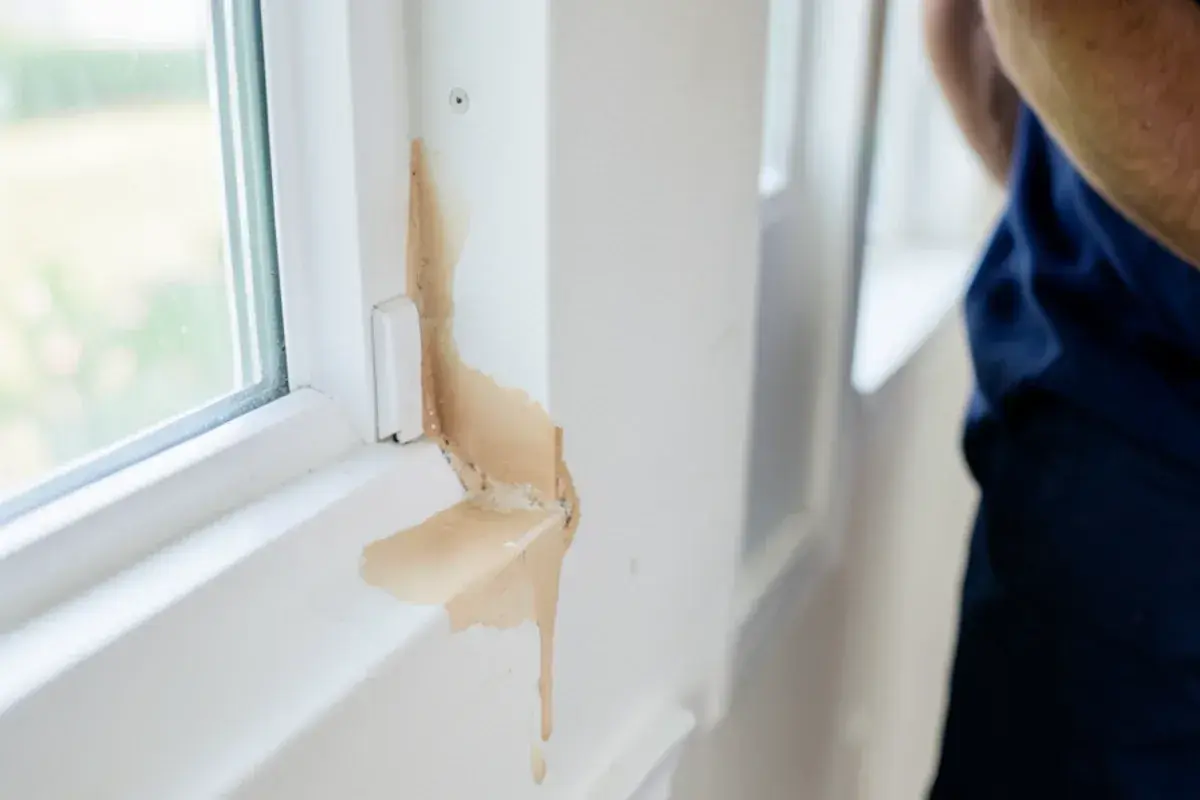
Keep the original files, not screenshots, since phone photos carry a date. Repeat the same photos from the same spots once a week until the issue is resolved. A slow leak in a stucco wall may only show up after rain, so note rain days alongside each reading.
What does the timing of a wet spot tell you?
When a spot gets wet often says more than where it shows, so log the timing before you call a trade. Use this table to pick who looks next. It points at a place to check, and it does not name a defect.
| When it gets wet | Where to look first | Who usually checks |
|---|---|---|
| After rain, drying out between storms | Window corners, flashing, roof penetrations | Roofer, window or stucco trade |
| Whatever the weather | Supply lines, drains, shower pans | Plumber |
| During long cooling runs | Condensate line, ducts, cold surfaces | HVAC contractor |
| After the sprinklers run | Spray hitting the wall, grading at the slab | Irrigation trade, builder |
A single wet day proves little. Two or three dated readings, set against the rain record, show a pattern another person can check for themselves.
Which Florida clocks should you ask about?
Several run at once, and your contract may add its own. The table below is a general summary of statute text as of the 2025 Florida Statutes. Read your builder warranty, since it sets its own periods, and take your dates to an attorney.
| Clock | General rule | Source |
|---|---|---|
| Statutory builder warranty | One year on new homes, for defects causing a material code violation, from title or first occupancy, whichever is first | F.S. 553.837 |
| Notice of claim | Written notice at least 60 days before filing an action, 120 days for an association over 20 parcels | F.S. 558.004 |
| Effort to serve | Try within 15 days of discovery; missing that does not by itself bar an action | F.S. 558.004 |
| Construction lawsuit | Generally 4 years from the earliest certificate or abandonment date | F.S. 95.11(3)(b) |
| Outer limit | 7 years from that same date | F.S. 95.11(3)(b) |
Section 553.837 was added in 2024, so older homes and older contracts may sit differently under it. A Chapter 558 notice pauses the limitations period for a time, but section 558.004 says it does not toll the statute of repose.
Insurance runs on a separate track. If you are also thinking about a claim, section 627.70132 ties notice to 1 year after the date of loss, whatever your builder is doing. Your insurer, a licensed public adjuster or an attorney can say how that applies. We cannot.
How does Chapter 558 notice work?
It gives the other side a chance to look and respond before a lawsuit. Chapter 558 covers construction defect claims on agreements made after October 1, 2009, for defects that arise after completion. Parties can agree in writing to opt out, so check your purchase contract for that language. Your attorney should run this process, and the outline below is only so you know what the record is for.
- You, or your attorney, serve a written notice describing each alleged defect in reasonable detail.
- Service goes by certified mail with proof of delivery, hand delivery or a courier with written proof.
- The party served may inspect within 30 days, or 50 for a large association.
- A written response follows within 45 days, or 75 for a large association.
- That response may offer repairs, money, both, or dispute the claim.
- You accept or reject under the statute's rules, with an attorney's help.
The notice has to identify each defect's location well enough for the other side to find it, along with any known damage. That is where a dated moisture map earns its keep. It shows the room, the wall and the spread in terms another person can check.
Three other parts of section 558.004 shape the record. It says it does not prohibit or limit necessary emergency repairs. It has the claimant give reasonable access for inspection during normal working hours. And on a written request citing that subsection, either side can ask for an exchange, within 30 days, of plans, photos and videos of the alleged defect, and expert reports, with reproduction costs offered. So assume the other side may read your file. Keep it factual, and let your attorney decide what goes in it.
How we document a new-build leak
We measure and record. We do not name a cause we cannot prove, and we do not negotiate with your builder. Our new home water issues page covers the visit. These are the rules we keep to.
- Record the condition before any equipment starts or anything is removed.
- Use the same meter on the same spots at each visit.
- Mark wet areas on a floor plan, with a reading at each point.
- Use thermal imaging to guide the meter, never to replace it.
- Hand you the photos, readings and estimate as a package.
That package is the same kind of record described on our water damage documentation page, and what you do with it is your call. If the area has to dry, structural drying can start after the record is made.
Drying and evidence pull against each other, and neither side wins outright. A wall left wet to prove a point can grow mold, and a wall dried too soon can look as if it was never wet. So the order is fixed: photograph and read first, then dry.
Check again after the builder's repair
A closed ticket is not a dry wall. A repair can stop the source and leave the drywall, insulation and framing holding water behind fresh paint. Have the same marked spots read after the repair, then again after the next hard rain if the leak followed weather. If the numbers fall and stay down, you have that on paper. If they do not, you have that too, with dates.
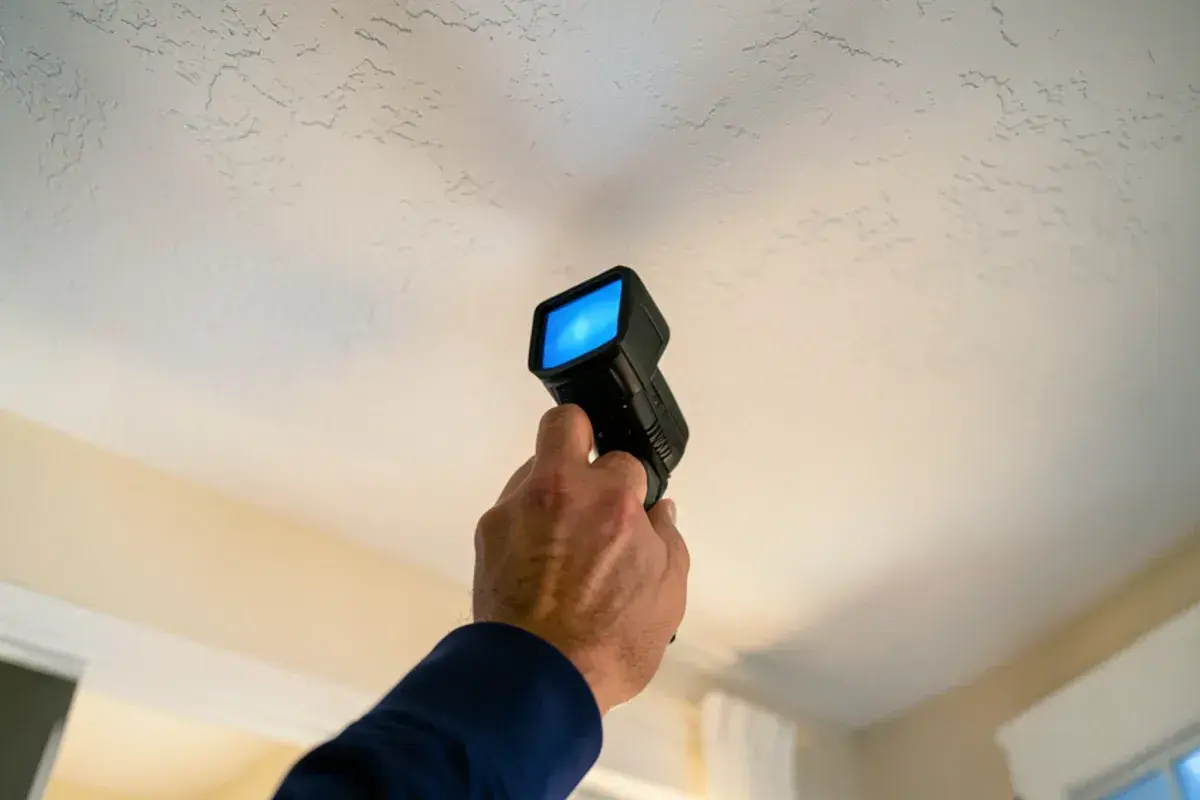
Coastal homes get the same treatment. A new build in Butler Beach faces salt air and wind-driven rain from day one, and a home in a Nocatee neighborhood may be under a builder warranty clock that is already running. Either way, the first reading is the one you cannot get back.
Get the first reading before the wall changes
Stop the water, record it, tell the builder in writing, and take the dates to an attorney. That order keeps the facts intact whichever way the dispute goes.
Think something is wet and the builder says it is fine? Call us. There is no sales pressure. We show up, assess the damage and give you an estimate, and your readings stay yours.
Frequently asked questions
The builder wants to send its own crew. Should I let them in?
That depends on your contract and your builder warranty, so read both and ask an attorney if the stakes are high. Chapter 558 gives the party served with a notice a chance to inspect. Whatever you decide, record the condition first, ask for a written note of what was found and what was done, and keep copies of every message. Photos taken before a repair cannot be taken later.
Should I dry the wall or wait for the builder to inspect it?
Do not let active water keep running while you wait. EPA's advice is to dry wet materials within 24 to 48 hours, and a wall left wet can become a bigger problem. Stop the source, tell the builder in writing right away, and record the area before equipment starts. Ask your attorney how to handle any material that has to come out, and keep samples if advised.
Who decides what caused the leak in a new house?
We can show where the water is and how it moves, but a moisture map is not a defect finding. Cause may take a plumber, a roofer, an engineer or another qualified expert. A notice of claim under Chapter 558 asks for reasonable detail, based on at least a visual inspection, and the statute says destructive testing is not required for that notice. Your attorney can say what you need.
New home, wet wall? Call for a free assessment and readings
Open 24 hours for emergencies. Non-emergency calls are best between 7am and 7pm.
- 5.0 on Google, 8 reviews
- Family owned since 2020
- Calls go straight to the owner
- Free assessments and estimates
1 Call Restoration, Saint Augustine, FL. (208) 464-4194.
Related services: New Home Warranty Water Issues, Water Damage Documentation, Structural Drying. Serving Butler Beach and Nocatee and the rest of our service area.
Sources
- Florida Statutes 2025, Section 558.002, Definitions
- Florida Statutes 2025, Section 558.004, Notice and opportunity to repair
- Florida Statutes 2025, Section 558.005, Contract provisions; application
- Florida Statutes 2025, Section 553.837, Builder warranty
- Florida Statutes 2025, Section 95.11, Limitations other than for the recovery of real property
- U.S. Census Bureau, QuickFacts, St. Johns County, Florida
- EPA, A Brief Guide to Mold, Moisture and Your Home
- Florida Statutes, Section 558.004, public copy of the 2024 text
- Florida Statutes 2026, Section 627.70132, Notice of property insurance claim