
Cost and insurance
Water Damage Restoration Cost in St. Augustine
By Dal Beggs, founder and owner of 1 Call Restoration. Published November 1, 2026. Updated November 1, 2026.
Water damage restoration cost in St. Augustine runs from about $1,926 to $2,035 for remediation and $3,162 to $3,407 for flood repair, per Homeyou's 2026 local figures. Forbes Home puts the national range at $1,300 to $5,600. These are third-party ranges, not our quotes. Your number comes from equipment days, demolition, water category, wet area and put-back.
What do third-party ranges say about St. Augustine?
The published ranges sit in the low thousands, with national figures running wider. Read them as a sanity check, not a price list. None of these numbers is a quote from us, and we did not set them.
| Job type | Range | Basis | Source and date |
|---|---|---|---|
| Water damage remediation, St. Augustine | $1,926 to $2,035 | 43 local quotes | Homeyou, 2026 |
| Flood repair, St. Augustine | $3,162 to $3,407 | 34 completed projects | Homeyou, February 2026 |
| Water damage restoration, national | $1,300 to $5,600 | National average range | Forbes Home, as shown when checked November 2026 |
| Water damage restoration, national | $1,305 to $5,707, average $3,455 | Angi and HomeAdvisor data | Bob Vila, updated May 30, 2023 |
Want a written number for your home? Call for a free estimate
Open 24 hours for emergencies. Non-emergency calls are best between 7am and 7pm.
- 5.0 on Google, 8 reviews
- Family owned since 2020
- Calls go straight to the owner
- Free assessments and estimates
Why do those local ranges look so narrow?
A narrow band is an average of averages, not a limit on your job. Homeyou's figures describe what a set of past quotes and projects came to, so a single home can land well outside them in either direction.
A small clean-water leak caught early can come in under the low end. A Category 3 loss across several rooms can pass the top of the national range with room to spare. Use the range to spot an estimate that seems out of line, then ask why. A good answer will point to a specific line item.
The five line items that build your price
Every water damage estimate comes down to the same five questions. Ask for each one in writing:
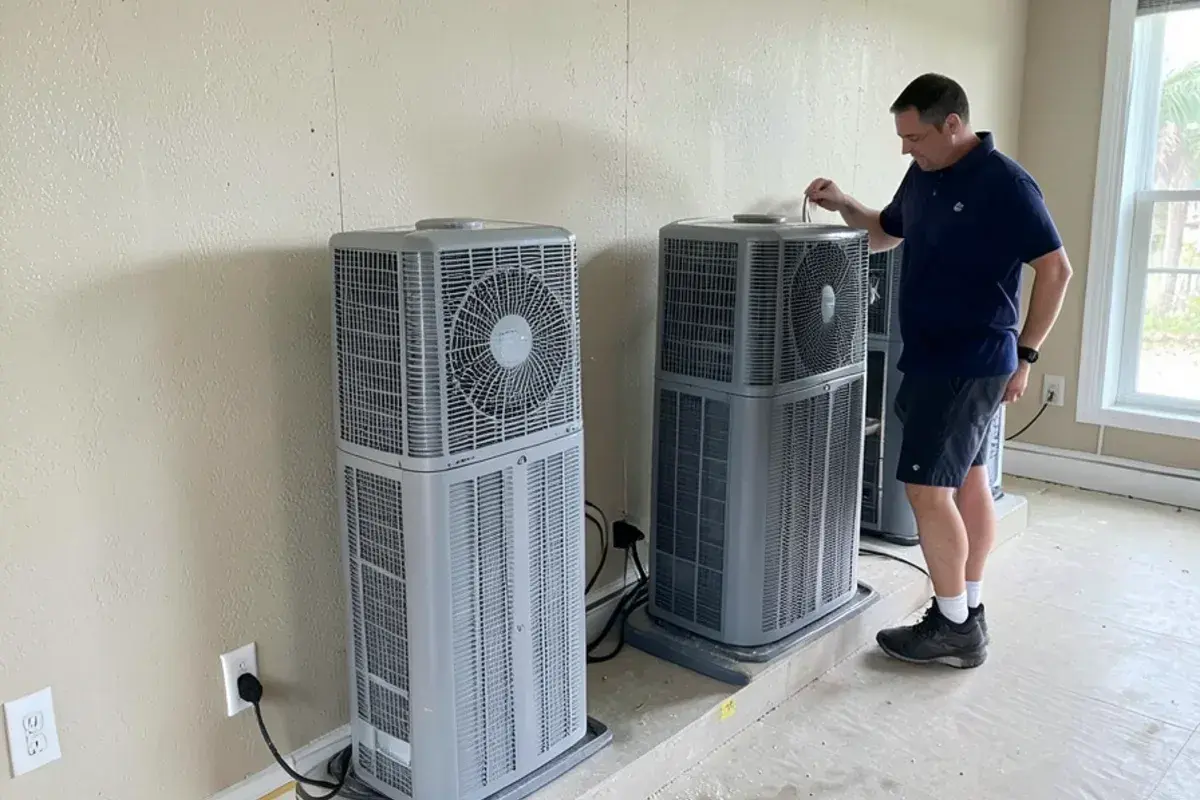
- Equipment days: how many machines, for how many days?
- Demolition: how much drywall, insulation and flooring is coming out?
- Water category: is this Category 1, 2 or 3?
- Affected area: how many rooms and floors got wet?
- Put-back: is the repair priced here, or separately?
Category does more to move the number than most people expect. A clean supply-line leak can often dry in place. With Category 3 water, expect removal, disinfection, containment and HEPA air scrubbers, and that adds labor at every stage.
A national guide shows the pattern. Bob Vila, updated May 30, 2023, lists $3 to $4 per square foot for Category 1 drying, $4 to $6.50 for Category 2 and $7 to $7.50 for Category 3, before repairs. Those are older national figures, so use them for the ratio and not as a price here.
How to read equipment days on an estimate
An equipment day is one machine running for one day. Three air movers and one LGR dehumidifier running for four days comes to 16 equipment days. That is sample math, not a price or a promise about how long your job will take. Now pull two air movers when one zone passes after day two, and the count falls from 16 to 12. Daily readings matter to your bill as well as your walls.
Ask these questions when you see that line:
- How many of each machine, and why that number?
- What moisture reading ends the job?
- Will I see the daily readings?
- What happens if the wet areas dry ahead of the plan?
We dry to a measured goal, the reading of unaffected materials in the same home, and we log it every day. Equipment should leave when the numbers say so, not when a calendar does. Structural drying explains how that works in practice.
How to audit a water damage estimate, line by line
Ask one thing of every line: could someone who never saw the house check it? A clear line gives a quantity, a unit and a reason. Use this table on any company's estimate, ours included.
| Line | A clear line shows | Ask |
|---|---|---|
| Extraction | Rooms or area, and the water category | Was the category found or assumed? |
| Equipment | Machines by type, days, rooms served | Does the count match the moisture map? |
| Monitoring | Daily visits and readings | Do I get a copy? |
| Demolition | Linear feet of flood cut, square feet of flooring | Do the photos show why it came out? |
| Cleaning | Surfaces treated, antimicrobial where needed | Why is it needed here? |
| Containment and air scrubbing | Rooms sealed, days run | What is it protecting? |
| Disposal | Quantity, included or extra | Is it in this total? |
| Put-back | A separate scope, or a clear note that it is excluded | Who does this work? |
A lump sum with no quantities may be fair, but you cannot check it. A quantity that no reading supports deserves the same question. If the answers do not add up, a second opinion can check the measurements.
Costs that sit outside a restoration estimate
Some real costs never appear on a drying estimate, so plan for them separately:
- The plumber's repair of the source
- An electrician's check if water reached circuits
- A higher power bill, since equipment runs continuously on your circuits
- Lead or asbestos testing before older finishes are disturbed
- An independent licensed mold assessor, if sampling is needed
- Permit costs on the put-back, through whoever pulls the permit
- Somewhere to stay if the home cannot be lived in
An estimate can also move. It is written from what meters and thermal imaging show before a wall opens, and an open wall can show more or less. Ask any company how a change gets approved before you sign, and get that answer in writing.
Where shopping around pays off, and where it costs you
Shop the put-back hard and keep the drying moving. EPA says water-damaged areas should be dried within 24 to 48 hours to prevent mold, so three quotes spread across a week can cost more in removed material than any price gap saves. A second number that fits inside that window is fine. One that stops the drying is not.
Put-back has to wait for a dry structure anyway, so that is where you have time to compare drywall, paint and flooring, and you can bring your own trades. What a policy pays is your insurer's decision, so leave it out of the comparison. We explain our own estimate and nothing beyond it.
What pushes a coastal job up the scale?
Coastal homes add variables that a national figure cannot see. On Crescent Beach, oceanfront homes take wind-driven rain from nor'easters, and that water can enter high on a wall and travel down through several layers. More wet layers means more to open up and more machines to dry them.
These are the factors worth asking about on any home near the water:
- Humid outdoor air, which makes dehumidifiers do more of the work.
- Elevated construction, where water can reach the space below the floor.
- Salt and silt in flood water, which affect what can be cleaned.
- Finishes such as custom cabinets or wood floors, which raise put-back cost.
- Association access rules, since census survey data shows more multi-family than single-family units at Crescent Beach.
Older block homes and new builds differ as well. Plaster, cabinet bases and floor assemblies dry at different speeds, so two homes of the same size can need very different equipment counts.
How we price a job
We come out, read the damage and write a free estimate, with no high-pressure sales. The numbers we use come from readings at your home, not a table on a website.
You get a written scope before heavy work starts, photos before demolition and daily moisture readings. We will explain every line of our own estimate. Our free damage assessment page shows what that visit includes, and reconstruction explains how put-back is scoped and sequenced once the structure is dry.
If you have an estimate in hand and something does not add up, or you need one for the first time, call. For an overview of the full process, see our page on water damage restoration in St. Augustine. A price is much easier to judge once someone has measured how far the water actually went.
Frequently asked questions
Is there a fair price per square foot for water damage restoration?
No reliable local per-square-foot figure exists, and we have not found a source for St. Augustine we would stand behind. A single price per foot also misleads, because a clean-water carpet leak and a Category 3 flood in the same room are different jobs. Ask for a written estimate that shows equipment days, demolition, cleaning and disposal as separate lines. Those lines let you compare two companies on the same scope.
Are drying and repairs priced together or separately?
Separately in most estimates, and you should want it that way. Mitigation covers extraction, demolition and drying. Put-back covers drywall, paint and flooring after the structure is dry, and its scope depends on what the drying showed. Bundled into one number, you cannot see what either costs. We scope and sequence the put-back of finishes, and structural rebuilding goes to a suitable licensed contractor.
How should I compare two water damage estimates?
Line them up by scope first, then by price. Check that both assume the same rooms, the same water category and the same materials coming out. A low number that leaves out demolition or disinfection is not a lower price, just a smaller job on paper. Ask each company what readings they will take and how they decide the home is dry. Then ask for the projected equipment days in writing.
Comparing estimates? Call and we will walk you through ours
Open 24 hours for emergencies. Non-emergency calls are best between 7am and 7pm.
- 5.0 on Google, 8 reviews
- Family owned since 2020
- Calls go straight to the owner
- Free assessments and estimates
1 Call Restoration, Saint Augustine, FL. (208) 464-4194.
Related services: Structural Drying, Reconstruction, Free Damage Assessment. Serving Crescent Beach and the rest of our service area.