
Comparison and decision guides
DIY Cleanup vs Professional Water Restoration
By Dal Beggs, founder and owner of 1 Call Restoration. Published November 1, 2026. Updated November 1, 2026.
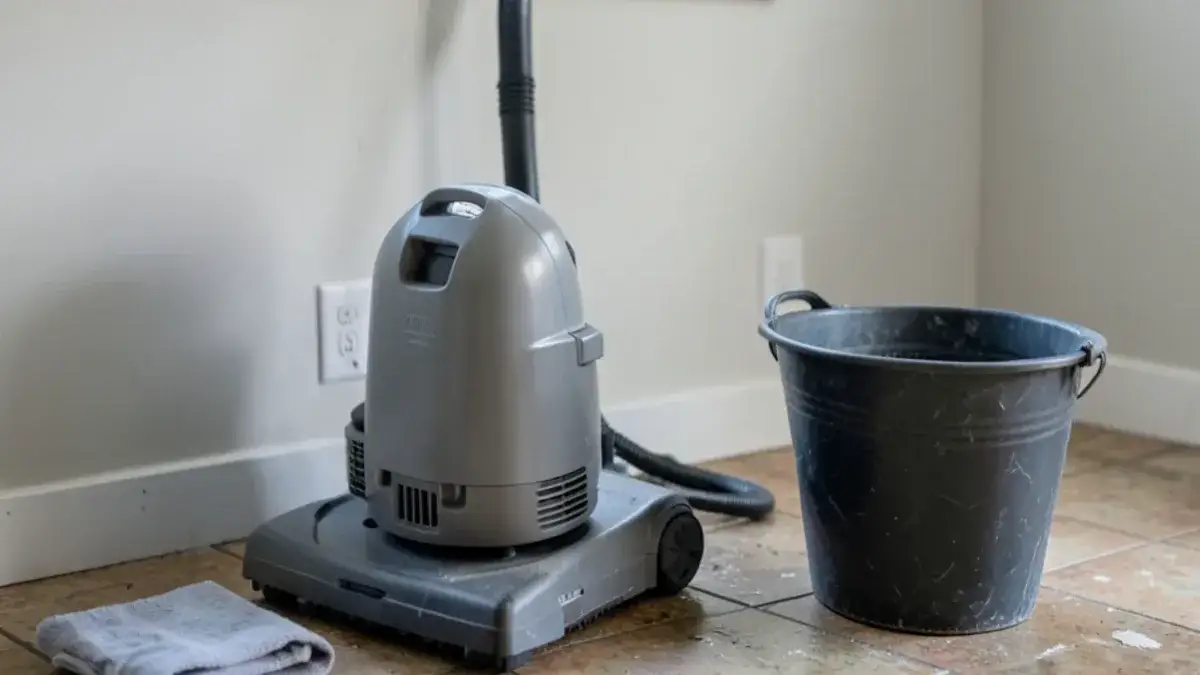
DIY water damage cleanup is reasonable for a small, fresh spill of clean water on hard surfaces that you caught right away. Sewage, floodwater, wet ceilings, soaked walls and anything near live electrical are jobs for a professional. The deciding test is whether you can prove the hidden side is dry.
When is DIY water cleanup reasonable?
DIY cleanup is reasonable when every item below is true. If one is false, treat the job as bigger than it looks.
- The water came from a clean supply line, a sink or a tub, not a drain or the outside.
- You found it within the first hours.
- It stayed on tile, sealed concrete or another hard surface.
- It did not reach carpet padding, drywall, or a cabinet base.
- It is confined to one small area.
- The electrical in that room is dry and working normally.
A kitchen sink overflow that you mopped up in twenty minutes usually fits. A washing machine that ran for an hour while you were at work usually does not.
Past the mop-and-towel stage? Call us before it spreads.
Open 24 hours for emergencies. Non-emergency calls are best between 7am and 7pm.
- 5.0 on Google, 8 reviews
- Family owned since 2020
- Calls go straight to the owner
- Free assessments and estimates
What should never be a DIY job?
Never take on sewage, floodwater or a wet ceiling yourself. Those three carry risks that a mop cannot manage, whatever the size of the area.
- Sewage and floodwater are Category 3 water, and porous materials they touch usually come out. See our notes on sewage cleanup before touching anything.
- A sagging ceiling can hold more water than you think, and it can come down without warning.
- Water near outlets, panels or a light fixture calls for an electrician, and nobody should step through it to reach a panel.
- Mold over a large area needs a different approach. The EPA says many patches under about 10 square feet are a do-it-yourself job, and Florida licenses mold remediation above that size through DBPR.
If you do clean a small moldy patch, the CDC says to wear an N-95 respirator at a minimum, plus goggles and protective gloves.
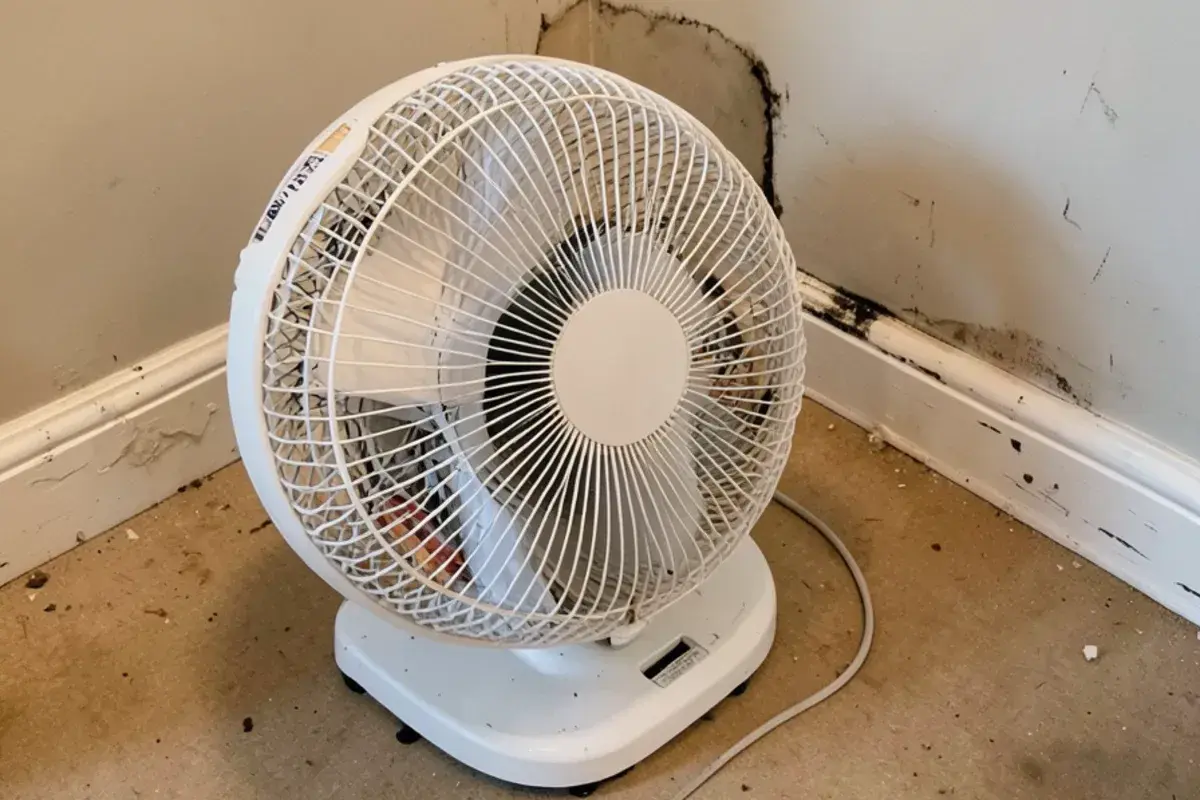
DIY versus professional water restoration, side by side
The gap between the two is mostly about reach and proof. Household tools handle what you can see, and professional equipment handles what you cannot.
| DIY cleanup | Professional restoration | |
|---|---|---|
| Water removal | Mop, towels, shop vac | Extraction through carpet, padding and hard floors |
| Drying | Household fans and open air | Air movers plus LGR dehumidifiers in a closed room |
| Finding hidden water | Sight, touch and smell | Moisture meters and thermal imaging |
| Proof it is dry | A surface that feels dry | Daily readings against the dry standard |
| Contaminated water | Not appropriate | Containment, removal, antimicrobial where needed |
| Paperwork | Your own photos | Photos, moisture logs, equipment records |
The cost of DIY is low if it works. If it fails, the bill includes everything the water reached while you were waiting for it to dry.
What DIY saves, and what it can cost
DIY saves a real invoice on a job that never needed one. Tile that was wet for a few minutes has no use for equipment days, and we will tell you so.
The trade-off is time and evidence. Every day spent testing your own method comes out of the drying window, and a failed attempt hands the next person a wetter structure with less time left. You also finish with no readings, so nobody can show later how far the water went or when it dried.
A rented dehumidifier sits in the middle. It helps on a small, open area in a closed room. It does nothing for water behind a wall, and it cannot tell you when to stop.
Which wet materials can you save yourself?
The material decides more than the size of the puddle. The EPA's water damage table sets out actions for clean water handled within 24 to 48 hours, condensed in the middle column here. The last column is our note on where each one catches people out.
| Wet material | EPA action | Where it catches people |
|---|---|---|
| Carpet and backing | Extract the water, lower the humidity, speed the airflow | A shop vac leaves the pad holding water |
| Tile, vinyl, linoleum | Clean with mild detergent, let dry, confirm the underlayment is dry | The top dries first, and the underlayment stays out of sight |
| Drywall | Dry in place if nothing swelled and the seams hold, otherwise replace | Swelling often starts behind the baseboard |
| Fiberglass or cellulose insulation | Replace | Reaching it means opening the wall |
| Ceiling tiles | Replace | Water may still be sitting above them |
| Concrete or block | Extract, then speed the drying | Block gives up water slowly |
| Upholstered furniture | Extract and dry, though 48 hours may be hard | Thick cushions stay wet in the middle |
Those rows apply to clean water only. The EPA says not to run fans until you know the water is clean or sanitary, and anything wet past 48 hours, or already moldy, moves to its separate mold guidelines. A clean supply line that ran for three days has left this table, however harmless it looks.
How do you know it is really dry?
You know it is dry when a meter says so, because touch only tells you about the surface. Drywall can feel dry while the bottom of the wall cavity stays wet. Baseboards and vinyl plank hide this especially well.
Watch for the signs a surface check misses: a musty smell after the room has been closed, paint that bubbles, a baseboard that swells or a floor that cups in the days after the spill. Any of those means water got further than you thought.
The clock matters here. The EPA says water-damaged areas and items should be dried within 24 to 48 hours to prevent mold growth, and structural drying work is built around that window. Our dry standard is the reading of unaffected materials in the same home, so the target comes from your house and not a chart.
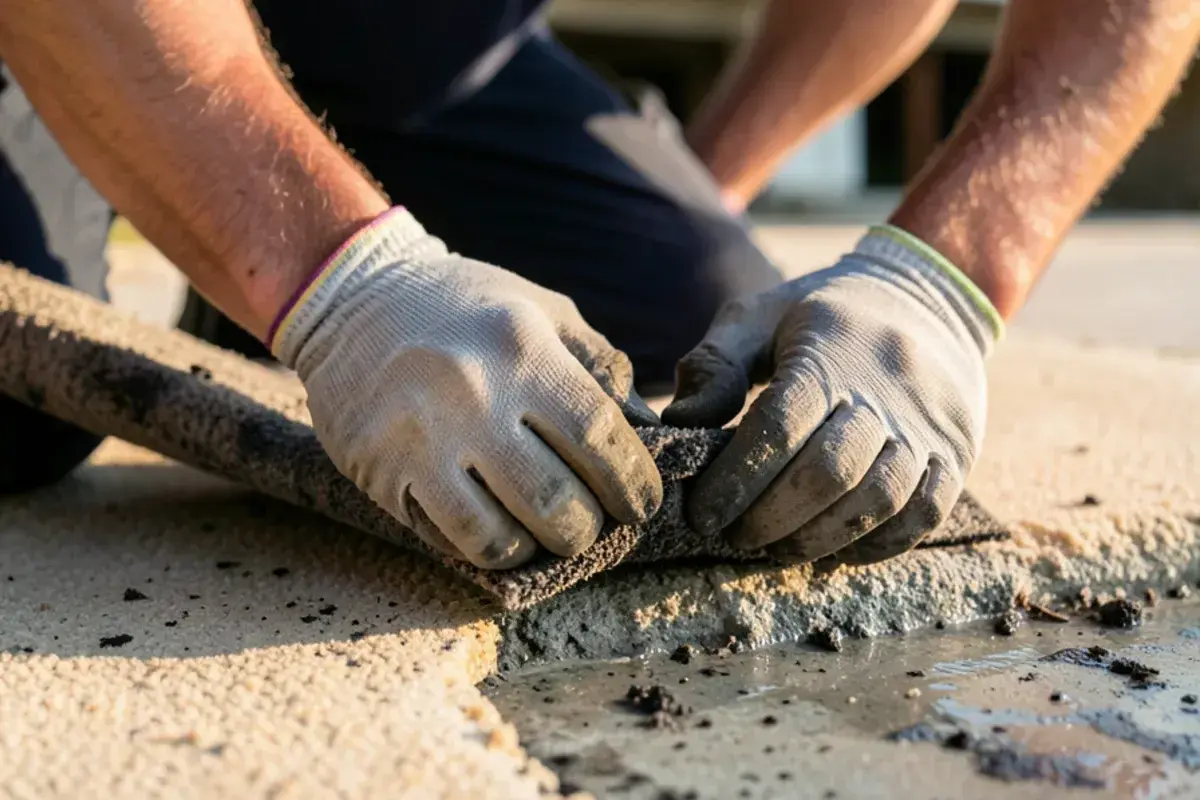
Run your own version of the dry standard
A basic pin meter lets you borrow our method on a small job. The number alone means little, because scales vary by meter and material. The comparison is what counts.
- Read the same material in a room that never got wet.
- Read the wet area low on the wall, at the baseboard and inside the cabinet base.
- Mark those spots with painter's tape, so you test the same place each day.
- Write the numbers down at the same time each day.
If the wet spots fall to match the dry room, you are finished. If they stop falling while still above it, water is held somewhere your air cannot reach, or the source is still feeding it. A pin meter reads one point, which is why we pair ours with thermal imaging. Our guide to signs of hidden water behind a wall covers what to look for next.
If you handle it yourself, follow these steps
Work in this order so you do not make the job worse. Stop as soon as one of the conditions in the first section stops being true.
- Shut off the source and check that the room's electrical is safe.
- Photograph everything before you move it.
- Remove surface water with towels, a mop or a shop vac.
- Move rugs, furniture legs and anything that can stain out of the wet area.
- Lift any wet mat or rug, and check what is underneath.
- Run a dehumidifier in the closed room, along with a fan.
- Check the area again the next day for smell, swelling or damp spots.
Throw out anything porous that cannot be fully dried in that same 24 to 48 hour window. Do not paint over or caulk a damp area, because a sealed surface keeps the moisture in.
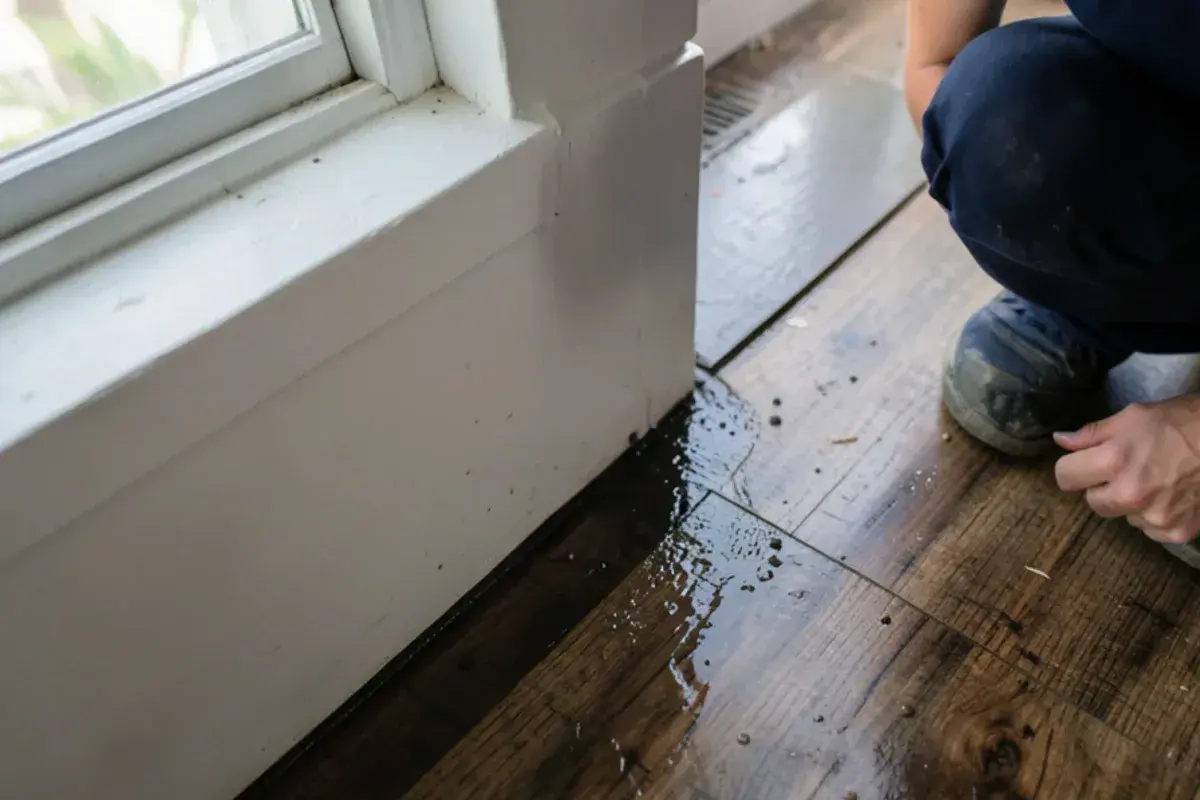
Rules we give homeowners doing it themselves
We would rather you handle a small spill yourself and keep your money. These are the rules we pass along:
- Close the windows. Coastal air is wet, and in a St. Augustine Beach house the breeze brings moisture in with it.
- Give yourself a one-day limit. If the area is still damp tomorrow, your method is not working.
- Check the room below, the closet behind and the cabinet base next door.
- Do not use bleach and ammonia together, and do not treat a chemical as a substitute for drying.
- Keep your receipts and photos in one folder.
What happens when you call after trying it yourself
Tell us what the water was, when it started and what you have already done, because the category and the clock both come from those answers. At a free moisture assessment, we read the materials you dried against unaffected ones in the same home. Then we check the places a mop does not reach: the wall base, the next cabinet and, on a second floor, the ceiling below.
If the readings match, we say so and leave. If they do not, you get the readings and an estimate, and the choice stays yours.
Prove it is dry, or hand it to someone who can
Size is the wrong test. A small spill under a vanity can soak a wall cavity, while a wide puddle on sealed tile can be gone within the hour. Clean water, caught early, on surfaces you can reach, with readings that match a dry room: that is a DIY job. Miss any one of those and the call is worth making.
Past that point, water extraction and drying equipment will outperform anything from a hardware store. We provide free assessments and estimates, so a call costs you nothing if the answer turns out to be that you were fine. Call us when you are unsure, and we will bring a meter and tell you what it reads.
Frequently asked questions
Can a shop vac handle water damage on its own?
A shop vac handles surface water, and for a small spill that may be all you need. It cannot reach water in carpet padding, under vinyl plank or inside a wall cavity. Use it on clean water only, and keep the cord and outlet well away from anything wet. If the floor still feels damp a day later, the vacuum has reached its limit.
Will box fans dry wet carpet in a Florida home?
Box fans help a surface dry, but they mostly move damp air around unless something removes the water from that air. In our humidity, opening the windows can add moisture. Wet padding stays wet under a dry-feeling carpet, so lift a corner and check. Padding soaked by anything other than clean water should come out instead of being dried in place.
Could cleaning up myself cause a problem with my insurance claim?
That depends on your policy, so ask your insurer before you throw anything away. Your policy wording and adjuster decide what applies. As a practical habit, photograph every wet room and item first, note the date of loss and keep samples of damaged materials. Those simple records help you whether you clean up yourself or hire someone to do it.
Is a rented dehumidifier enough after a small leak?
Yes, for a small clean-water spot with open surfaces in a closed room, as long as someone empties the unit or runs its hose to a drain. It pulls water from room air, so it does nothing for a wet wall cavity or the slab under vinyl plank. In August, when rain peaks here, every open door lets wet air back in, so keep the room shut and check your readings daily.
Not sure it is dry? Get a reading before you close it up.
Open 24 hours for emergencies. Non-emergency calls are best between 7am and 7pm.
- 5.0 on Google, 8 reviews
- Family owned since 2020
- Calls go straight to the owner
- Free assessments and estimates
1 Call Restoration, Saint Augustine, FL. (208) 464-4194.
Related services: Water Extraction, Structural Drying, Sewage Cleanup. Serving St. Augustine Beach and the rest of our service area.