
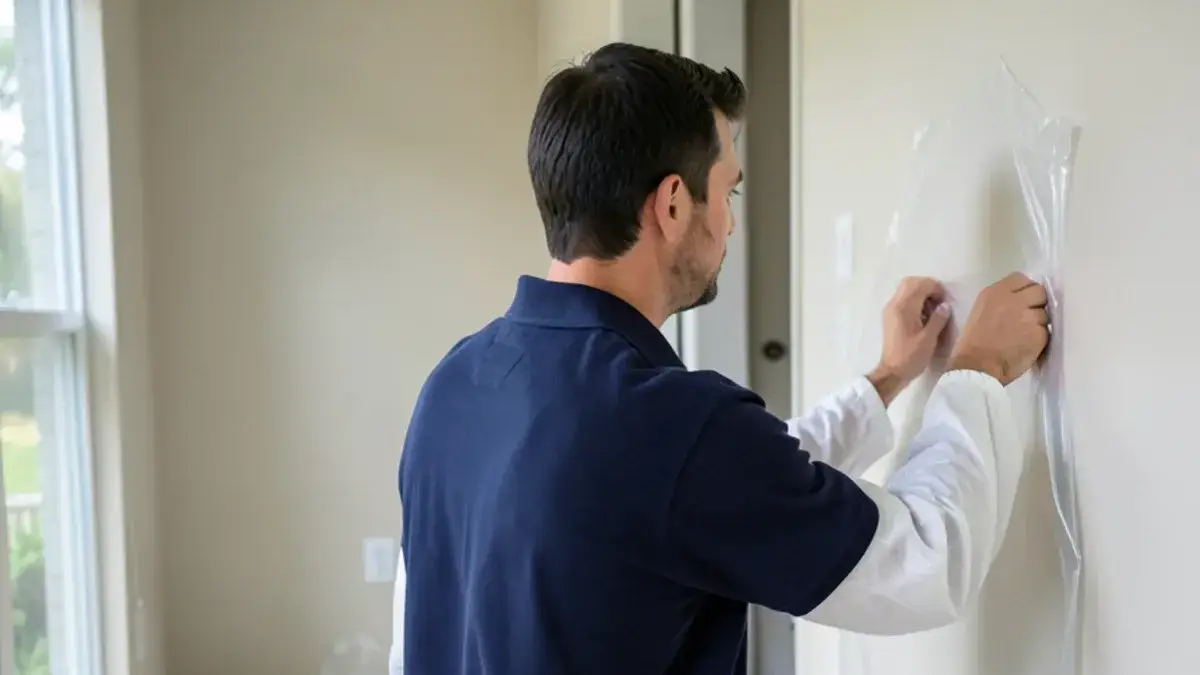
What counts as a sewage emergency?
Any water with waste in it inside the house is an emergency, and it does not take much. Sewage is Category 3 water, the contaminated category in the industry's S500 reference standard. Call us if you see any of these:
- Dark or foul water coming up through a tub, shower or toilet
- Water around a floor drain or washer standpipe
- Several drains gurgling or slowing at once
- A sewage smell that stays after you flush
- Water coming through a ceiling below a bathroom
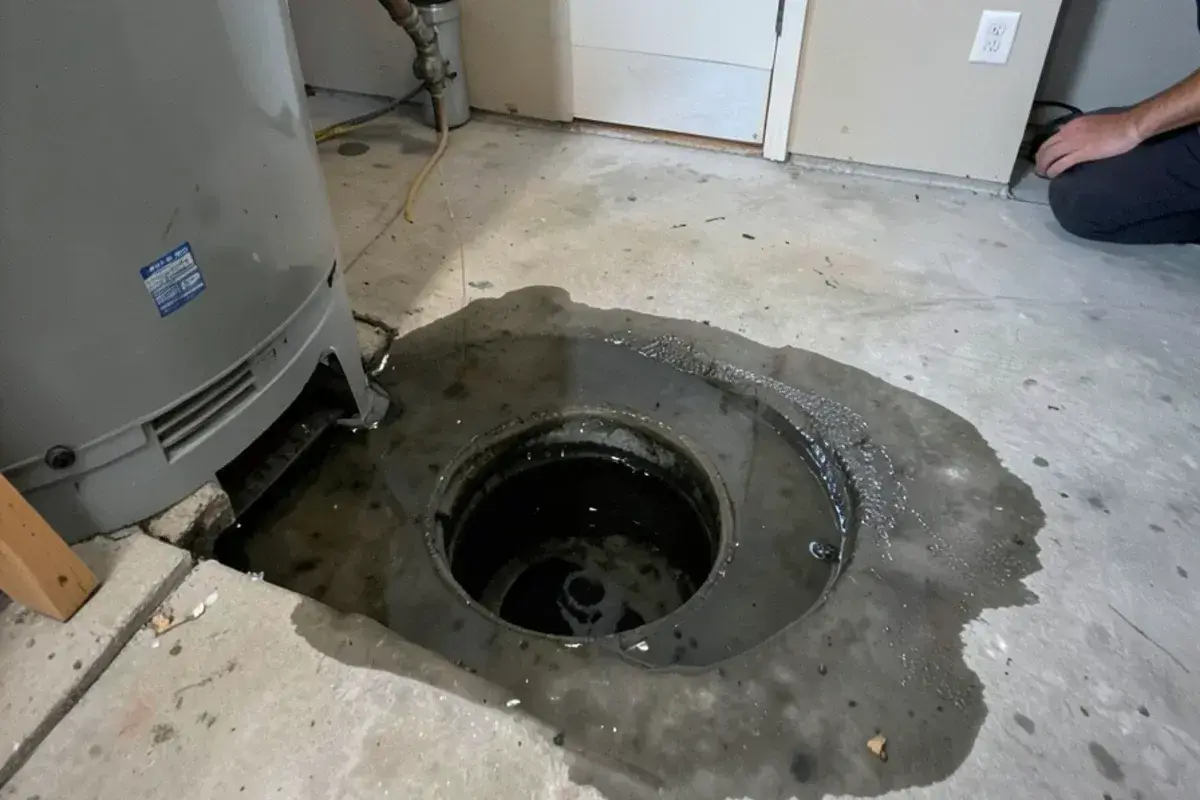
Low fixtures usually show it first. A ground-floor shower or tub is often where a blocked line shows up.
What to do right now, and what not to touch
Stop adding water and keep clear. The next flush or load of laundry adds to what is on the floor.
- Keep children and pets away. The CDC says not to let children play in areas affected by floodwater.
- Stop using toilets, sinks, showers and the washer.
- Shut off power to the room only from a dry place.
- Do not walk through it. If you must enter, the CDC calls for rubber boots, goggles and gloves, and a waterproof bandage over any cut.
- Do not run a fan or the air handler over the wet area.
- Throw away food that touched the water, and take photos from the doorway.
Afterward, the CDC says to wash exposed clothing in hot water with detergent and to wash your hands with soap and water. The EPA says to limit contact with water that may hold raw sewage. If you feel unwell, talk to a doctor.
Septic or municipal sewer: who do you call first?
Your system decides the first call, and the rules differ. Check your utility bill. A sewer line item usually means municipal service.
On municipal sewer. Report it to your utility and ask where the blockage sits. City of St. Augustine customers can find the wastewater after-hours line on the city's after a storm page. St. Johns County Utilities customers should use the county's contact. If the main is fine, a plumber takes it from there.
On septic. Cut water use and call a septic contractor. St. Johns County notes that many septic systems here were installed decades ago and can be hard to maintain where groundwater is high or flooding is frequent. After a flood, the EPA gives clear rules:
- Do not pump the tank while the drainfield is flooded or saturated, because the tank can try to float.
- Do not use the system until water in the absorption field is lower than around the house.
- Keep heavy equipment off the wet drainfield.
- Have only trained specialists clean or repair tanks, which may hold dangerous gases.
- Do not drink well water until it has been tested.
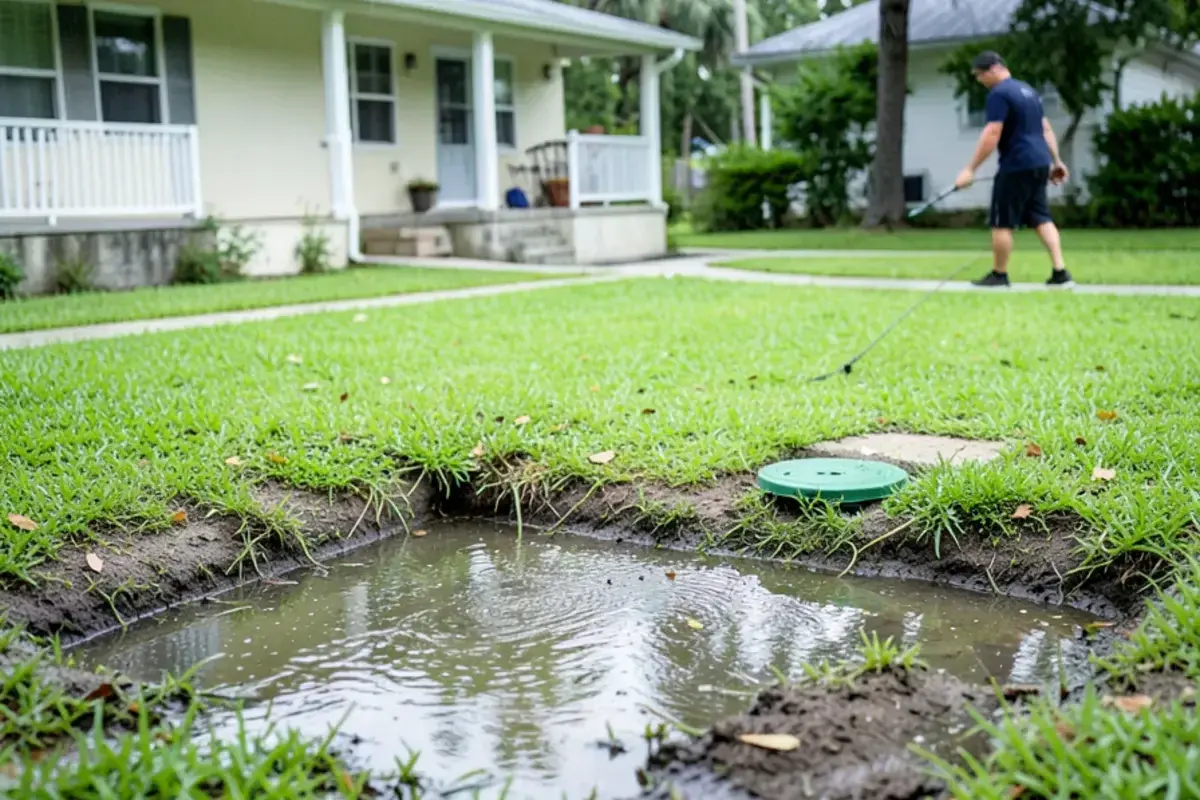
The county health department can point you to help. We clean the house. The blockage itself belongs to the utility, a plumber or a septic contractor.
Sewage in the house? Keep everyone out and call the owner
Open 24 hours for emergencies. Non-emergency calls are best between 7am and 7pm.
- 5.0 on Google, 8 reviews
- Family owned since 2020
- Calls go straight to the owner
- Free assessments and estimates
Request a free estimate
Not an emergency? Send the details and we will call you back. If water is still moving, call instead.
How sewage cleanup works, step by step
We start only when the backup has stopped, and we work from the dirtiest area outward. You see the scope before heavy work starts.
- Check the hazards, confirm the source is stopped and photograph the affected rooms before demolition.
- Seal the area with containment and set HEPA air scrubbers.
- Extract the sewage and solids, then remove carpet, pad, wet drywall, insulation and other porous materials.
- Clean all remaining surfaces, then apply antimicrobial where needed.
- Set air movers and LGR dehumidifiers for structural drying, and take daily readings until materials reach the dry standard.
- Sequence the drywall, paint and flooring put-back.
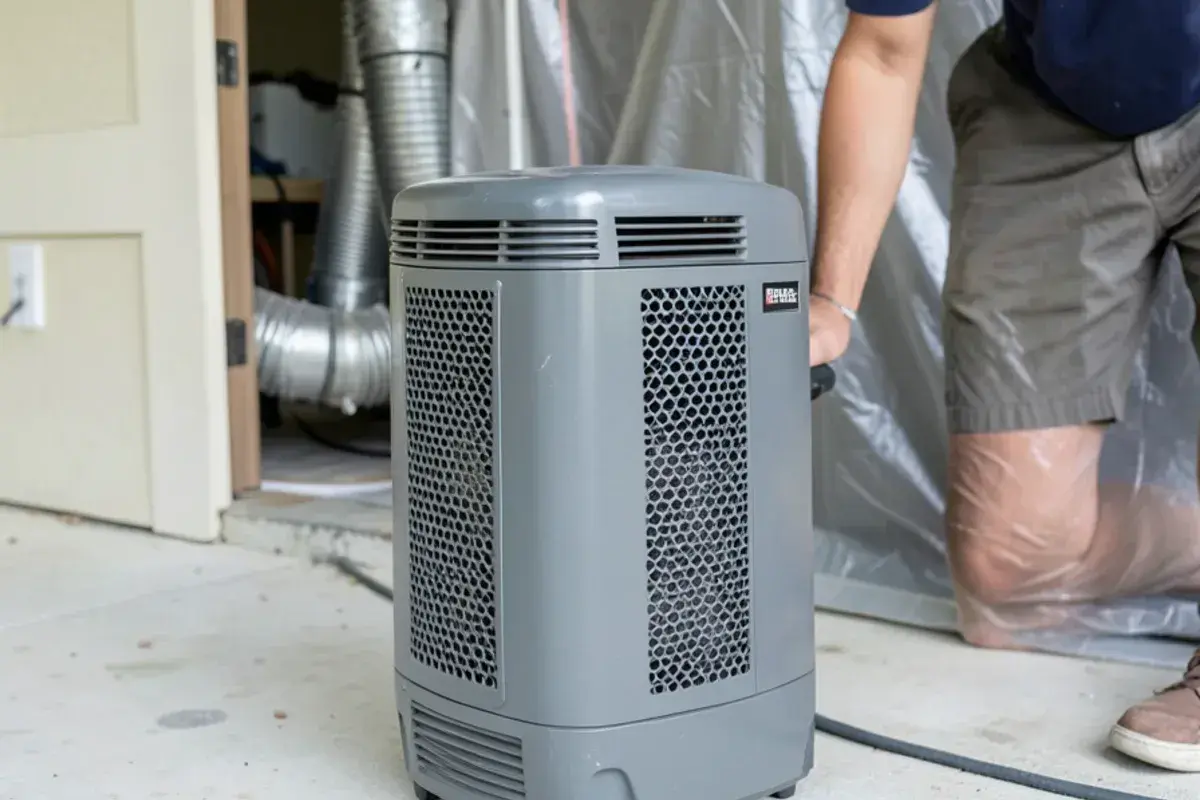
Do not skip the drying step. Sewage jobs leave wet framing behind, and a cleaned wall that stays damp becomes mold after water damage. For flood-driven backups, our flood damage restoration page explains the wider job.
What the job includes
A sewage job has two halves: get the room clean, then get the structure dry. In a St. Augustine slab home that usually means the floor level and the bottom of the walls. On a raised older home, it can mean the subfloor and what sits under it too, so we check from below when we can reach it.
We keep the work away from the rooms you are using, and we leave the line, the tank and the blockage to the people who fix them. The scope holds whether the source was a blocked lateral, a septic tank or a storm. You see the removal list before heavy work starts, so the record matches the estimate line by line.
- Containment and HEPA air scrubbing around the work area
- Extraction of sewage and solids
- Tear-out of porous materials, with photos of what leaves
- Cleaning and antimicrobial on hard surfaces
- Drying with daily moisture readings
What stays and what goes after Category 3 water
Porous materials usually go, and hard surfaces usually stay. The call depends on how long the sewage sat and how far it reached.
| Material | Usual decision | Why |
|---|---|---|
| Carpet and pad | Remove | Sewage soaks through to the backing |
| Drywall and insulation | Flood cut and remove | Paper and fiber hold contamination |
| Baseboards and door casing | Often remove | Water sits behind them |
| Sealed tile and concrete | Clean and disinfect | Hard surfaces can be cleaned |
| Upholstered furniture | Usually discard | Cleaning cannot reach the filling |
| Solid wood furniture | Assess each piece | Some cleans up, some swells |
The EPA also says to discard items that have been wet longer than 24 to 48 hours. We photograph what leaves, so you keep a record for your own file.
Local backups: surge, rain and old lines
Storms make backups worse here, and low-lying neighborhoods feel it first. News4Jax reported that Hurricane Matthew's 7-foot surge left raw sewage in homes across Davis Shores in 2016. High groundwater and heavy rain can also stop a septic drainfield from accepting water, which pushes it back toward the house.
Nor'easters do it without a hurricane. In October 2025, News4Jax reported storm drains filling and pressure lifting manhole covers as King Street and Bridge Street closed. Tree roots and aging pipe add a quieter cause, narrowing a line until one heavy use sends water to the lowest fixture.
We take sewage calls in Flagler, Volusia, Putnam, Clay, Duval and St. Johns counties, including St. Augustine Shores, Butler Beach and rural Hastings, where wells and septic systems are part of the conversation.
Who regulates what
The S500 standard names Category 3 water, but it is an industry reference, not a law. CDC and EPA publish the safety advice on this page. The pipe itself is regulated. Under F.S. 489.113, contracting work such as plumbing needs a certified or registered contractor, and the City of St. Augustine's under-$7,500 exemption does not reach plumbing. Whoever does permitted work pulls the permit. Septic questions go to the county health department. If growth follows, Florida licenses mold remediation over 10 square feet through DBPR. Ask any company for its license number and check it on the DBPR site, ours included.
How is the price set on a sewage job?
The estimate comes first, whatever the hour. We show up, assess the damage and give an estimate, free and with no high-pressure sales.
- Volume of sewage and how long it sat
- Rooms and floors affected
- Amount of porous material removed
- Containment and air scrubbing
- Disposal and equipment days
Three things move a St. Augustine sewage estimate most. Distance traveled comes first, since one tile bathroom is a different job from carpet running through a slab home. Wall cavities come next, because a flood cut adds drywall and insulation to the put-back. Then time: sewage left for days in our humid air means more material out and more cleaning before drying can begin. Containment grows with all three, and so do equipment days.
Your insurer decides what your policy does. You receive the photo record, moisture and equipment logs, and an itemized estimate. Ask us about any number on it.
Why 1 Call for a sewage backup
This work is unpleasant, and the family in the house should not have to manage it. Here is how we run it:
- Family owned, so you speak with the owner, Dal Beggs
- Clear separation between work areas and the rooms you live in
- A plain list of what comes out and why
- Daily readings until the home is dry
- Open 24 hours for emergencies, so a backup at night still reaches Dal
- A free assessment and estimate, without high-pressure sales
- Locally owned since 2020, and run with his son
We also tell you when it is a mop job. Clean bowl water caught on tile does not need a crew.
What customers say
5.0 stars on Google from 8 reviews. Quoted as written.
“Very impressive service. Dal and his team responded to our call immediately and were out the same day to begin the remediation process. Would highly recommend 1Call Restoration.”
“Highly recommend Dal and his team at 1 Call Restoration - great locally owned company. We had a pipe burst that flooded parts of our home - it was such a stressful situation for our family. Dal and his team were amazing through the whole process. They helped us get everything cleaned up and even helped us as we worked with our insurance. Super thankful for their expertise, quality work, responsiveness, and professionalism.”
“Dal and his son are so compassionate and truly care about the human and do everything in their power to help your house back to normal. They were punctual and even showed back up to the house with any questions etc, I was very pleased with them and would recommend them to anyone who wants someone honest in this industry that unfortunately doesn’t have many honest companies in it. Dal and his crew have a customer life with us anytime we need their services.”
Frequently asked questions
Is one overflowing toilet a sewage job?
It depends on what was in the bowl and how far it went. Clean bowl water caught at once on tile is a mop job. Water with waste in it, or water that reached carpet, baseboards or the room below, is Category 3 and needs proper cleanup. Send a photo or describe it on the call and we will say which.
Can my family stay in the house during a sewage cleanup?
Often yes, if the affected area can be sealed off and you have a working bathroom. We put up containment and keep work areas under HEPA air scrubbing. If the sewage reached kitchens, bedrooms or the only bathroom, staying elsewhere is more sensible. Children, pets and anyone with a health concern should stay out of the area.
Will bleach take care of a sewage spill?
Not on its own, because bleach cannot clean what soaks into carpet, pad or drywall. Surfaces need the solids and water removed before any disinfectant can work, and porous materials usually have to go. Never mix bleach with ammonia or other cleaners. Let us see the room as it is before anything gets poured on it.
Does carpet have to go after a backup?
Yes, in most cases. Carpet and pad take sewage down into the backing and the tack strip, and cleaning cannot reach that. We remove them, clean the floor below and disinfect before drying. Hard surfaces such as sealed tile usually stay. We show you which materials we recommend removing, and why, before the work starts.
Should I call a plumber or a restoration company first?
Stop the backup first, then clean up. Call your utility or a plumber if drains are blocked, or a septic contractor if you have a tank, and call us at the same time. Until the line is clear, cleaning can be undone by the next flush. Stop using water in the house while you wait.
Is my well water safe after a septic backup or flood?
Do not assume so. The EPA says not to drink well water after a flood until it has been tested, and not to run the pump on a flooded well because of shock risk. Contact the county health department for testing advice. Use bottled water for drinking, cooking and brushing teeth until you have a result.
Tub or floor drain backing up? Call before anyone steps in it
Open 24 hours for emergencies. Non-emergency calls are best between 7am and 7pm.
- 5.0 on Google, 8 reviews
- Family owned since 2020
- Calls go straight to the owner
- Free assessments and estimates
1 Call Restoration, Saint Augustine, FL. (208) 464-4194.
Related services
Worth reading
Where we handle sewage cleanup
See all of our service areas.