
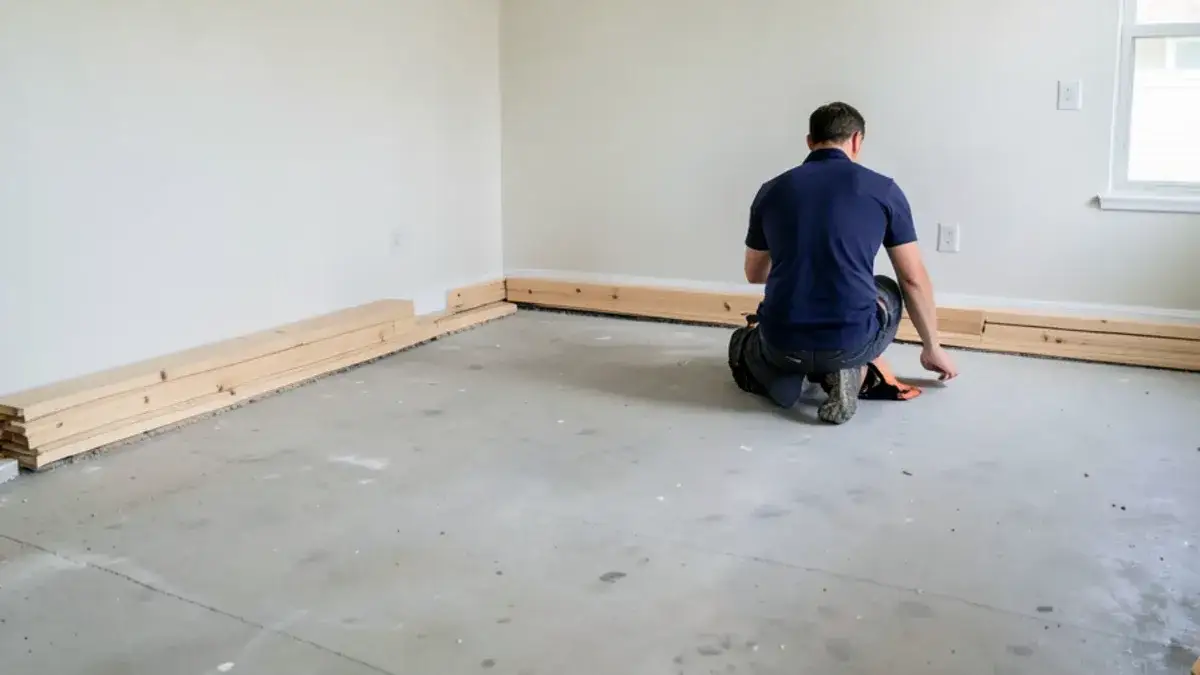
Which Water-Damaged Floors Can Be Saved?
Save what you can and replace what you cannot verify. The answer depends on the material, the water category and how long it stayed wet.
| Flooring | Clean water, caught early | Long-wet or Category 3 |
|---|---|---|
| Carpet | Can often be extracted and dried, pad usually replaced | Remove |
| Luxury vinyl plank | Lift, dry beneath, reinstall where possible | Remove, clean the slab |
| Laminate | Usually replace, the core swells | Remove |
| Engineered wood | Depends on veneer and glue | Usually remove |
| Solid hardwood | Dry slowly, then reassess | Often replaced |
| Tile on slab | Usually stays | Clean and disinfect, or remove |
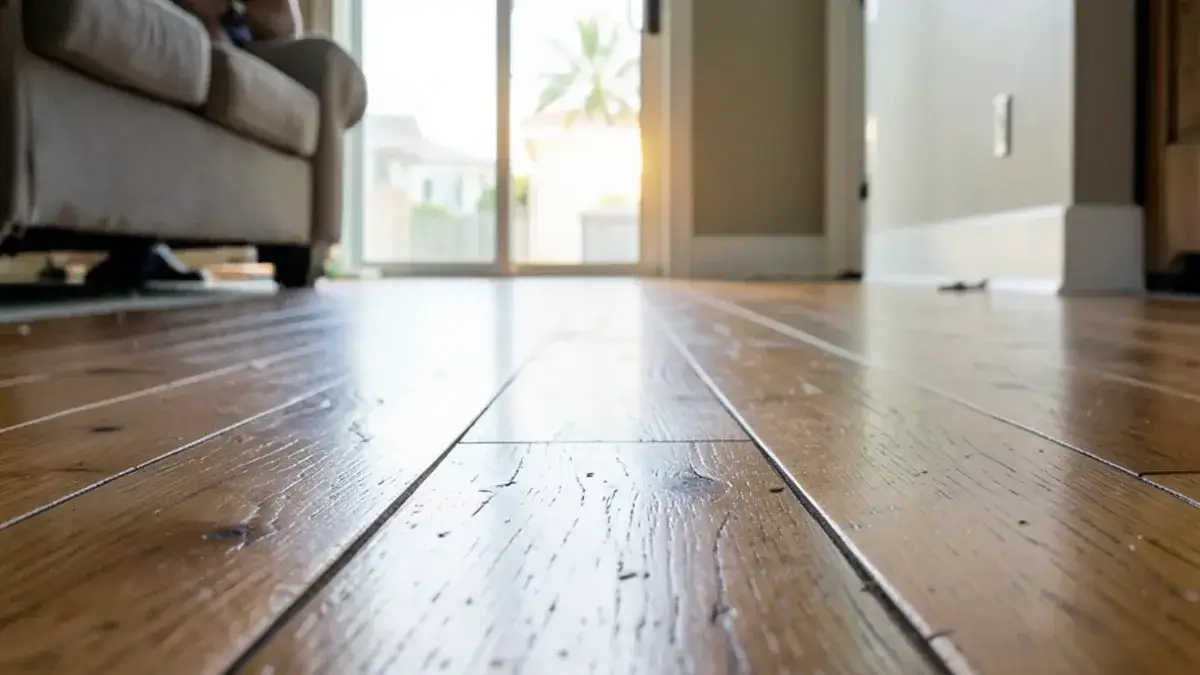
For wood floors, start with our hardwood floor water damage page. Wood can sometimes recover if it dries slowly, and refinishing waits until it has settled.
Signs the Base Under Your Floor Is Still Wet
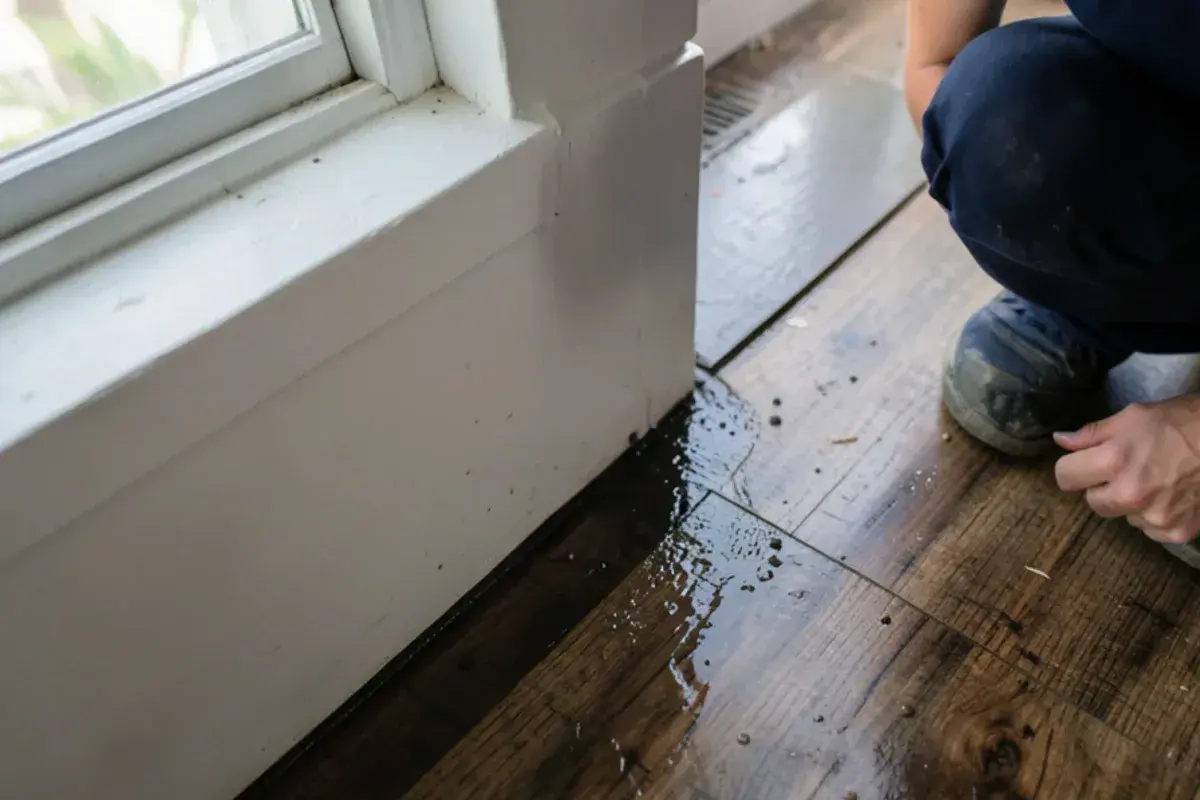
The surface often tells you. Boards cup, plank edges lift, tile sounds hollow, grout stays dark, or a soft spot gives underfoot. A musty smell at floor level after the room looks dry points the same way. Around St. Augustine the usual sources are supply lines, water heaters, AC drain lines and storm water coming in at sliders.
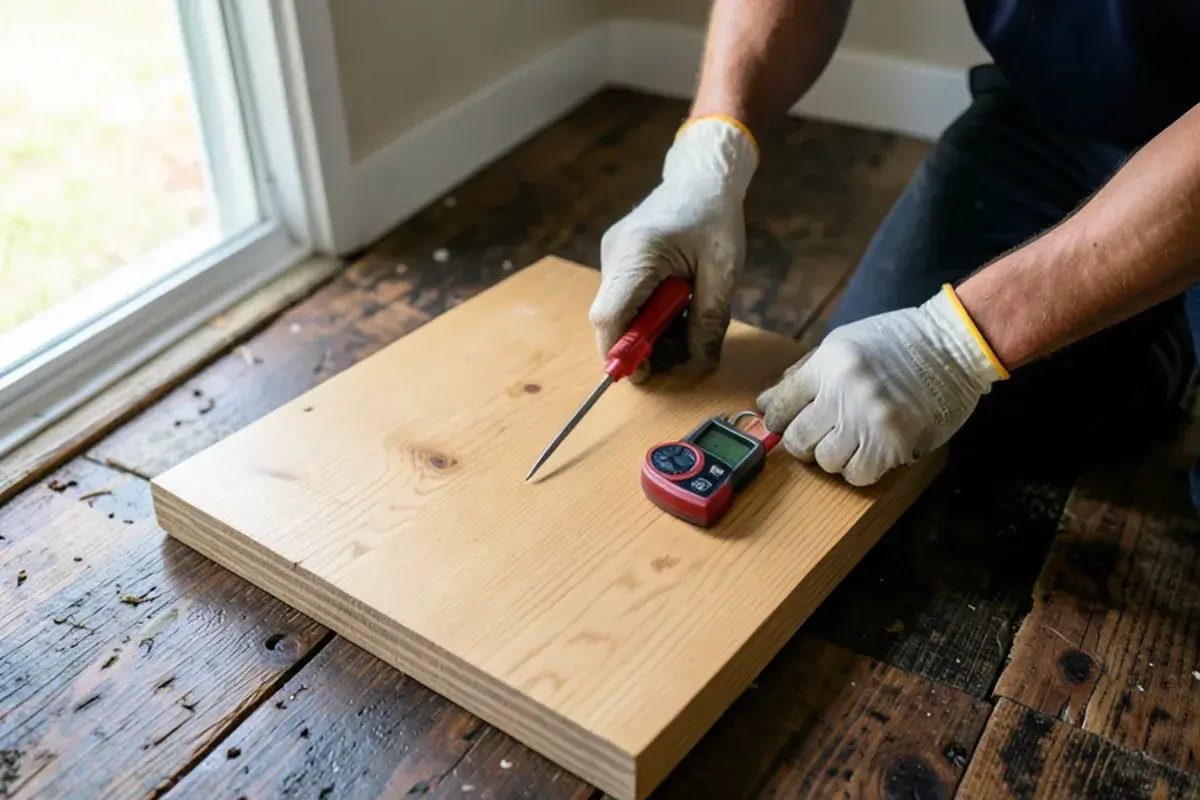
Flooring Replacement Options for a Humid Coast
Pick the floor for the room and the climate. Trade-offs matter more here than anywhere else in the job.
- Porcelain or ceramic tile. Handles moisture well. Hard underfoot, costly to remove later.
- Luxury vinyl plank. Quiet and forgiving. Can trap moisture if laid over a damp slab.
- Engineered wood. A wood look with less movement than solid. Sensitive to flooding.
- Solid hardwood. Refinishable and long-lived. Moves with humidity, needs steady AC.
- Carpet. Warm and affordable for bedrooms. A poor choice for spaces with leak history.
- Polished or sealed concrete. Simple and durable on a sound slab. Less forgiving of cracks.
Coastal homes in places like Crescent Beach see salt air and tracked-in sand, so hard surfaces near the door hold up well. In the end, the choice is yours, and we scope around it.
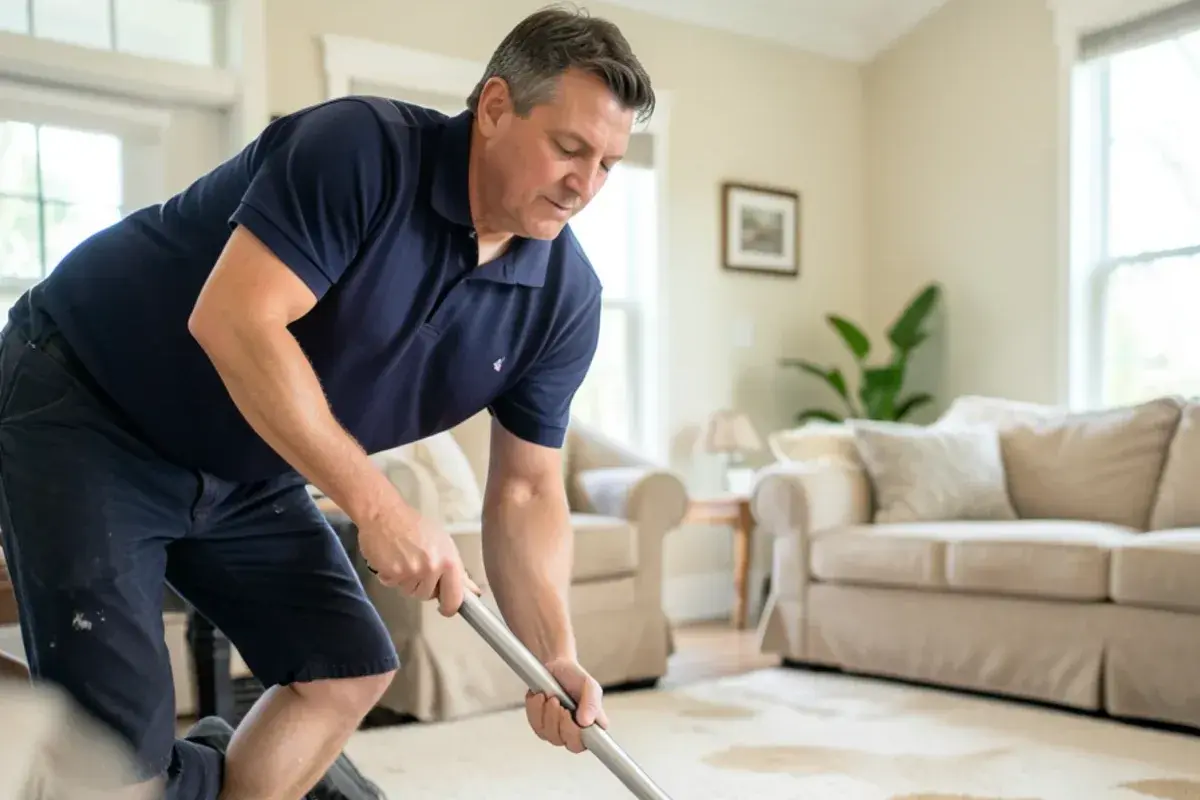
Slab or Subfloor: The Check That Comes First
No floor goes down until what is under it passes. Most block homes here sit on concrete slabs, which can hold water long after the surface feels dry.
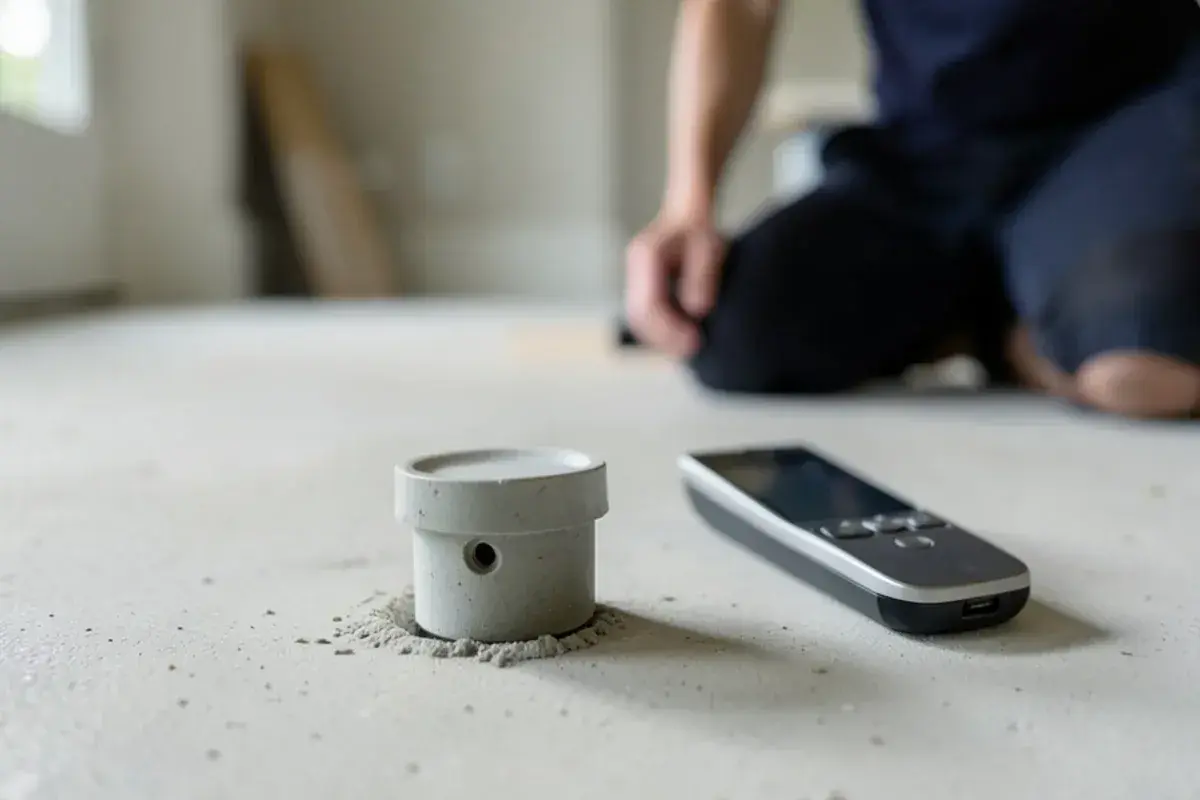
For slabs, we use meter readings and compare against unaffected areas, then a qualified flooring installer checks the limit set by the maker of the new floor. ASTM F2170 is a common slab test, using relative humidity probes in drilled holes that sit for 72 hours. A result only describes that time and spot, so moisture has to be stable before anyone trusts it.
EPA's archived flood guidance points to a simple ASTM check: fasten clear plastic sheeting to the slab and wait about 16 hours. Moisture on the plastic means the slab is still too wet for flooring. A clean sheet does not replace the maker's test.
For wood subfloors, pin meter readings tell the story. Delaminated plywood or soft spots mean a section needs replacing. Where subfloor or joist repair is structural, it goes to a suitable licensed contractor, and that work finishes first.
Older Tile and Adhesive: Stop Before You Scrape
Do not grind or sand old flooring until you know what it is. EPA and CPSC note that vinyl floor tile, sheet flooring backing and some adhesives in older homes may contain asbestos.
Only testing by a qualified professional can confirm it. If old tile is sound, EPA's older guidance also notes new flooring can sometimes go over it. We flag older layers during scoping, and the work pauses until you have an answer. This comes up most in 1970s and older homes.
How the Replacement Is Sequenced
Flooring comes near the end of the put-back, so it does not get damaged by other trades.
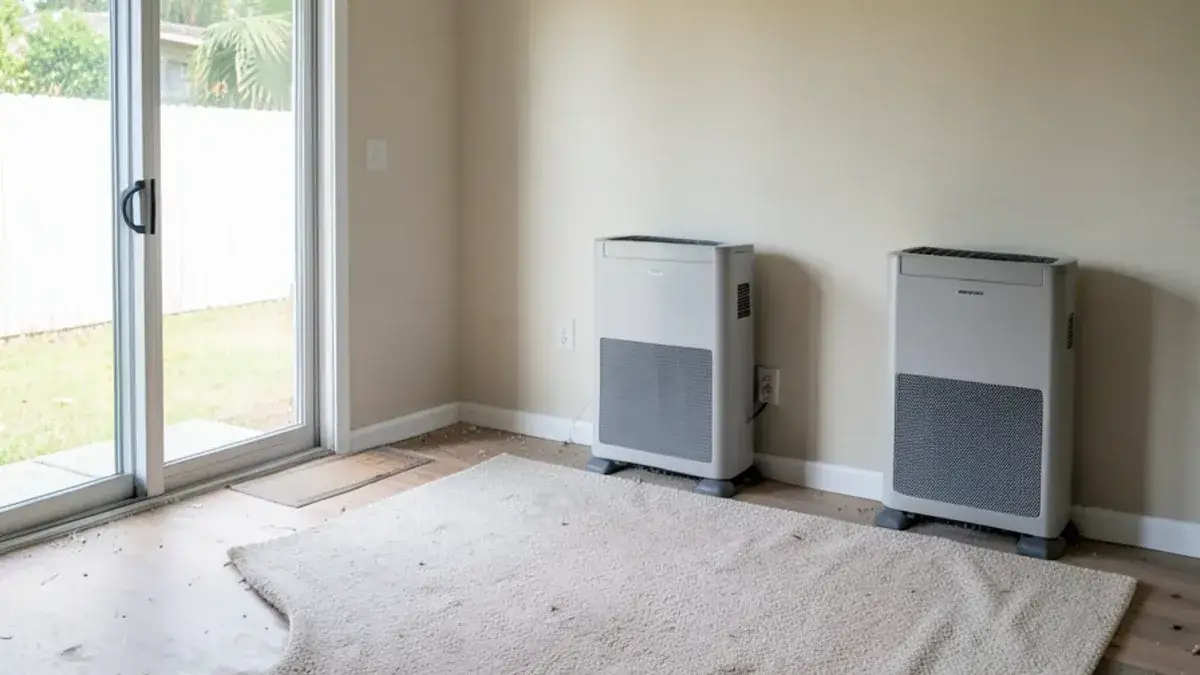
- Confirm drying is done, the air movers and LGR dehumidifiers are out and the final log is signed off.
- Clean and, where needed, disinfect the slab or subfloor.
- Finish drywall, primer and first coats of paint.
- Test the slab or subfloor against the flooring maker's limit, then let new material acclimate if the maker requires it.
- Install underlayment and flooring, then reinstall baseboards and transitions.
- Walk the job with you and touch up paint.
We build this order into the written scope and set out who handles each stage. If walls are also open, see how it fits with drywall and paint repair on the Reconstruction page.
What Goes in the Flooring Scope
The scope answers three questions: what stays, what comes out, and what has to pass before new material arrives. It keeps the wet area and the matching area on separate lines. Framing and joist work sits outside it and goes to a suitable licensed contractor.
- Moisture readings for the slab or subfloor, room by room
- Removal list by material, with photos before demolition
- Cleaning or disinfection, based on the water category
- Testing required by the maker of the new floor
- Baseboards, transitions and stairs
- The order of flooring against drywall and paint
Floors ruined by water? Find out what can be saved first.
Open 24 hours for emergencies. Non-emergency calls are best between 7am and 7pm.
- 5.0 on Google, 8 reviews
- Family owned since 2020
- Calls go straight to the owner
- Free assessments and estimates
Request a free estimate
Not an emergency? Send the details and we will call you back. If water is still moving, call instead.
Do You Need a Permit to Replace Flooring in St. Augustine?
Usually not for a simple floor covering, but confirm it. The City of St. Augustine's Storm Recovery Permitting Guide lists replacement of floor coverings among repairs that need no permit, along with removing wet storm-damaged materials.
Subfloor and structural repairs are a different matter. Work involving framing, or any project in a flood hazard area, is outside the City's under-$7,500 single-family exemption. In unincorporated areas, the St. Johns County Building Department says the owner must find out if a permit applies, so a quick call saves trouble. Whoever does permitted work pulls the permit. Ask any company for its license number and check it on the DBPR site, ours included.
For a flood zone home with heavy damage, ask City staff or County Floodplain Management about the 50 percent rule before ordering materials.
What Moves the Price of New Flooring
Removal and preparation can cost as much as the new floor.
- Square footage and how many rooms connect
- Material type and pattern
- Tile or glued-down demolition
- Slab grinding, leveling or testing
- Subfloor repairs by others
- Stairs, transitions and baseboards
- Furniture moves and cabinet toe kicks
Local conditions add their own lines. A 1970s or older home may need its old tile and adhesive tested before demolition, and work pauses for that result. A slab test adds waiting days, because probes sit 72 hours before a reading. Humid weeks can stretch slab drying, which pushes the install date.
Flooring prices shift often, so any number you see online may be old. Our estimate is free, comes in writing and separates removal from installation so you can compare.
Caring for New Floors in Florida Humidity
Keep the air steady and catch leaks early. New floors do well when indoor relative humidity stays under 60 percent, the upper end of EPA's guidance.
- Run the AC even when you are away
- Use a water sensor at the washer, water heater and fridge
- Keep entry mats down to trap sand
- Wipe spills, and clean with the maker's recommended product
- Check door thresholds after a storm
Why Call 1 Call Before You Buy Flooring
- Honest timing. We tell you when the floor is ready, not just when you want it to be.
- Direct access. Dal Beggs takes the call himself.
- Family owned. A local company founded in 2020, run with his son.
- No pressure. You get a written estimate and your own decision.
- Readings before material. We log the slab or subfloor, so the order you place fits what the base can take.
- Free assessment. We tell you what can stay.
We cover Fruit Cove, St. Johns, Flagler Beach and the rest of our six-county area. Water still on the floor? Start with water extraction instead.
What customers say
5.0 stars on Google from 8 reviews. Quoted as written.
“I recently had the pleasure of working with 1 Call Restoration, led by owner Dal, and I couldn’t be more impressed. Dal’s expertise in restoration services is evident from the moment you engage with him; he possesses a deep understanding of the industry and provides practical solutions tailored to individual needs. His professionalism shines through in every interaction, as he maintains clear communication, sets realistic expectations, and follows through on commitments. What truly sets Dal apart is his unwavering trustworthiness—he approaches each project with integrity and transparency, ensuring that clients feel valued and informed throughout the process. I highly recommend 1 Call Restoration for anyone seeking reliable and skilled restoration services.”
“Highly recommend Dal and his team at 1 Call Restoration - great locally owned company. We had a pipe burst that flooded parts of our home - it was such a stressful situation for our family. Dal and his team were amazing through the whole process. They helped us get everything cleaned up and even helped us as we worked with our insurance. Super thankful for their expertise, quality work, responsiveness, and professionalism.”
“I needed a second opinion on my water damage cleanup but about 5 minutes after Dal showed up I realized I should have contacted 1 Call FIRST. They immediately got to work drying out my house and explained everything so well which helped relieve so much of the anxiety I was feeling. The communication and work was all top notch. HIGHLY RECOMMEND!”
Frequently asked questions
Is luxury vinyl plank waterproof after a flood?
No, not as a whole floor. The plank may survive, but the floor underneath can stay wet. Water sits under a floating floor, and a vapor-tight surface slows drying below it. Clean-water leaks may allow lifting and reinstalling some planks. After Category 3 water, the plank usually comes up so the slab can be cleaned, disinfected and dried.
Can tile stay in place after water damage?
Often yes. Tile set firmly on a slab usually survives clean water, though grout and edges need checking. Hollow-sounding or loose tile means water or movement got underneath it. Removal is loud, dusty work, so we check before recommending it. After Category 3 water, tile stays only if it can be properly cleaned and disinfected.
Why does the floor have to be tested before installation?
Because a slab can feel dry and still hold moisture. Flooring makers set limits for moisture under their products, and going over them can cause lifting, cupping or adhesive failure. ASTM F2170 uses probes placed in drilled holes in the slab. Those holes sit for 72 hours before a reading, so plan for it.
Do you have to replace flooring in rooms that did not get wet?
Not always, but matching can make it practical. If the same floor runs unbroken from the wet room through a doorway, a clean stop may not exist, and old stock may be discontinued. We show the wet area and the matching area as separate lines. Coverage for matching is a question for your insurer.
Should I replace wood floors with something else near the beach?
It depends on the room and your plans. Tile takes moisture well and suits lower floors, entries and baths. Vinyl plank is forgiving and quiet. Solid wood looks great but moves in humid air, so it needs steady AC. Near the coast, whichever floor you pick, a working AC and controlled humidity matter as much as material.
Plan new floors on a dry base. Call 1 Call Restoration.
Open 24 hours for emergencies. Non-emergency calls are best between 7am and 7pm.
- 5.0 on Google, 8 reviews
- Family owned since 2020
- Calls go straight to the owner
- Free assessments and estimates
1 Call Restoration, Saint Augustine, FL. (208) 464-4194.
Related services
Worth reading
Where we handle flooring replacement
See all of our service areas.