
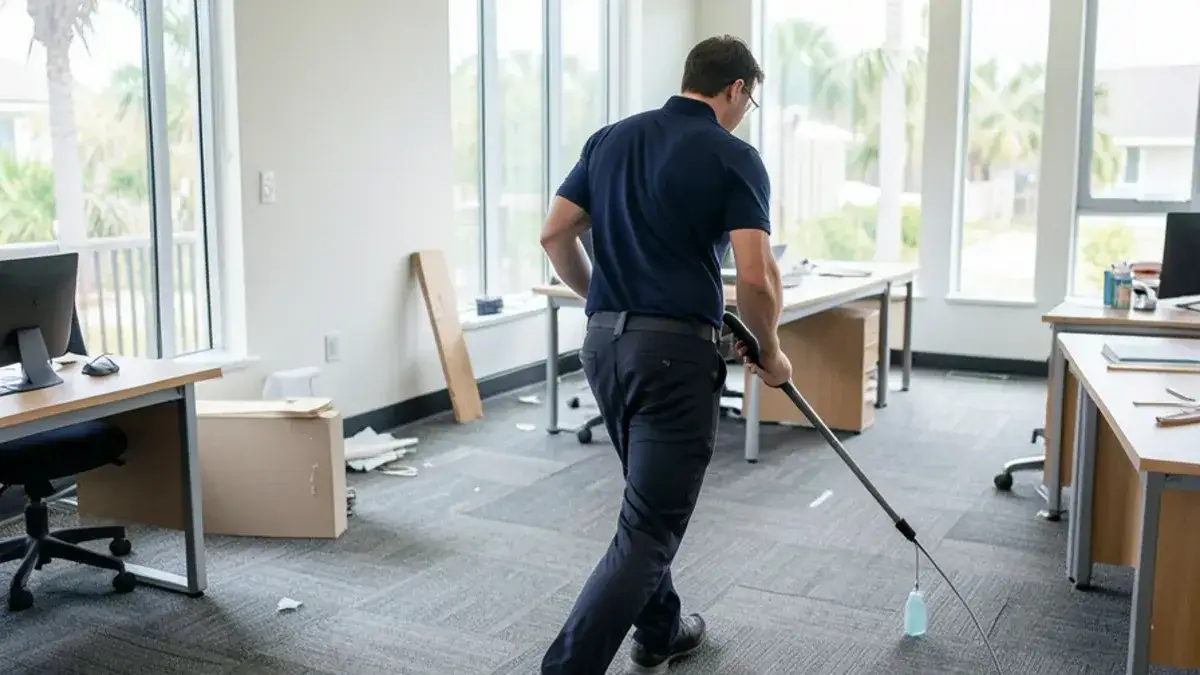
What Should a Manager Do First in a Commercial Water Damage Loss?
Stop the water, protect people, then start the record. Those three jobs come before anything else, and you can do most of them before we arrive.
- Close the nearest shutoff, or the main if you must. Know where your valves are.
- If water is near panels or fixtures, keep people out and call the utility or an electrician.
- Move staff, guests and customers away from wet floors and sagging ceilings.
- Get stock, files and equipment off the floor if it is safe.
- Photograph every affected area before anything moves.
- Call your landlord, owner or manager, then phone us. You will reach the owner directly.
Note the date and time you found the water. Someone will ask.
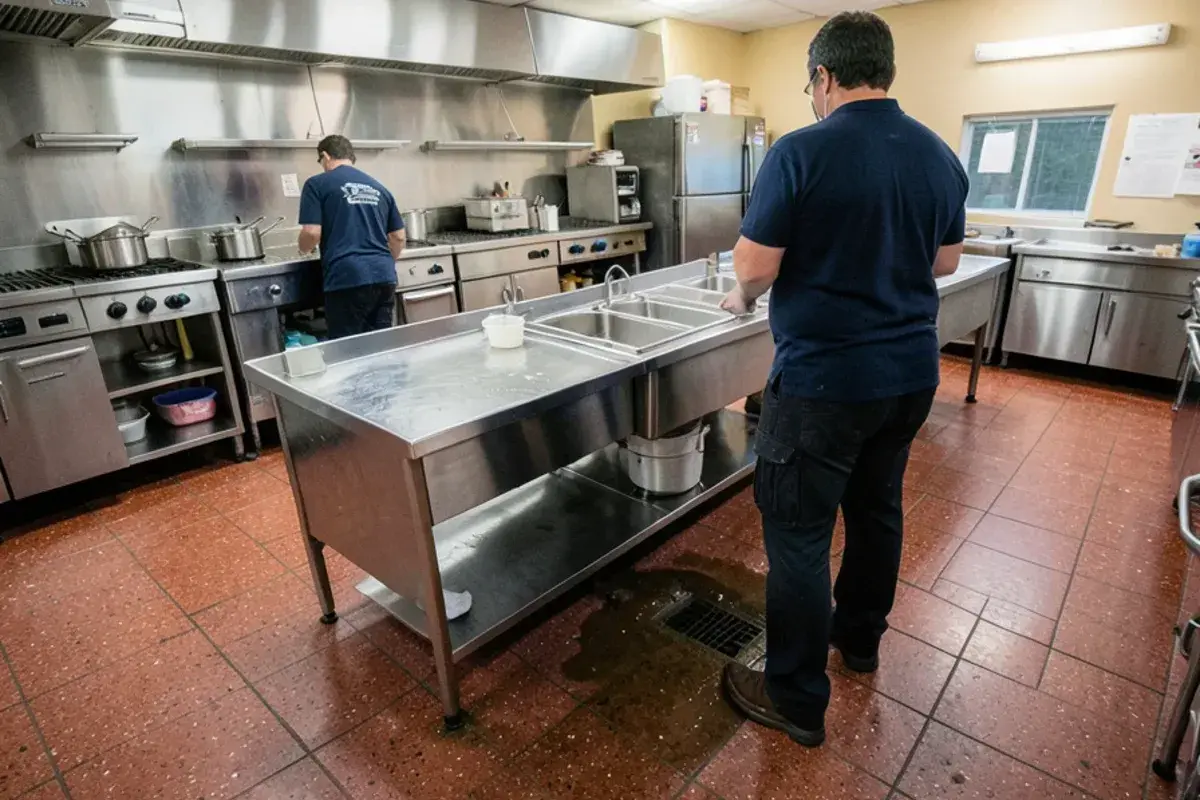
How Do the Risks Change by Property Type?
The drying method barely changes. What changes is who is affected and what cannot get wet.
| Property | Biggest risk | What we plan around |
|---|---|---|
| Office | Files, wiring, carpet tile, ceiling tile | Dry zones, covered desks, overnight running |
| Retail | Wet stock and rear storage | Separating stock, keeping the front open if safe |
| Restaurant | Food safety and floor drains | DBPR guidelines, Category 2 or 3 water |
| Hospitality | Guest rooms and shared chases | Room-by-room moisture map, quiet hours |
| Church or assembly | Carpeted halls, fixed event dates | Work phased around services and gatherings |
Older buildings downtown add their own issue, since masonry and plaster hold water longer than drywall. Older commercial property also raises the asbestos question covered on our commercial restoration page.
How Water Reaches St. Augustine Storefronts
Roof leaks, AC drain lines, supply lines, sprinkler breaks and floor drains are the usual starts. Downtown adds tide. During Milton in 2024 the Matanzas River came over the seawall into downtown, and in October 2025 a nor'easter closed King Street and Bridge Street, per News4Jax. Tide water is Category 3.
Keeping the Business Open During Drying
Part of the space can usually keep running, as long as the air and the people stay separated. We build containment with plastic sheeting and zipper doors, then run HEPA air scrubbers during demolition so dust stays in the work zone.
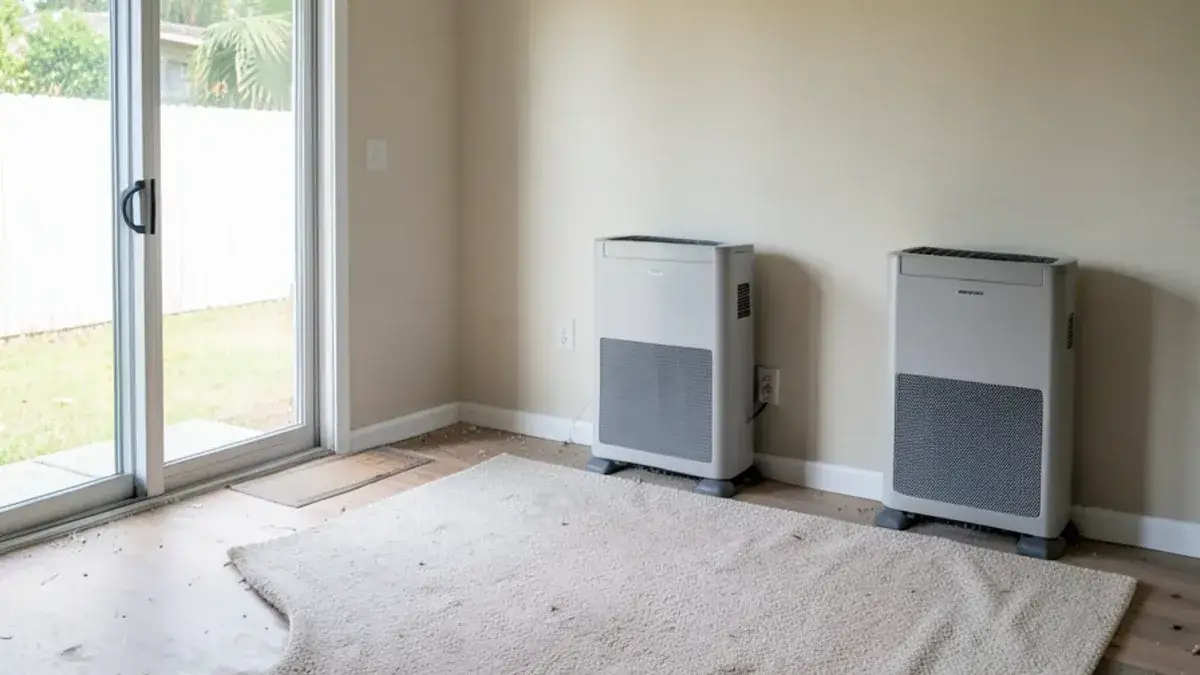
Air movers are loud. We will tell you how loud and where before they start, because a dentist's office and a warehouse tolerate noise differently. Equipment can run overnight, and water extraction comes first because nothing dries over standing water.
Doors stay closed. Humid outside air slows drying, and St. Augustine sees rain on about 116 days a year. Propping a storefront door open to help the fans works against the LGR dehumidifiers.
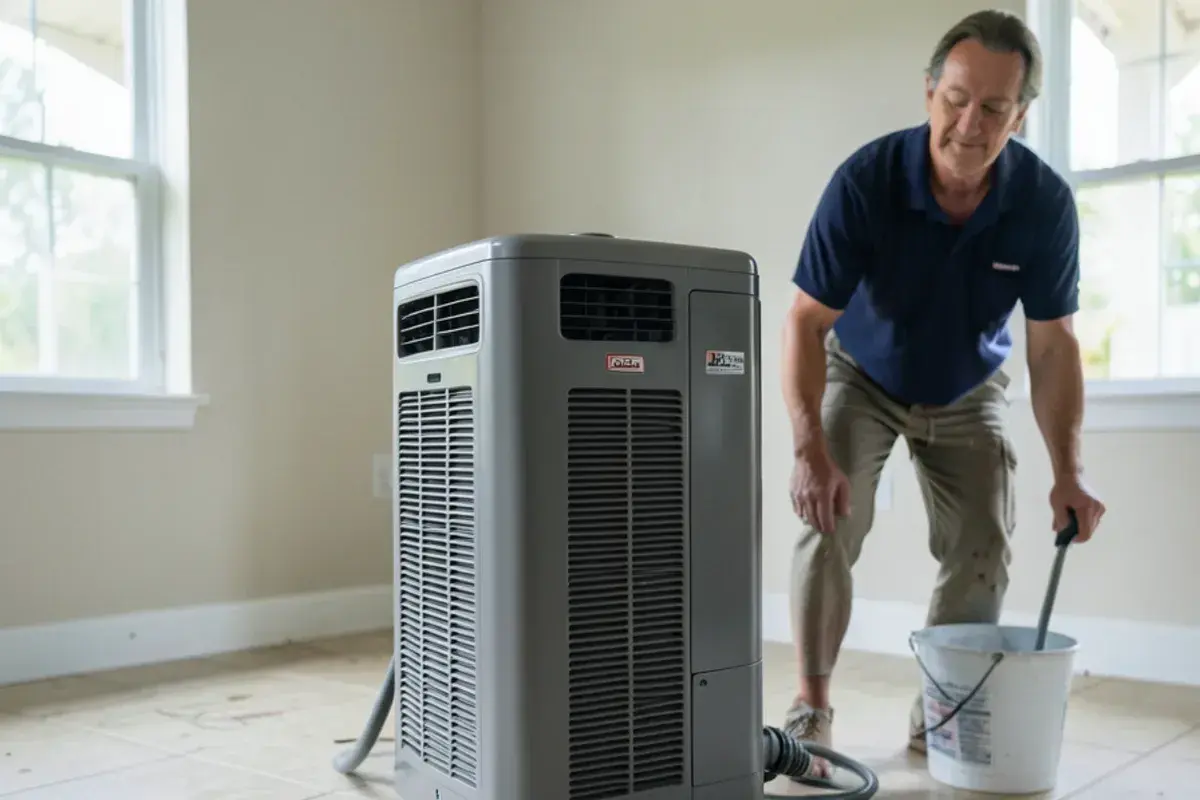
The Job, Phase by Phase
Each phase has an end point you can check.
- Assessment: free walk-through with moisture meters and thermal imaging, source, moisture map, water category.
- Scope: written plan and itemized estimate before heavy work.
- Extraction and demolition: pumps and extractors take out standing water, then flood cuts remove materials that cannot dry, with containment up.
- Drying: air movers and LGR dehumidifiers, with readings logged daily.
- Closing: materials match the dry standard, then equipment leaves.
- Put-back: we scope and sequence drywall, paint and flooring. Structural work goes to a suitable licensed contractor.
Drying time follows the readings, not a calendar. Masonry, thick carpet and humid weather stretch it. EPA aims for wet materials to be handled within 24 to 48 hours, then notes that mold can still form inside that window.
What the Commercial Job Covers
- Extraction and removal of wet finishes
- Containment and HEPA air scrubbers around occupied zones
- Overnight drying where the space allows
- Daily readings logged by suite or zone
Leak in your building right now? Call the owner directly.
Open 24 hours for emergencies. Non-emergency calls are best between 7am and 7pm.
- 5.0 on Google, 8 reviews
- Family owned since 2020
- Calls go straight to the owner
- Free assessments and estimates
Request a free estimate
Not an emergency? Send the details and we will call you back. If water is still moving, call instead.
What Records Will Owners and Insurers Ask For?
Keep everything in one file from the first hour. A building owner, tenant or insurer will usually want to see the same set:
- Dated photos before demolition
- Moisture map and daily moisture logs
- Equipment records, room by room
- Written scope and any changes to it
- Itemized estimate
We provide these and explain our own estimate. We do not read a commercial policy, negotiate or say what it pays. Your broker, insurer or attorney handles those questions.
Rules That Reach a Commercial Loss
A restaurant answers to DBPR, whose Emergency Recovery Guidelines cover food service after flooding or contaminated water. Before demolition, EPA's asbestos NESHAP calls for a thorough inspection outside residential buildings of four or fewer units. Florida DEP runs notification. Under F.S. 627.7152(13), post-loss benefits under a commercial property policy issued on or after January 1, 2023 cannot be assigned. Ask any company for its license number and check it on the DBPR site, ours included.
How Commercial Water Damage Gets Priced
Your estimate is free and arrives before heavy work. These factors carry most of the weight on a commercial job:
- Square footage and number of affected suites
- Whether work must run nights or weekends
- Wet stock or furniture to move or protect
- Water category, since a sewage cleanup changes everything
- Power available for equipment
- Equipment days and put-back
St. Augustine buildings add their own variables. Downtown masonry and plaster hold water longer, which adds equipment days. Street flooding on King Street can delay access.
Where We Work, and Why Call Us
We cover St. Johns County, Flagler and Volusia to the south, Duval to the north and Clay and Putnam to the west, including St. Augustine Beach, Ponte Vedra Beach, Palatka and Ormond Beach.
- The phone goes to owner Dal Beggs, who runs the company with his son.
- We are family owned, with quick response and no high-pressure sales.
- We measure dry with moisture readings, not a guess.
Both reviews come from trade partners, and neither describes a particular commercial job.
What customers say
5.0 stars on Google from 8 reviews. Quoted as written.
“I work with these guys all of the time. They are a very ethical group, really good guys. Call Dal for water damage restoration or mold clean up.”
“Where a local plumbing company who’s used Dal many times. He’s always been helpful and honest. 1 call is a great asset for our customers!”
Frequently asked questions
Will a restaurant have to close after a kitchen water leak?
It depends on the water and your inspector, not on us. DBPR's Division of Hotels and Restaurants publishes Emergency Recovery Guidelines for food service after flooding or contaminated water, so read those first. Sewage backing up through a floor drain is Category 3 water and calls for extreme caution. We will explain what we find, and DBPR's rules decide whether you can operate.
Can drying equipment run overnight in an office?
Yes, drying works best when the equipment runs without a break. Air movers and LGR dehumidifiers keep going through the night, with cords routed and doors closed so the room holds its air. We check the power available on each circuit first. If a security system or after-hours access rule applies, tell us during the walk-through so we can plan for it.
Do wet ceiling tiles have to be replaced after a leak?
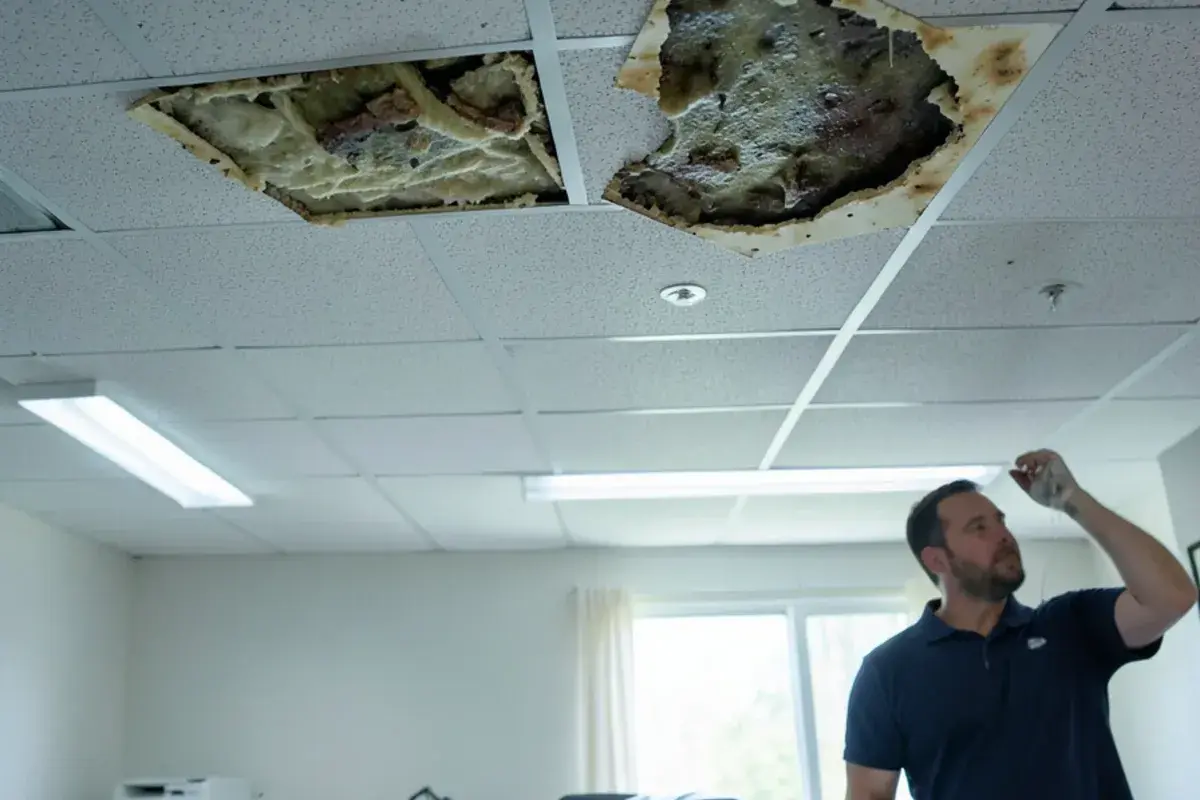
In most cases, yes. EPA's guide for commercial buildings lists ceiling tiles among the materials to replace rather than dry after water damage. We check the space above them too, because insulation, wiring trays and the deck hold water. Tiles in a suite with an active leak above should come down in a controlled way before they fall.
Can tenants stay in the building during drying?
Often yes, in the unaffected suites. Containment separates the work area, and HEPA air scrubbers handle dust during demolition. We will tell you if a space should be emptied, especially with Category 3 water or visible mold. Health questions belong with EPA and CDC guidance or a doctor. The notice to tenants comes from you, and we can supply the plain facts.
What if the water came from a neighboring tenant's space?
Stop the water first and sort out responsibility afterward. We trace the path with moisture meters and thermal imaging and record what we see, in both spaces if we can get access. We do not decide who is at fault. The lease, the owners and their insurers work that out, and the dated record gives them something factual to work from.
How does a fire sprinkler line break change the response?
It adds another trade and changes how we treat the water. Your fire protection contractor and local fire official decide what happens while the system is down. Water that sat in sprinkler pipe is not clean supply water, so we do not treat it as Category 1. We check how far it traveled through ceilings and walls before planning the drying.
Get your commercial water loss assessed. Call Dal any time.
Open 24 hours for emergencies. Non-emergency calls are best between 7am and 7pm.
- 5.0 on Google, 8 reviews
- Family owned since 2020
- Calls go straight to the owner
- Free assessments and estimates
1 Call Restoration, Saint Augustine, FL. (208) 464-4194.
Related services
Worth reading
Where we handle commercial water damage
See all of our service areas.