
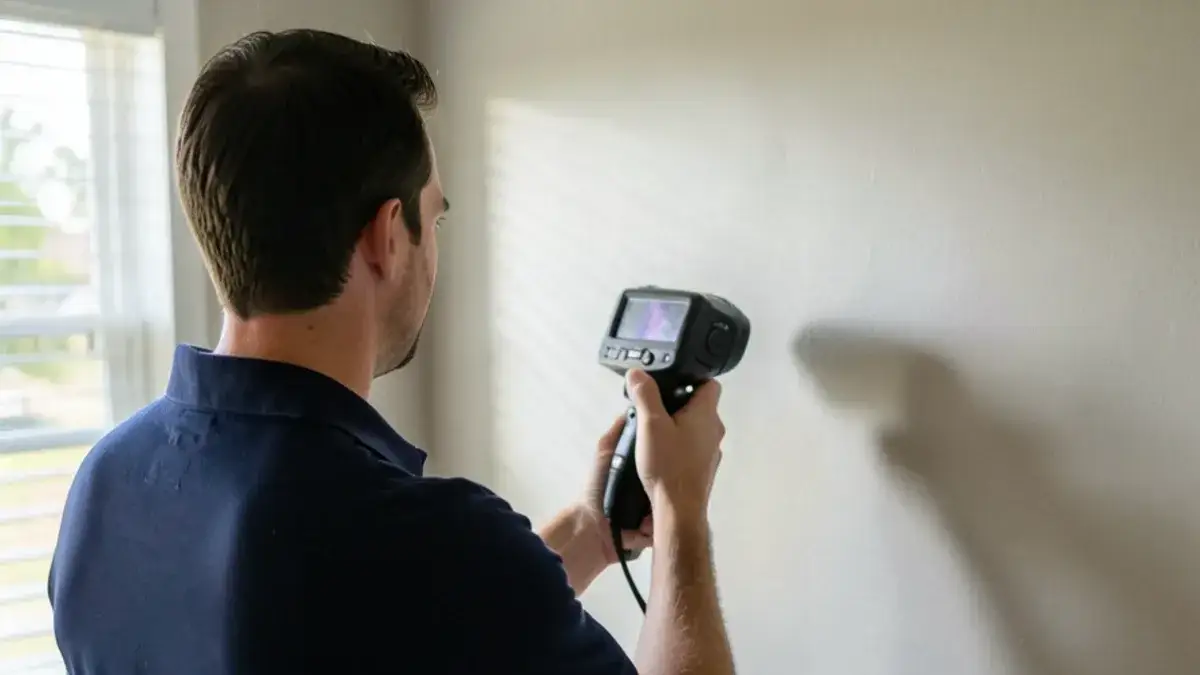
When Do You Need a Mold Inspection?
Call when something suggests hidden moisture, even if you see nothing. A moisture check costs you nothing and often settles the question.
Common reasons people call:
- A musty smell in a closet or room with no visible cause
- Spots, bubbling paint or staining on walls or baseboards
- A past leak that was cleaned up but never measured
- A storm that pushed rain through a window or wall
- A new ceiling stain, even a small one
EPA says to suspect hidden mold when a building smells moldy but you cannot find the source, or when there is known water damage. Common hiding places include the back of drywall, under carpet pad and inside walls around pipes.
Around St. Augustine, about 116 rain days a year and wind-driven rain keep outside walls wet, so a weather-side closet often smells first.
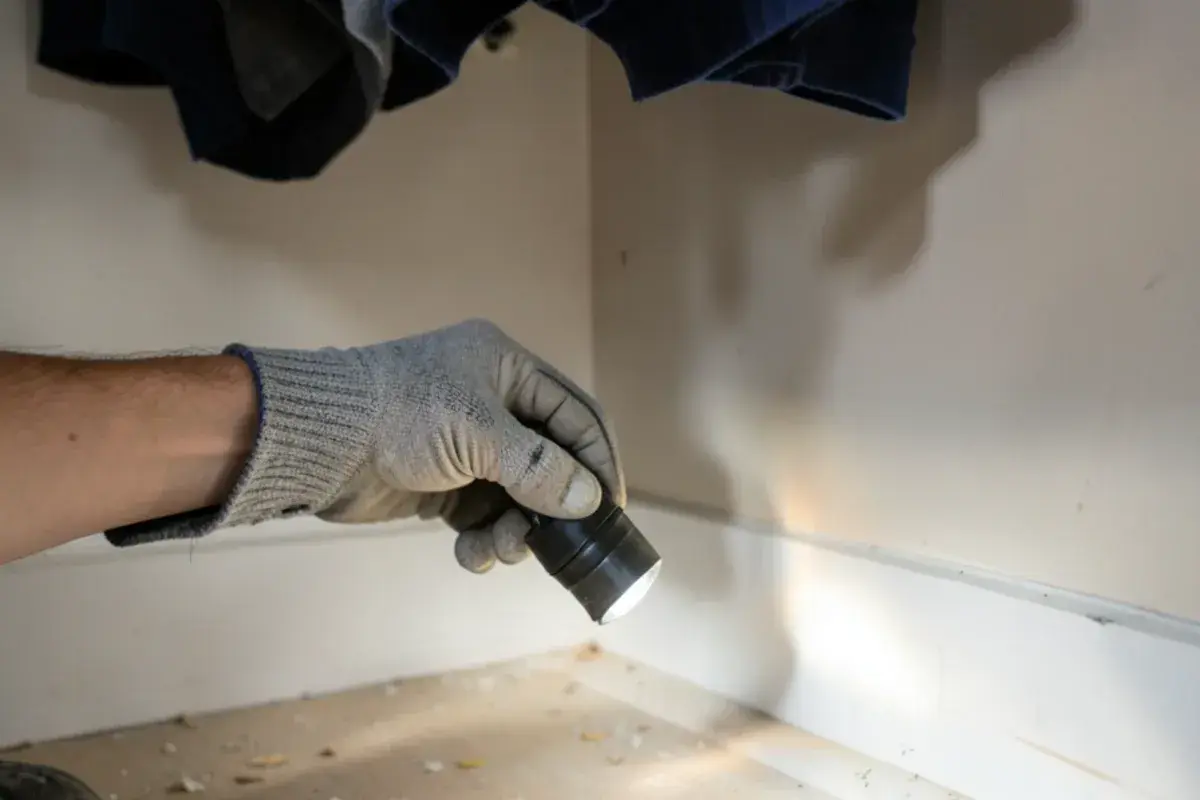
What We Check and What We Do Not
We look for water first, then for what the water has done. Here is what a visit includes:
- Moisture source inspection. We trace plumbing, window lines, AC components and exterior walls for the way water got in.
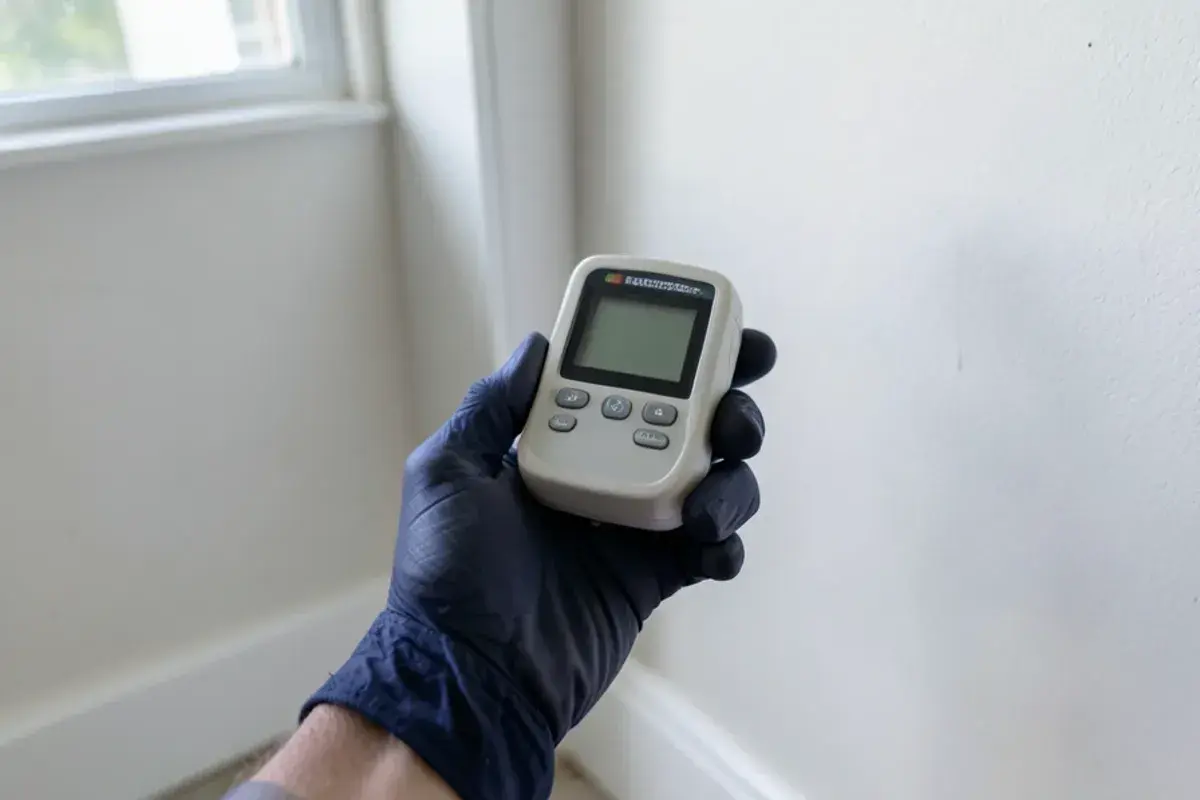
- Moisture readings. Meters compare suspect material to unaffected material in the same home.
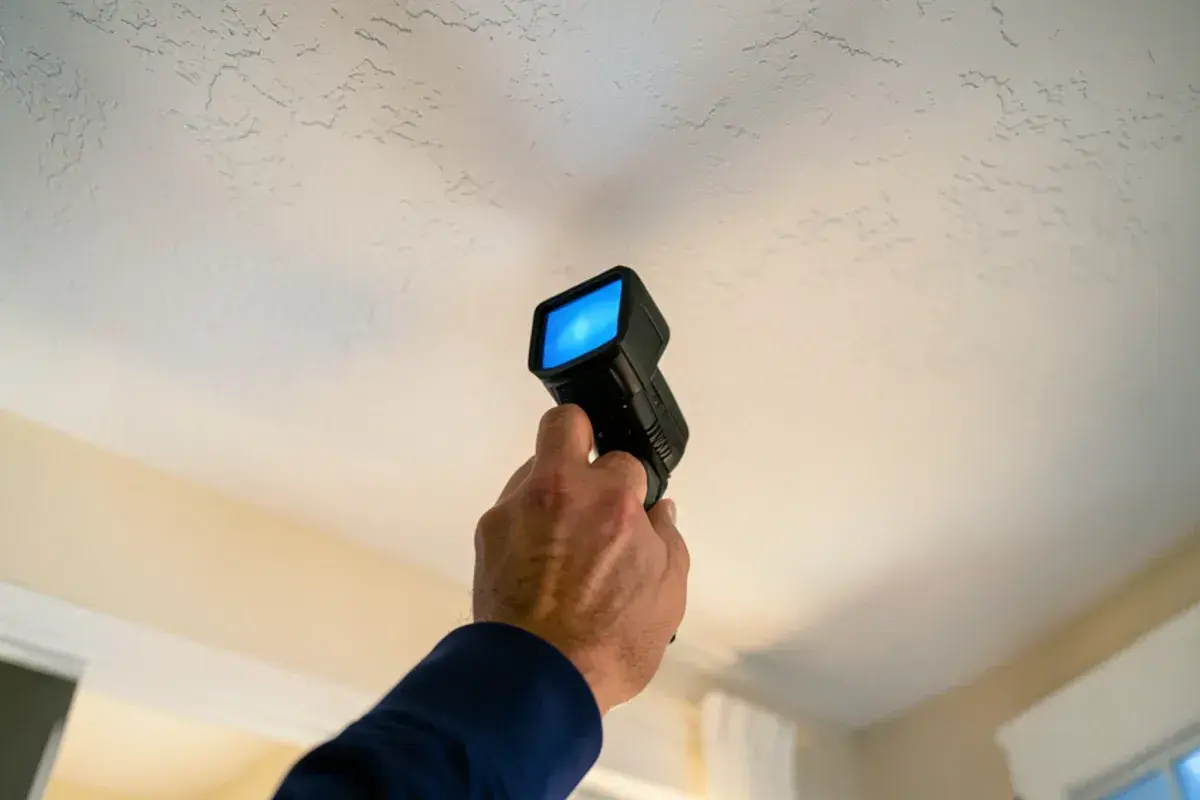
- Thermal imaging. The camera shows temperature patterns that can indicate moisture behind a finish.
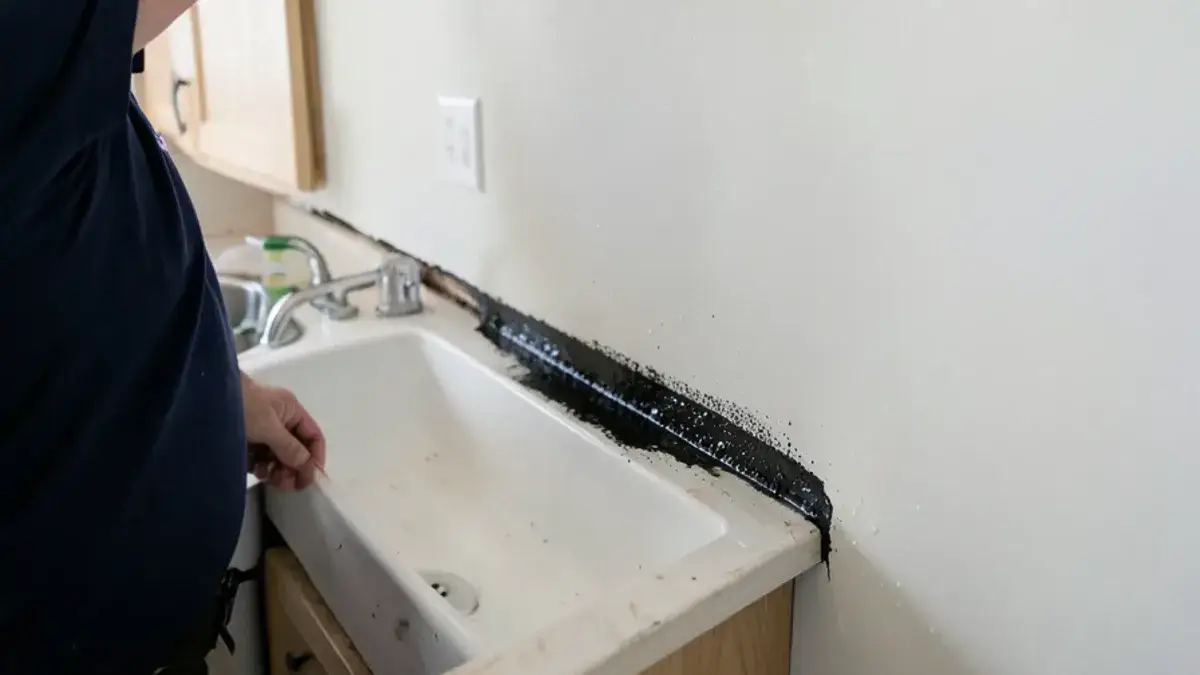
- Visual scoping. Visible growth is photographed and its area measured, so you have a real size.
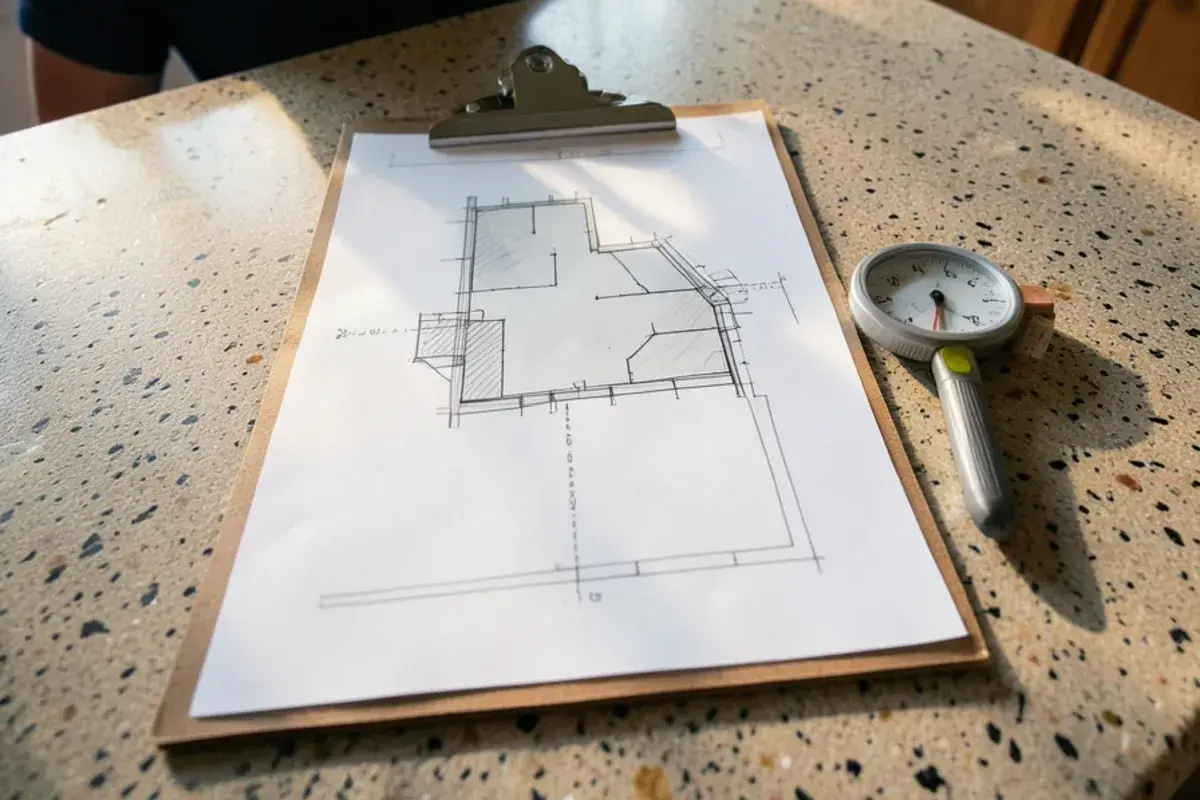
- Written findings. You get the moisture map, photos and our plain read of what comes next.
We do not take air samples, swab surfaces or send anything to a lab. Thermal imaging does not see mold, and a moisture meter does not identify it. These tools find the conditions mold needs.
Treat the visit as a map of conditions, not a diagnosis. It covers the rooms tied to your concern, plus the places water would pass on its way there, such as an air handler closet or the wall behind a bathroom. If the smell has no obvious source, we widen the walk. You keep:
- A moisture map of the rooms we checked
- Photos of each wet spot and any visible growth
- The measured size of visible growth
- Our plain read on the likely water source
- An estimate, if the findings call for work
Moisture Inspection Versus Florida Mold Assessment
These are two different services, and the difference matters under state law. Under F.S. 468.8411, a mold assessment includes physical sampling and detailed evaluation to work out the origin, identity, location and extent of growth over 10 square feet.
| Question | Our moisture inspection | Independent licensed mold assessor |
|---|---|---|
| Finds the moisture source | Yes | Usually part of the review |
| Measures visible growth | Yes | Yes |
| Takes samples for a lab | No | Yes, where the assessor decides it is warranted |
| Issues a formal assessment | No | Yes |
| Fee | Free assessment | Set by the assessor, paid to the assessor |
Most homeowners with a visible, explainable problem need the first column. A formal assessment makes sense when you want written independent evidence, such as during a dispute, a real estate deal or a hard-to-explain odor.
The 10 Square Foot Line and the 12-Month Rule
Two Florida rules shape who does what. Both come from Part XVI of Chapter 468, administered by the Department of Business and Professional Regulation.
The 10 square foot line. Mold assessment and mold remediation of more than 10 square feet each require a state license. Before hiring anyone for that work, get the license number and look it up on the DBPR license search, ours included.
The 12-month rule. F.S. 468.8419 bars a mold assessor from remediating a structure the assessor or the assessor's company assessed within the last 12 months. It also bars a remediator from assessing a structure it remediated within the last 12 months. The statute makes an exception for a certified Division I contractor.
The point is separation: the company that writes the problem up should not be the one paid to fix it. That is why we do not sell lab testing or formal mold assessment on a job we would remediate. Florida also bars referral payments between the two roles, so no one should be paid for sending you to the other.
Musty smell with no visible cause? Ask for a free assessment.
Open 24 hours for emergencies. Non-emergency calls are best between 7am and 7pm.
- 5.0 on Google, 8 reviews
- Family owned since 2020
- Calls go straight to the owner
- Free assessments and estimates
Request a free estimate
Not an emergency? Send the details and we will call you back. If water is still moving, call instead.
Do You Really Need Mold Testing?
Often you do not. EPA says sampling is usually unnecessary when mold is visible, and there are no federal limits to measure a result against. CDC also advises against routine testing, and says to remove mold whatever the type.
This surprises people who searched for mold testing first. A lab result does not tell you where the water is coming from, and that is the part that has to be fixed. You also do not need to know whether growth is black, green or white. The cleanup plan is the same.
If you still want sampling, that is a fair choice, and it is yours to make. Hire an independent licensed assessor directly, using the DBPR search above.
What Happens After We Find a Problem?
You decide the next step with the findings in hand. Nothing is opened or demolished without your go-ahead, and heavy work follows a written scope.
If the area is small and clean water caused it, the fix may be a repair and drying. If growth is larger, the next stop is mold remediation with containment. A wet wall with no growth yet may just need structural drying. If you would rather get a formal assessment first, we step back until you have it.
The assessment and estimate from us are free, and they do not depend on any insurance claim. An independent assessor bills you directly. For coverage questions, ask your insurer, an attorney or a licensed public adjuster. Your policy wording and your adjuster decide.
What customers say
5.0 stars on Google from 8 reviews. Quoted as written.
“Dal with 1 Call Restoration is fantastic. Him and his son do a great job. I had a ton of issues with my DR Horton home. They came in, listened to my issues, took them seriously and made sure I was fully taken care of. Issues that DR Horton tried to say weren’t present Dal showed them they were. I’d use Dal again for issues outside of DR Horton warranty claims if I needed. Thank you Dal for everything!”
What Does a Mold Inspection Cost in St. Augustine?
Two bills can exist here, so keep them apart. Our moisture inspection and estimate are free. A formal assessment is a separate contract, and the independent assessor sets that fee and bills you directly. We cannot quote it, and we take no share of it.
Ask what the fee includes before you book. These variables usually change it:
- Home size and the rooms in the sampling plan
- Number of air or surface samples
- Lab fees and turnaround
- Access to attics, crawl spaces and closed walls
- Whether a written report or a later check is included
Remediation is priced separately again, on affected area, material, access, containment and the source repair. St. Augustine homes add their own variables, such as a block wall that holds water, plaster in an older downtown house or an air handler above the growth. Online price ranges rarely say which of these they include, so compare written scopes.
Why People Start With 1 Call
- Owner on the phone. Your call reaches Dal Beggs directly, any time for an emergency.
- Honest about limits. We tell you what our tools can and cannot show.
- No pressure. You get findings and an estimate, then the choice is yours.
- Local family company. Founded in 2020, run by Dal and his son.
- Records you keep. The map and photos stay with you, whoever does the work.
- Clear roles. Sampling stays with an independent assessor.
Non-emergency calls are easiest between 7am and 7pm. We work throughout St. Johns County, from Butler Beach north to Nocatee, and across the five neighboring counties.
Frequently asked questions
Can a thermal camera see mold inside a wall?
No. A thermal camera shows surface temperature differences, and a cool patch often points to moisture behind the finish. It cannot identify mold. We confirm what the camera suggests with a moisture meter, then decide whether the wall needs opening. In a St. Augustine summer we read it alongside room humidity, since AC-cooled walls can show cool spots too.
Will you recommend a mold assessor?
We do not recommend a specific assessor, and we do not take or pay referral fees. Florida prohibits compensation for referrals between assessors and remediators under F.S. 468.8419. You can look up licensed mold assessors yourself on the DBPR website, then ask each one about sampling plans, reports and what the fee includes.
Do I need an assessor if the mold is under 10 square feet?
Usually not, and a small visible patch rarely needs one. EPA says a homeowner can often handle patches under about 10 square feet, and Florida's assessment definition starts above that size. The catch is hidden growth. You may not know the true area until a baseboard or wall section comes off, so we fix the source first.
Should I pay for an indoor air test?
Think hard about what it would change. CDC does not recommend routine mold testing, noting there are no set standards for acceptable amounts, and EPA has set no federal limits. A test might help in a dispute or a medical situation. If you want one, it comes from an independent licensed assessor. We do not sell lab testing.
Is your visit the same as a home inspection for a sale?
No. A home inspection and a formal mold assessment are both separate services. Our visit looks at moisture and visible growth tied to a water or mold concern, then we tell you what we find. If a purchase contract calls for a licensed report with sampling, that has to come from an independent licensed assessor, so check your deadline.
Find out what is wet and why. Call for a free assessment.
Open 24 hours for emergencies. Non-emergency calls are best between 7am and 7pm.
- 5.0 on Google, 8 reviews
- Family owned since 2020
- Calls go straight to the owner
- Free assessments and estimates
1 Call Restoration, Saint Augustine, FL. (208) 464-4194.
Related services
Worth reading
Where we handle mold inspection and assessment
See all of our service areas.